Council tax liability orders: what they mean and what to do


MoneyNerd introduces enquiries to The Debt Advice Service and may receive a referral fee. For free, independent guidance and help finding a debt adviser, visit MoneyHelper.
This information and enquiry service is not a full financial assessment or a guarantee of suitability or debt write-off. Debt solutions are not suitable for everyone. Fees may apply, and your credit record and assets may be affected. Get advice on your circumstances before choosing a solution.
MoneyNerd introduces enquiries to The Debt Advice Service and may receive a referral fee. For free, independent guidance and help finding a debt adviser, visit MoneyHelper.
This information and enquiry service is not a full financial assessment or a guarantee of suitability or debt write-off. Debt solutions are not suitable for everyone. Fees may apply, and your credit record and assets may be affected. Get advice on your circumstances before choosing a solution.
A council-tax liability order allows further recovery action. Understand payment options, enforcement safeguards and the rules for older bills.
What is a liability order?
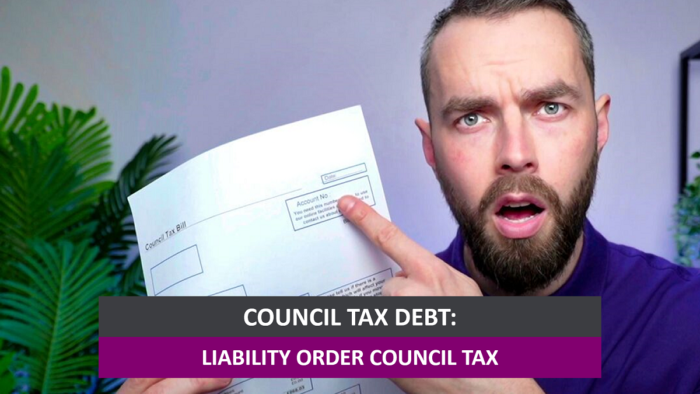
A liability order is a document that a court can give to a local authority if you have not paid the amount of council tax you owe.
The document gives the council the power to collect what’s owed in different ways. The way the council enforces the collection is up to them, though there are rules and limits guiding what they can do.
Debt advice: Continue to the debt enquiry form
Advertisement. MoneyNerd is a commercial introducer, not a debt adviser. The Debt Advice Service, a trading style of Pacific Financial Solutions Limited, offers free debt advice with no obligation. If you request an introduction, your details are shared with them so they can contact you.
Some debt solutions have fees and may negatively affect your credit rating. MoneyNerd may receive a fee if you proceed with a debt solution through The Debt Advice Service. MoneyHelper offers free, impartial money guidance and help finding free debt advice.
How much does it cost?
The council can ask the court to add recoverable legal costs to the council-tax debt. There is no universal £20 total: check the summons and the council’s published charges. Bailiff fees, if enforcement later reaches that stage, are separate.
What happens when a liability order is granted?
Contact the council promptly with a realistic budget and ask it to agree an affordable arrangement. Asking for help does not itself suspend enforcement; request written confirmation of any hold or payment agreement.
The order can allow deductions from employed earnings at statutory rates, or an application for deductions from certain benefits. These are different processes. The council may also instruct enforcement agents. For council-tax debt, bailiffs cannot normally force entry to a home on an initial visit; different rules can apply to re-entry to remove goods already lawfully controlled.
Charging-order and bankruptcy applications have separate legal conditions and court safeguards. A creditor bankruptcy petition generally requires at least £5,000 of qualifying debt in England and Wales. A charging order secures debt against an interest in property; it is not an automatic sale order or a universal ban on selling. Get urgent advice if either is threatened.
| Debt Strategy | How It Can Help With Council Tax Arrears |
|---|---|
| Flexible Payment Arrangements | Local councils often offer the option to spread council tax payments over 12 months instead of the standard 10. |
| One-Off Payment | If affordable, pay the arrears or agree instalments. Any discretionary reduction must be assessed by the council; a lump sum does not automatically earn a discount. |
| Hardship Schemes | Council Tax Reduction (CTR) Discretionary Relief Hardship Funds Support for Vulnerable Individuals Current discretionary support (ask your council) Charitable Grants |
| Discounts and Exemptions | Check for eligibility for discounts (e.g., single-person discount of 25%) or exemptions (e.g., properties unoccupied due to the resident’s death, properties where everyone’s a full-time student, or someone qualifies to be disregarded because of severe mental impairment; the effect depends on the household and eligibility rules) |
| Deferred Payments | Some councils allow deferring payments wherein you’ll pay less now and make up for it later. |
| Challenge your Council Tax Band | If you believe your property’s council tax band is incorrect, you can challenge it to potentially lower future payments and refund previous overpayments. |
| Debt Solutions | Certain formal debt solutions like Debt Relief Orders (DRO), Bankruptcy, and Individual Voluntary Arrangements (IVA) can potentially write off council tax arrears, |
| Professional Debt Advice | UK residents can seek free advice from debt organizations and charities for council tax guidance tailored to their specific financial situation. |
How the introduction works
The Debt Advice Service can discuss your circumstances and explain available options, including their benefits, costs and risks.
Options depend on your circumstances. You decide whether to proceed.
Advertisement. MoneyNerd introduces enquiries; we do not give debt advice or recommend solutions. The Debt Advice Service, a trading style of Pacific Financial Solutions Limited, offers free debt advice with no obligation. Complete the enquiry form to share your details and request a call.
Some debt solutions have fees and may negatively affect your credit rating. MoneyNerd may receive a fee if you go ahead with a debt solution through The Debt Advice Service. For free, impartial guidance and help finding free debt advice, visit MoneyHelper.
How long does a council tax liability order last?
In England and Wales, the council generally has six years from the date a council-tax sum became due to apply for a liability order. This is not a six-year period restarted by your last payment. Once a liability order has been obtained in time, its enforcement is not automatically barred when the original bill reaches six years old. Ask the council for the order date and a breakdown, and get advice about the particular enforcement action. Scotland has a different recovery system.
What happens if you ignore the order?
Ignoring an order can lead to further lawful recovery action and costs. If you cannot pay, contact the council and a free debt adviser promptly. Offer only what the budget supports and ask whether action will be paused. An unaccepted offer or small payment does not automatically stop enforcement.
Can you go to jail for not paying council tax?
In England, imprisonment for council-tax non-payment is a last-resort procedure. The magistrates must investigate your means and find wilful refusal or culpable neglect; inability to afford the bill alone is not enough. The maximum is three months. Wales has abolished imprisonment for council-tax non-payment. Scotland uses a different enforcement system.
A committal or means-enquiry summons is different from the earlier liability-order hearing. Get urgent legal advice and follow the court’s attendance instructions. Missing a hearing at which your attendance is required can lead to an arrest warrant. If you pay before the hearing, obtain confirmation from the council and court about whether attendance is still required.
About The Debt Advice Service
Use the enquiry form to request a call about your circumstances and available options. You decide whether to proceed.

Advertisement. MoneyNerd introduces enquiries; we do not give debt advice or recommend solutions. The Debt Advice Service, a trading style of Pacific Financial Solutions Limited, offers free debt advice with no obligation. Complete the enquiry form to share your details and request a call.
Some debt solutions have fees and may negatively affect your credit rating. MoneyNerd may receive a fee if you go ahead with a debt solution through The Debt Advice Service. For free, impartial guidance and help finding free debt advice, visit MoneyHelper.
Can arrears be written off?
Ask a free debt adviser whether any formal debt solution can include your council-tax arrears. Eligibility and effects on your home, assets, income and credit record vary. A debt relief order, IVA or bankruptcy is not an automatic entitlement or a guarantee that every debt will disappear. Keep paying current bills where required and affordable, and do not stop payments simply because you have made an enquiry.
Also check Council Tax Reduction, discounts, exemptions and discretionary hardship help with the council. These have their own criteria. See GOV.UK’s arrears guidance.
How long can you be chased for council tax debt?
In England and Wales, the council generally has six years from the date a council-tax sum became due to apply for a liability order. This is not a six-year period restarted by your last payment. Once a liability order has been obtained in time, its enforcement is not automatically barred when the original bill reaches six years old. Ask the council for the order date and a breakdown, and get advice about the particular enforcement action. Scotland has a different recovery system.
The application limit appears in regulation 34 of the Council Tax (Administration and Enforcement) Regulations 1992. Do not assume that a consumer-credit limitation checklist applies to council tax.
Does it affect credit rating?
A liability order is not the same as a County Court Judgement (CCJ) and will, therefore, not affect your rating. But I must emphasize this should not a reason not to pay your council tax debt.
There are ways to check your current credit rating.
References