







Cars and Car Finance in a Scottish Protected Trust Deed








MoneyNerd introduces enquiries to The Debt Advice Service and may receive a referral fee. For free, independent guidance and help finding a debt adviser, visit MoneyHelper.
This information and enquiry service is not a full financial assessment or a guarantee of suitability or debt write-off. Debt solutions are not suitable for everyone. Fees may apply, and your credit record and assets may be affected. Get advice on your circumstances before choosing a solution.
MoneyNerd introduces enquiries to The Debt Advice Service and may receive a referral fee. For free, independent guidance and help finding a debt adviser, visit MoneyHelper.
This information and enquiry service is not a full financial assessment or a guarantee of suitability or debt write-off. Debt solutions are not suitable for everyone. Fees may apply, and your credit record and assets may be affected. Get advice on your circumstances before choosing a solution.
Are you curious about trust deed car finance? Do you need to know more about this process?
Keep a clear record of your debts, income and essential costs. Free independent debt advice can help you compare the options available where you live.
This article will help you understand:
- What a trust deed is
- How your car plays a role in a trust deed
- What you can do if you have a trust deed and need car finance
- How to handle your car during and after a trust deed
- If a trust deed can affect your chance to get car finance
A protected trust deed is a Scottish insolvency arrangement. Vehicle ownership, value, practical need and any finance agreement all affect the outcome.
Discuss the vehicle with the proposed trustee before signing, and get the agreed treatment in writing.
What happens to my car?
A trust deed transfers relevant assets or interests to the trustee under its terms; it is not simply a loan secured on your car. The vehicle’s ownership, value and any exemption must be assessed. See related guidance.
A vehicle you reasonably require and whose value does not exceed £3,000 can be exempt under the Scottish rules. Exactly £3,000 is within the threshold; need and the other conditions still matter.
When it is worth more than £3,000, the Trustee will practice some discretion concerning how they manage it.
This implies they can offer it to pay your debts.
In the event that they do place the car in a position to pay off debt, they ought to have discussed this with you before you agree on your Trust Deed.
If a different arrangement is proposed for a more valuable car, ask how it complies with the trust deed and obtain written agreement before relying on it.
Do not assume the trustee will wait for depreciation to bring the vehicle under the exemption threshold.
Any decision to retain the car, realise its value or accept a third-party payment should be explained and documented by the trustee.
Is financing possible?
Although difficult, it is possible to get car finance with a Trust Deed.
However, you should always bear in mind that entering a Trust Deed will make getting any sort of credit very troublesome, which may reduce your options for car finance.
A lender may decline an application or offer restricted terms. There is no universal rate: compare affordability and total cost, and obtain the trustee’s agreement before applying.
Because of this, it’s highly unlikely that you can get a good rate of car finance along with a Trust Deed -however, it’s not impossible.
Key Components
As we delve into the details of car finance with a Trust Deed, it’s crucial to understand the core aspects of this financial setup.
The table below explains the key components of a Trust Deed.
| Trust Deed Aspect | Details |
|---|---|
|
Average Length |
Typically 4 years; varies based on individual circumstances |
| Eligibility | Must be a resident of Scotland with unsecured debts of at least £5,000 |
| Assets | High-value assets like property and vehicles may be included in the arrangement and may have to be sold to pay off debts |
| Credit Impact | Credit score is negatively impacted and stays on your credit file for 6 years |
| Debt Types Included | Unsecured debts such as credit card balances, personal loans, overdrafts, store cards, catalog debts, and some types of tax and utility arrears |
| Debts needing separate advice | Secured creditors retain rights over their security. Some liabilities, including certain court fines, maintenance obligations and student loans, are not discharged. Ask the trustee to check each debt and any hire-purchase agreement. |
| Monthly Payments | Based on what you can afford, reviewed annually |
| Creditor contact | Once the deed is protected, creditors bound by it cannot pursue recovery of included debts, but required statements and notices may still be sent. |
| Discharge from Debts | Most remaining unsecured debts are written off at the end, assuming compliance with all terms |
| Practical effects | Essential belongings are generally protected. Your home, valuable assets and bank arrangements need individual assessment; none is guaranteed to remain unaffected. Check employment or professional rules. |
| Your obligations | Co-operate with the trustee, make agreed payments and report changes in income, employment or assets promptly. Get advice before new borrowing or dealing with assets that form part of the deed. There is no general ban on changing jobs. |
Can I keep my vehicle?
You may be able to keep an exempt or appropriately agreed vehicle, but needing transport does not guarantee you can retain any car regardless of value or finance terms.
There are a number of reasonable requirements for buying a car during a Trust Deed or other debt plan – for example, you may need it in the case of a car breakdown or for an essential job change/work travel, as this forum user discusses:
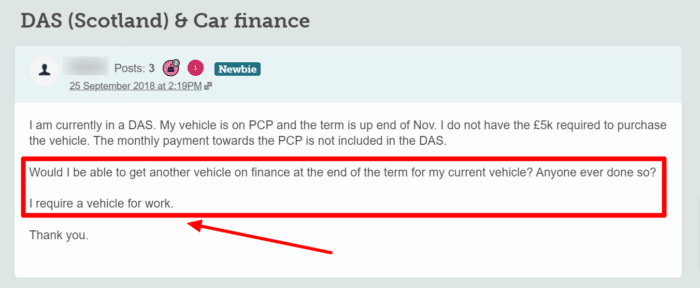
Work, caring, health needs and access to public transport can be relevant when assessing reasonable need. School journeys or a rural address are not an automatic exemption for every vehicle.
This incorporates vans and motorbikes as well.
If the car is on hire purchase or another finance agreement, the lender may retain ownership or contractual rights. Check any insolvency clause and whether the lender and trustee agree that affordable payments can continue.
A necessary and reasonable finance payment may be allowed in the budget, but this is not guaranteed and does not override the lender’s contract. Ask about alternatives if the agreement cannot continue.
Get debt advice from The Debt Advice Service
MoneyNerd can introduce you to The Debt Advice Service for free debt advice. MoneyNerd does not provide debt advice or recommend debt solutions.
The Debt Advice Service can explain your options, including their benefits, costs and risks. Options available depend on your circumstances. There’s no obligation to take a debt solution.
MoneyNerd does not provide debt advice or recommend debt solutions. The Debt Advice Service is a trading style of Pacific Financial Solutions Limited. If you request an introduction, we’ll share your details with their team so they can contact you.
Some debt solutions have fees and may negatively affect your credit rating. MoneyNerd is a commercial introducer and may receive a fee if you go ahead with a debt solution through The Debt Advice Service.
For free, impartial money guidance and help finding free debt advice, visit [MoneyHelper](https://www.moneyhelper.org.uk/en/money-troubles/dealing-with-debt).
How do I get it?
During your Trust Deed term, you will need to have the consent of your Trustee to acquire any type of credit.
Not informing your Trustee breaches the terms of your arrangement and could prompt your Trust Deed to fail.
Your Trustee will decide whether your request to take out car finance is sensible.
The Trustee will choose if taking out a car on account is appropriate for you, depending on your pay and consumption.
Affordability and practical need are relevant, but trustee consent does not guarantee lender approval. Do not assume new finance will be accepted.
Special consideration will be given when you require the car for work purposes.
Considering selling your car?
You should always discuss and agree on any car sale with your trustee before you sell.
There might be no issue, or your trustee may have an interest in the sale proceeds. It relies on the circumstance, so you should get the proper guidance and assistance before you sell.
» TAKE ACTION NOW: Fill out the short debt form
Is it necessary for your trustee to sell it?
An agreed third-party contribution or other arrangement may sometimes avoid sale of a non-exempt vehicle. The amount and terms require assessment and approval; they are not automatically limited to the value above £3,000.
On the other hand, the trustee may agree that an ‘outsider’, similar to a relative or companion, can purchase out their advantage in the car by making contributions during the Protected Trust Deed.
What happens once it’s completed?
After discharge, check what obligations or asset realisations remain and review your credit reports. New borrowing still depends on affordability and lender checks.
The Register of Insolvencies entry is not removed immediately on your discharge. It normally remains until 12 months after the trustee’s discharge, which can occur later.
Unfortunately, the Trust Deed will stay on your credit file for six years from the date you took out your Trust Deed.
So, if your Trust Deed is in place for the standard time period of four years, it will stay on your credit document for an additional time period of two years.
Take the first step towards tackling your debt
Every day, our partner, The Debt Advice Service, helps people understand their options for dealing with debt. Their debt advice is free, with no obligation to proceed.
MoneyNerd introduces you to The Debt Advice Service. We do not provide debt advice or recommend debt solutions.

Natasha
Very helpful and informative thank you
If you submit the enquiry form, MoneyNerd will share your details with The Debt Advice Service so they can contact you.
Some debt solutions have fees and may negatively affect your credit rating. MoneyNerd may receive a fee if you go ahead with a debt solution through The Debt Advice Service.
The Debt Advice Service is a trading style of Pacific Financial Solutions Limited.
For free, impartial help and access to not-for-profit debt advice, visit MoneyHelper.
Will completing it affect my ability to obtain financing?
Having a trust deed on your credit report will affect your credit score, which can make it harder to secure an appropriate lender (than if you had no financial disparities).
Credit recovery takes time and does not guarantee a better rate. Compare actual offers, total repayable and affordability before taking new finance.
If transport is essential, discuss affordable alternatives with an adviser before making multiple credit applications.
References