MoneyNerd introduces equity release enquiries to Age Partnership and may receive a referral fee. MoneyNerd does not provide equity release advice. Age Partnership advises on lifetime mortgages. Equity release can reduce your estate and affect means-tested benefits and future care funding. Fees may apply, and any interest added to a lifetime mortgage can increase the amount owed. Specialist financial and independent legal advice are required before proceeding.



Before you enquire: MoneyNerd introduces equity release enquiries to Age Partnership and may receive a referral fee. MoneyNerd does not provide equity release advice. Age Partnership advises on lifetime mortgages. Equity release can reduce your estate and affect means-tested benefits and future care funding. Fees may apply, and any interest added to a lifetime mortgage can increase the amount owed. Specialist financial and independent legal advice are required before proceeding.
How Does Equity Release Work?
Equity release allows eligible homeowners, usually aged 55 or over, to access part of their home’s value. A lifetime mortgage is borrowing secured against the property. A home reversion plan involves selling all or part of the property. Eligibility and terms vary by product.
A lifetime mortgage is normally repaid when the last borrower dies or moves permanently into long-term care, often from the sale of the property. Moving home or repaying early depends on the plan’s terms. Read our guide to how equity release works.
Key costs and risks
Equity release can reduce the inheritance you leave and affect entitlement to means-tested benefits. Fees may apply for advice, legal work, valuation and the product. Compound interest, early repayment charges and restrictions on moving can make it expensive or inflexible. Releasing equity now can also reduce the money available for future care.
Compare alternatives such as downsizing, using other savings or assets, or a retirement interest-only mortgage where repayments are affordable. If you are considering equity release because of debt problems, get free debt advice first. MoneyHelper explains equity release and its alternatives.
A calculator gives an estimate, not an offer or a decision that equity release is suitable. You need specialist financial advice and independent legal advice before proceeding.
» TAKE ACTION NOW: Find out how much equity you could release
What’s a Lifetime Mortgage?
A lifetime mortgage is a loan secured against your home while you retain ownership. Some plans allow interest to build up without monthly repayments; others allow or require payments. If interest is added to the loan, you pay interest on that interest and the debt can grow substantially. Check the exact repayment terms.
The loan and any outstanding interest normally become repayable when the last borrower dies or moves permanently into long-term care. Early repayment charges and restrictions on moving may apply. Read more on our lifetime mortgage page.
What’s a Home Reversion Plan?
With a home reversion plan, you sell all or part of your home, usually for less than its market value, in return for money and the right to remain there under the plan’s terms. This is a sale of ownership, not a loan. You give up the sold share of any future increase in value.
The provider receives its agreed share when the property is eventually sold, normally after the last plan holder dies or moves permanently into long-term care. Read our home reversion guide. Age Partnership states that it advises on lifetime mortgages only.
An Age Partnership customer’s experience
Individual experiences vary. Equity release is a long-term decision, and specialist advice is needed to assess whether it is suitable for you.

Mrs Wareham
“I am more than pleased to have taken out Equity Release with Age Partnership.”
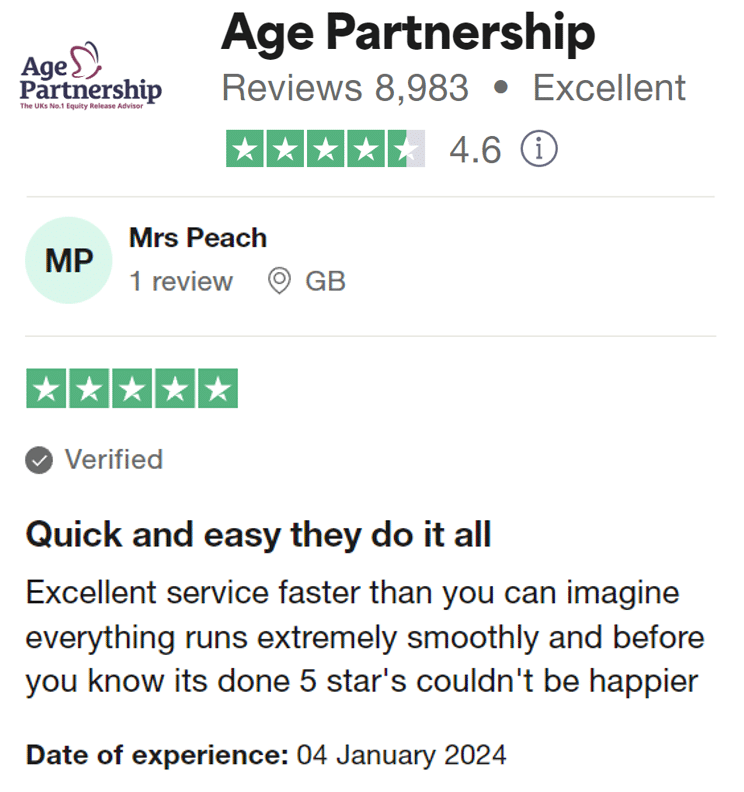
Reviews shown are for Age Partnership. Search powered by Age Partnership.