Dealing with Bailiffs – Letter Templates








MoneyNerd introduces enquiries to The Debt Advice Service and may receive a referral fee. For free, independent guidance and help finding a debt adviser, visit MoneyHelper.
This information and enquiry service is not a full financial assessment or a guarantee of suitability or debt write-off. Debt solutions are not suitable for everyone. Fees may apply, and your credit record and assets may be affected. Get advice on your circumstances before choosing a solution.

MoneyNerd introduces enquiries to The Debt Advice Service and may receive a referral fee. For free, independent guidance and help finding a debt adviser, visit MoneyHelper.
This information and enquiry service is not a full financial assessment or a guarantee of suitability or debt write-off. Debt solutions are not suitable for everyone. Fees may apply, and your credit record and assets may be affected. Get advice on your circumstances before choosing a solution.
These letter templates can help you contact enforcement agents, challenge charges and explain vulnerability. The guidance concerns England and Wales.
In this article, we’ll help you understand:
- How to deal with bailiffs in a stress-free way.
- How to complain if a bailiff overcharges you.
- The right way to complain to a bailiff company.
- How to inform a bailiff that you are vulnerable.
- The possibility of writing off some debt.
Debt can be worrying — we know it’s not easy. That’s why we have created sample letter templates that can help you manage your interactions with bailiffs more efficiently.
Let’s get started!
Overcharging
Many private enforcement fees are set by the Taking Control of Goods (Fees) Regulations 2014, as amended in 2026. Court-employed County Court bailiffs have different court fee rules. Ask for an itemised breakdown and challenge charges that do not apply to your case using the complaint template.
Making Complaints
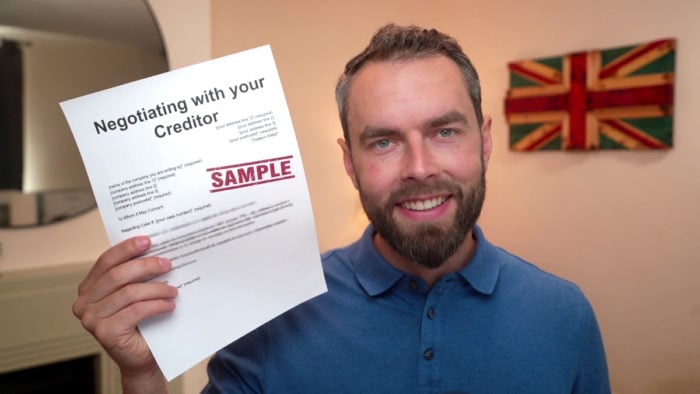
If you want to make a complaint about a bailiff company for any other reason than overcharging you, we have a letter template for you. Whether it be aggressive behaviour, intimidating threats or repossessing items they are not legally allowed to take, use this letter template to complain about a bailiff company.
» TAKE ACTION NOW: Fill out the short debt form
Complain to a Bailiff Company
Complain to a Council
If the council has sent bailiffs to recover debts relating to unpaid council tax or fines, and the bailiff did not act appropriately, you can use our bailiff complaint letter template and send it to the council. You might want to complain directly to the bailiff company as well (using the letter template above), but use this letter to make your concerns clear to your local authority as well.
Complain to a Council About the Actions of their Bailiffs
Understand your debt options
MoneyNerd can introduce you to The Debt Advice Service for free debt advice. MoneyNerd does not provide debt advice or recommend debt solutions.
The Debt Advice Service can explain your options, including their benefits, costs and risks. Options available depend on your circumstances. There’s no obligation to take a debt solution.
MoneyNerd does not provide debt advice or recommend debt solutions. The Debt Advice Service is a trading style of Pacific Financial Solutions Limited. If you request an introduction, we’ll share your details with their team so they can contact you.
Some debt solutions have fees and may negatively affect your credit rating. MoneyNerd is a commercial introducer and may receive a fee if you go ahead with a debt solution through The Debt Advice Service.
For free, impartial money guidance and help finding free debt advice, visit MoneyHelper.
Tell Them that You Are Vulnerable
Vulnerability depends on the person’s circumstances and how enforcement affects them. Tell the enforcement company and creditor about your needs, provide relevant evidence if available, and ask for suitable adjustments. A diagnosis or membership of a particular group does not automatically cancel the debt, stop all visits or remove all fees. Under regulation 12 of the Taking Control of Goods (Fees) Regulations 2014, enforcement-stage fees and related disbursements are not recoverable from a vulnerable debtor unless they have been given an adequate opportunity to obtain assistance and advice before controlled goods are removed. This is a conditional protection, not a blanket fee exemption. Agents must not enter, re-enter, remain in premises or take control of goods where the only people present are children under 16 or vulnerable people, including a combination of them. This is different from a blanket ban on visiting anyone who lives alone. See related guidance.
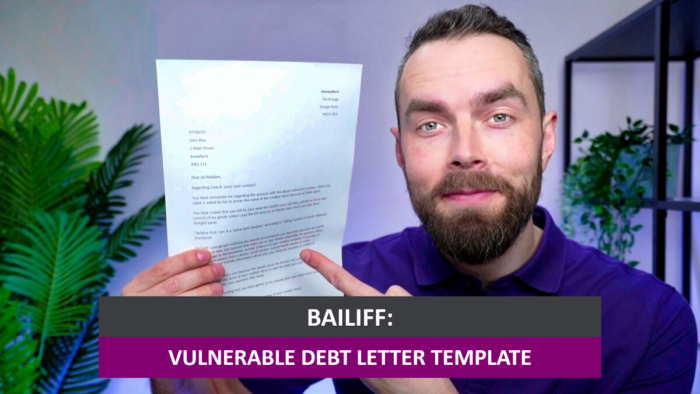
You can now tell a bailiff that you are vulnerable with our free letter template. Use it yourself, or download it for someone you know is vulnerable and needs help dealing with enforcement officers.
Tell a Bailiff that You Are Vulnerable