







Can you use a personal loan to buy a house or fund a deposit?








Loans Warehouse is a credit broker, not a lender. Approval and terms depend on checks. Compare fees, interest and the total amount repayable. A longer term may increase the overall cost. MoneyNerd introduces enquiries and may receive a referral fee.
Your home may be repossessed if you do not keep up repayments on a loan secured against it.

Loans Warehouse is a credit broker, not a lender. Approval and terms depend on checks. Compare fees, interest and the total amount repayable. A longer term may increase the overall cost. MoneyNerd introduces enquiries and may receive a referral fee.
Your home may be repossessed if you do not keep up repayments on a loan secured against it.
Using a personal loan to buy a property or fund a deposit can limit mortgage options and create substantial repayment commitments. The property type and both lenders’ rules matter.
We know this can be a big decision, and there might be a lot of questions on your mind. But don’t worry; we’re here to help with clear, simple advice.
In this guide, we’ll explore:
- Is it good to use a personal loan to buy a house?
- The true cost of a bad secured loan.
- How a personal loan can be used for the initial deposit on a mortgage.
- What kind of impact personal loans have on your credit score.
- What happens if you don’t pay back a short-term loan.
We understand that being in debt or considering a secured loan is a serious matter. It’s important to know all the facts before taking a big step. Remember, we’re here to support you with clear and simple advice.
Can you use a personal loan for the initial deposit/down payment on your mortgage?
UK mortgage deposit requirements vary by product and borrower. Some lenders do not accept a deposit funded by another loan. Confirm the source-of-funds rules before borrowing, and disclose the debt to the mortgage lender and conveyancer.
Lenders assess affordability using income, spending and existing commitments, as well as deposit source and credit history. A debt-to-income ratio is only one possible measure.
Debt-to-Income (DTI) ratio
A monthly debt-service ratio compares monthly debt payments with monthly income. For example,£1,600 of monthly debt payments divided by £4,000 gross monthly income is 40%. Dividing a total outstanding balance by one month’s income would measure something different.
There is no single UK approval threshold. A new loan adds repayments that can reduce mortgage affordability or breach a lender’s deposit rules.
This might cause the mortgage lender to reject your application even if they had initially approved it.
The lender needs an accurate picture of all borrowing and the deposit source. Borrowed funds can create additional risk without implying that every borrower has mismanaged money.
Can you pay a house deposit on a credit card?
Do not assume a credit card can fund an acceptable mortgage deposit. Mortgage and conveyancing source-of-funds checks apply; cash advances or money transfers can be expensive. There is no universal rule that only 5% of a deposit must come from savings.
Is it a good idea to take a personal loan to buy a house?
When it comes to loans for homes, in most cases, it’s not wise to take out a personal loan to buy a house. Personal or short-term loans often have much shorter repayment terms and plans, and lenders usually charge a higher interest rate than mortgage loans.
The appropriate finance depends on the property’s title, condition, value and your circumstances. Park or mobile homes can differ from conventional land-backed property; obtain specialist advice instead of assuming a short-term personal loan is suitable.
Compare eligibility, affordability, security and total repayment cost before choosing finance. A smaller property does not by itself make a personal loan prudent.
Secured vs unsecured loans
The loan is secured on the property. Missed payments can lead to repossession through the applicable legal process; security does not remove affordability checks or give the lender an automatic right to take the home without that process. Unsecured loans do not take security at outset, but default can still lead to court action and enforcement.
A secured loan takes agreed assets as security, commonly a property; it does not ordinarily mean paying a cash deposit to a lender. Rate and affordability depend on the product, and requests for upfront loan deposits can be a scam. See related guidance.
Secured vs Unsecured Loans, a Breakdown
There are many differences between secured and unsecured loans, so it’s really important that you know the main differences between them to make an informed decision.
Here’s a quick table to summarize them.
| Category | Secured loan | Unsecured loan |
|---|---|---|
| Security | An asset, often your home, secures repayment. | No named asset is pledged as security. |
| Amount and term | Depends on equity, affordability and lender criteria. | Depends on affordability and lender criteria. |
| Rates and costs | May be fixed or variable; compare APRC, fees and total cost. | Often fixed-rate, but compare APR, fees and total cost. |
| Time to complete | Valuation, legal work and checks can affect timing. | Checks and lender processes determine timing. |
| Risk | Your home or other security may be repossessed if repayments are missed. | Missed payments can lead to charges, credit damage and court action. |
Explore secured loan options
Loans Warehouse is a credit broker, not a lender. You can enquire about options based on your circumstances. Approval and terms depend on lender checks; an enquiry is not a guaranteed offer.
Compare the interest rate, fees, monthly payments and total amount repayable. A longer repayment term can increase the overall cost. Consolidating unsecured debts into a secured loan puts your home at risk.
MoneyNerd introduces enquiries to Loans Warehouse and may receive a referral fee. Broker and lender fees may apply and should be explained before you proceed.
Your home may be repossessed if you do not keep up repayments on a loan secured against it.
Compare the full cost of a secured loan
Compare the APRC, fees, monthly repayments and total amount repayable over the full loan term. A lower monthly payment can mean paying more overall if the loan runs for longer.
Loans Warehouse is a credit broker, not a lender. Approval and terms depend on checks. MoneyNerd introduces enquiries and may receive a referral fee. Fees and charges may apply to the loan and broker service.
Your home may be repossessed if you do not keep up repayments on a loan secured against it.
Enquire about a secured loan through Loans Warehouse.
What are some problems you could face?
The problem with taking out several short-term loans, or just a single one, is that debtors can soon find themselves in debt with no real way of paying it off. Reasons can include increasing interest rate or the debtor losing their job.
Lenders must carry out the applicable checks, and you should assess whether payments remain affordable if circumstances change. Default can lead to lawful charges, credit-record damage and court action; not every collection cost can automatically be added. See related guidance.
Not only will your debt keep on building, but your lender might hire a debt collector to retrieve your debt.
What happens if you don’t pay back a short-term loan?
Short-term borrowing may be secured or unsecured. An unsecured lender cannot simply take your home, but may seek a court judgment and enforcement, such as a charging order where applicable.
In England and Wales, a lender may bring a court claim and obtain a County Court Judgment if the claim is established. Other UK nations use different procedures.
If a judgment is not paid, the creditor may apply for enforcement. Depending on the case, this can include enforcement agents, an attachment of earnings or a charging order; there are procedural safeguards and exempt goods. See related guidance.
As you can see, there are several risk factors of property financing. You should keep these factors in mind when you’re considering different options for borrowing money to buy your house.
Enquire about a secured loan through Loans Warehouse, a credit broker, not a lender. Approval and terms depend on checks. Compare the full cost before applying. MoneyNerd may receive a referral fee. Your home may be repossessed if you do not keep up repayments on a loan secured against it.
What are bridging loans?
If you’re already a homeowner looking to sell your current house to buy a new one, you may want to consider bridging loans. A bridging loan is a short-term loan that you can use to fund the purchase of new property.
Bridging finance can cover a short gap, such as buying before an existing property sale completes. It is usually secured and needs a credible exit, such as an agreed sale or suitable refinancing.
Bridging can be expensive and risky if the planned sale or refinance fails. Obtain specialist advice and a written exit and contingency plan before committing.
Impact of short-term loans on property purchase
Bridging amounts, rates and fees vary. Compare the total cost over the expected term and the consequences of delay; it is not necessarily a smaller loan than a mortgage.
A Loans Warehouse customer’s experience
Individual experiences vary. Compare the total cost, fees, repayment term and risks before applying. Securing borrowing against your home puts it at risk if you cannot keep up repayments.

Polly
“This was by far possibly one of the nicest experiences I’ve had getting a secured loan.”
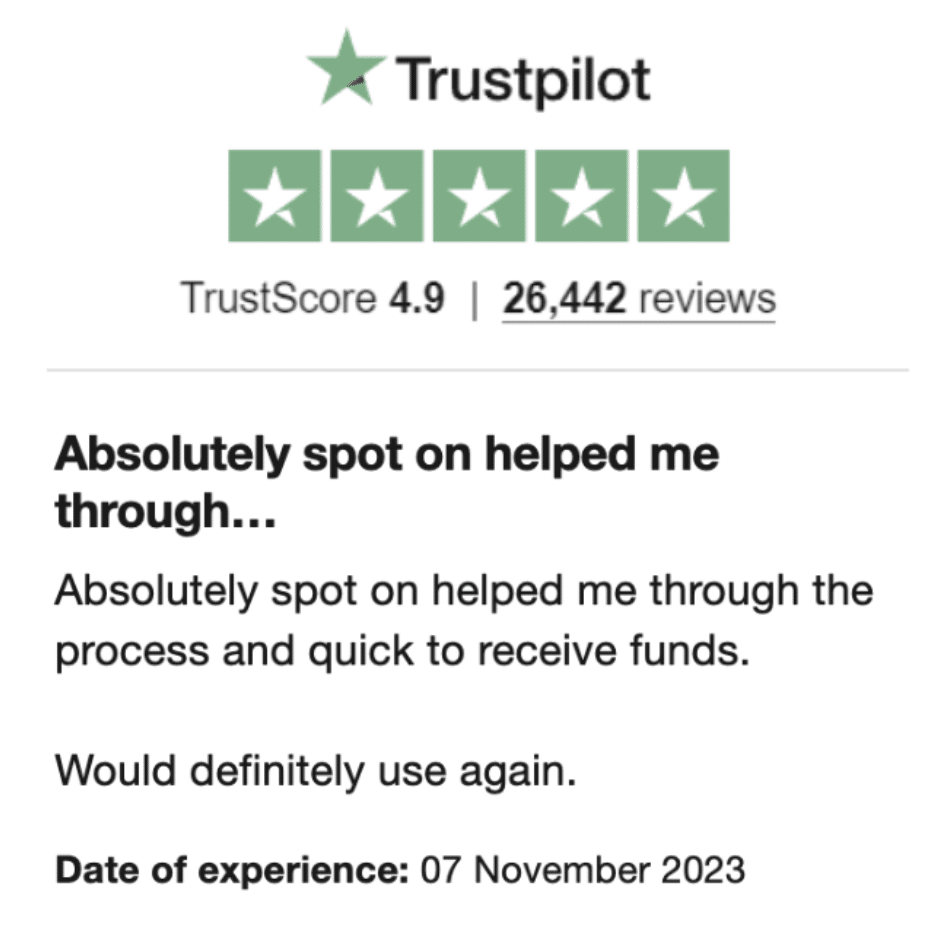
Reviews shown are for Loans Warehouse. Search powered by Loans Warehouse.
Mortgage alternatives
Shared ownership is a housing arrangement in which you buy an eligible share and usually pay rent on the remainder. A mortgage may finance your share, but the scheme is not itself a type of mortgage and eligibility rules apply.
Additionally, there are other affordable home ownership schemes in the UK. It is a good idea to do your research to see what’s out there.
Can you use a bridging loan for the down payment on your mortgage?
Do not use bridging finance as a mortgage deposit without both lenders’ explicit acceptance of the funding structure. A bridging loan is normally secured, requires a viable exit and adds costs and risk; repayment within six or twelve months cannot be assumed.
All overlapping payments, fees and the eventual repayment of the bridge must be affordable and disclosed.
References