Equity Release with an Existing Mortgage? Complete Guide








MoneyNerd introduces enquiries to Age Partnership and may receive a referral fee. MoneyNerd does not provide equity release advice. Equity release reduces the value of your estate and can affect means-tested benefits. With a lifetime mortgage, unpaid interest compounds and increases the amount owed. Fees and early repayment charges may apply.
Ask a regulated adviser to explain suitability, costs and alternatives. For free, impartial guidance, visit MoneyHelper.

MoneyNerd introduces enquiries to Age Partnership and may receive a referral fee. MoneyNerd does not provide equity release advice. Equity release reduces the value of your estate and can affect means-tested benefits. With a lifetime mortgage, unpaid interest compounds and increases the amount owed. Fees and early repayment charges may apply.
Ask a regulated adviser to explain suitability, costs and alternatives. For free, impartial guidance, visit MoneyHelper.
"Are you interested in how you can release equity from your home even if you have a mortgage? This guide is here to help. We know that this process can seem puzzling, but we have loads of helpful advice to guide you.
In this guide, we’ll cover:
- What home equity is.
- How to release equity from your mortgage.
- The different ways to release equity.
- If you can use equity to pay off your mortgage.
- What happens to your mortgage when you release equity.
We understand that you might be worried or unsure about releasing equity from your home. It can be a big decision. But don’t fret; we’re here to help explain everything in a simple way.
We’ve offered useful information to several other people in a similar position, so we know the questions you might have.
Let’s dive in and learn more about equity release.”
Can I release equity from my mortgage?
You cannot release equity from a mortgage, but you can release equity from your home. Equity is built up in assets rather than loans, and paying off a loan like a mortgage will increase your equity in your home as long as the value of your property doesn’t significantly decrease.
Can I use it to pay off my mortgage?
Using new secured borrowing to repay a mortgage requires comparison of total costs, term, repayments, fees and risks. A lower monthly payment or headline interest figure alone does not establish suitability.
Alternatively, you may be using the equity in one property to pay off your mortgage on a different property you own.
Do you have to be mortgage-free to do it?
An existing mortgage does not automatically rule out a lifetime mortgage. It normally has to be cleared at completion, often from the released funds; sufficient funds and eligibility are required.
How can you take it out from your home?
There are a number of ways to release equity from your home, including:
- Secured loans
- Equity release products (e.g. lifetime mortgage)
- Second charge mortgages (e.g. home equity loan)
- Remortgaging to release equity
These Options are suitable in different situations, which is best discussed with a financial adviser.
Consider the costs and risks of equity release
Equity release is a long-term financial decision. A lifetime mortgage is a loan secured against your home. If interest is added to the loan, the debt can grow substantially and reduce the inheritance you leave.
Consider the fees, effect on means-tested benefits, early repayment charges and future care needs. Alternatives may include downsizing, using other assets or a retirement interest-only mortgage where affordable.
Use the button below to start an enquiry with Age Partnership. An estimate does not confirm eligibility or suitability. Get specialist financial and independent legal advice before proceeding.
In partnership with Age Partnership, which advises on lifetime mortgages. MoneyNerd introduces enquiries and may receive a referral fee. Equity release can reduce your estate and affect means-tested benefits and future care funding. Fees may apply and interest added to a lifetime mortgage increases the amount owed. Specialist financial and independent legal advice are required before proceeding.
Option #1: Later-life equity-release products
A lifetime mortgage is a loan secured on your home; you retain ownership. Interest that is not paid is added to the balance. The loan is usually settled when the last borrower dies or moves permanently into care, subject to the contract. Required or optional repayments vary by product. A home reversion plan is a sale of part or all of your home, usually below open-market value, in return for money and the right to remain under the plan’s occupancy terms. It is not a loan. The provider receives its agreed share when the home is sold. See related guidance.
The different types
The two main types are lifetime mortgages and home reversion. Drawdown and enhanced arrangements are variations of lifetime mortgages; availability depends on the provider. See related guidance.
Lifetime mortgage
A lifetime mortgage is a loan secured on your home; you retain ownership. Interest that is not paid is added to the balance. The loan is usually settled when the last borrower dies or moves permanently into care, subject to the contract. Required or optional repayments vary by product. See related guidance.
Home reversion plan
A home reversion plan is a sale of part or all of your home, usually below open-market value, in return for money and the right to remain under the plan’s occupancy terms. It is not a loan. The provider receives its agreed share when the home is sold.
Who qualifies?
Most standard lifetime mortgages start at age 55, but some payment-term lifetime mortgages are available from 50 and require interest payments for an agreed period. Home-reversion minimum ages and all other eligibility rules depend on the provider. Check the youngest applicant’s age and the actual product criteria. Eligibility depends on the product, age, property, credit circumstances and any required affordability assessment. Minimum property values and borrowing limits are lender-specific. An existing mortgage normally has to be cleared at completion, often using some of the released funds.
Can I get it if I already have a mortgage?
Existing mortgages and other secured debts normally need to be cleared at completion. They do not necessarily need to have been repaid before you apply.
Ask an adviser how much would be available after clearing secured debt and fees.
Getting one with an existing mortgage
Eligibility depends on whether the available advance and any other funds can clear required secured debt. There is no universal rule that only a very small existing mortgage can be accepted. See related guidance.
Using release proceeds to discharge an existing mortgage at completion is a common arrangement. This reduces the cash left for other purposes.
The Council
If you do decide to look for an equity release plan, you should get financial advice first and only consider lenders that are authorised and regulated by the Financial Conduct Authority. For additional benefits and assurances, you should also only consider equity release providers that are members of the Equity Release Council.
For a plan meeting the relevant Equity Release Council standards, the right to remain depends on keeping the property as your main residence and meeting the contract terms. A no-negative-equity guarantee limits repayment to the net sale proceeds when its conditions are met; it does not stop the balance growing or make the product risk-free.
Option #2: Second charge mortgages
If you’re not over 55 or have not paid enough of your mortgage off to use equity release, you may want to consider a second charge mortgage.
A first charge mortgage is a mortgage you take out to buy your home, also known as a residential mortgage. So a second charge mortgage is an additional loan secured by your property which is separate from the first mortgage. They have separate monthly payments and could even be with different lenders.
Second-charge borrowing depends on property value, existing secured debt, combined loan-to-value and affordability. It is not simply a fixed percentage of existing equity.
The different types
Second-charge mortgages are additional UK secured borrowing. Do not assume US-style home-equity lines of credit and draw periods are generally available on the same terms.
Home equity loan
A secured loan may have fixed or variable rates and agreed repayments. Compare the full cost and risk of repossession if required payments are missed.
Home equity line of credit (HELOC)
Check any proposed facility’s actual UK availability, withdrawal rights, rate, fees and repayment terms; overseas HELOC features should not be assumed.
Option #3: Remortgaging
You don’t have to add a second debt to your home to release equity. You can change your existing mortgage and simultaneously borrow more against your available home equity to release cash. This money could be used for any purpose, including home renovations, car purchases or even debt consolidation.
How does it work?
Remortgaging is when you trade in your existing mortgage deal for a new one, either with your current lender or with a different provider. The common reason for doing so is to get a better interest rate and save some money. But the other reason is to borrow additional money on the new mortgage. This additional money is secured by some of your available home equity.
One thing to be aware of when you remortgage to release equity is that you might have to pay early repayment fees for paying off the first mortgage. These can be expensive, which you should consider against any second charge mortgage options. A financial adviser will be able to help you make an advantageous decision.
An Age Partnership customer’s experience
Individual experiences vary. Equity release is a long-term decision, and specialist advice is needed to assess whether it is suitable for you. Compare the costs, risks and alternatives before proceeding.

Mrs Wareham
“I am more than pleased to have taken out Equity Release with Age Partnership.”
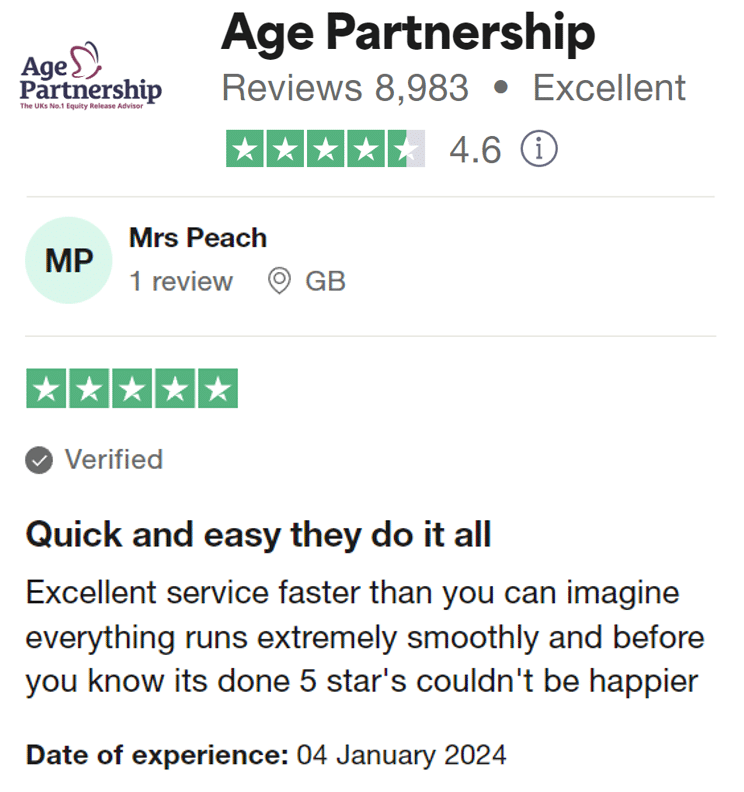
Reviews shown are for Age Partnership. Search powered by Age Partnership.
What happens to your mortgage?
What happens to your mortgage when you release equity will all depend on the method of releasing equity you use.
A lifetime mortgage normally requires existing secured debt to be cleared at completion. A second-charge mortgage leaves the first mortgage in place but adds a separate secured debt and repayment obligation.
Things to consider
Equity release includes lifetime mortgages and home reversion plans. A lifetime mortgage is a loan secured on your home; a home reversion plan sells part or all of the property. Equity release reduces what may be left in your estate and can affect means-tested benefits and future care funding. A lifetime mortgage is usually repaid when the last borrower dies or moves permanently into care, subject to the plan terms. Specialist financial and independent legal advice are needed. Any existing mortgage must normally be repaid from the proceeds or other funds. Age Partnership publishes an advice fee of £1,995 payable on completion; confirm the current fee in your personalised illustration. Lender and legal fees may also apply.