






Interest Only Lifetime Mortgage Calculator








MoneyNerd introduces enquiries to Age Partnership and may receive a referral fee. MoneyNerd does not provide equity release advice. Equity release reduces the value of your estate and can affect means-tested benefits. With a lifetime mortgage, unpaid interest compounds and increases the amount owed. Fees and early repayment charges may apply.
Ask a regulated adviser to explain suitability, costs and alternatives. For free, impartial guidance, visit MoneyHelper.

MoneyNerd introduces enquiries to Age Partnership and may receive a referral fee. MoneyNerd does not provide equity release advice. Equity release reduces the value of your estate and can affect means-tested benefits. With a lifetime mortgage, unpaid interest compounds and increases the amount owed. Fees and early repayment charges may apply.
Ask a regulated adviser to explain suitability, costs and alternatives. For free, impartial guidance, visit MoneyHelper.
Are you wondering about lifetime mortgages and how they work? We're here to help.
Our guide will help you understand:
- The idea of a lifetime mortgage
- How a lifetime mortgage is repaid
- The good and bad points of a lifetime mortgage
- Where to get a lifetime mortgage
- What happens when a lifetime mortgage ends
We know that thinking about money for your old age can be hard. But don’t worry. We’re here to help you learn about lifetime mortgages.
Let’s dive in.
How much is the rate?
Rates change and depend on the product and your circumstances. Obtain a current personalised illustration and compare the APRC, fees, repayment options and total projected cost; this article does not quote a live market-leading rate.
The rate you’re offered will depend on the company you’re using and possibly details about your property and your age,
Can you get an interest-only variation?
Yes, there is a variation of a lifetime mortgage called an interest-only lifetime mortgage. With this variation of a lifetime mortgage, you can mitigate the debt and stop it from growing altogether.
It might be a middle ground if you want to use a lifetime mortgage but don’t want to risk your loved ones receiving considerably less than they otherwise would do in their inheritance.
How is it calculated?
Lifetime mortgages are calculated by adding a compounding interest rate to the current total debt. This means that the interest which is added to the debt each month will be added to the total loan amount and any interest already accumulated.
In simple terms, a compounding interest rate causes the debt to grow much more quickly. But this is best understood with an example.
An example
Illustration only: assume a £65,000 lifetime mortgage against a £195,000 home at 6.4% interest compounded annually, with no repayments. This is not a current offer or an eligibility decision.
After 12 years, a permanent move into care by the final borrower would normally trigger repayment under the terms. The debt might be repaid from sale proceeds or other available funds.
The illustrative balance would be about £137,000 after 12 years, excluding fees. If the home happened to sell for £210,000, about £73,000 would remain before sale costs and other liabilities. Property growth is not guaranteed.
Consider the costs and risks of equity release
Equity release is a long-term financial decision. A lifetime mortgage is a loan secured against your home. If interest is added to the loan, the debt can grow substantially and reduce the inheritance you leave.
Consider the fees, effect on means-tested benefits, early repayment charges and future care needs. Alternatives may include downsizing, using other assets or a retirement interest-only mortgage where affordable.
Use the button below to start an enquiry with Age Partnership. An estimate does not confirm eligibility or suitability. Get specialist financial and independent legal advice before proceeding.
In partnership with Age Partnership, which advises on lifetime mortgages. MoneyNerd introduces enquiries and may receive a referral fee. Equity release can reduce your estate and affect means-tested benefits and future care funding. Fees may apply and interest added to a lifetime mortgage increases the amount owed. Specialist financial and independent legal advice are required before proceeding.
How does it work?
An interest-payment lifetime mortgage can involve voluntary payments or a required payment period, depending on the product. Required payments need an affordability assessment and must be maintained.
By paying off some of the interest each month, the debt will grow at a slower pace. And by paying off all of the interest each month, the debt will remain the same as the original loan amount, providing all interest repayments are met.
Borrowing extra money merely to fund interest payments increases initial debt and costs. It is not a reliable long-term affordability strategy; discuss sustainable payments and alternatives with an adviser.
» TAKE ACTION NOW: Find out how much equity you could release
How can a calculator help?
An interest-only lifetime mortgage calculator will help you to understand how much your lifetime mortgage loan will grow over time, and how making interest repayments each month will mitigate the growth rate of your debt.
An Age Partnership customer’s experience
Individual experiences vary. Equity release is a long-term decision, and specialist advice is needed to assess whether it is suitable for you. Compare the costs, risks and alternatives before proceeding.

Mrs Wareham
“I am more than pleased to have taken out Equity Release with Age Partnership.”
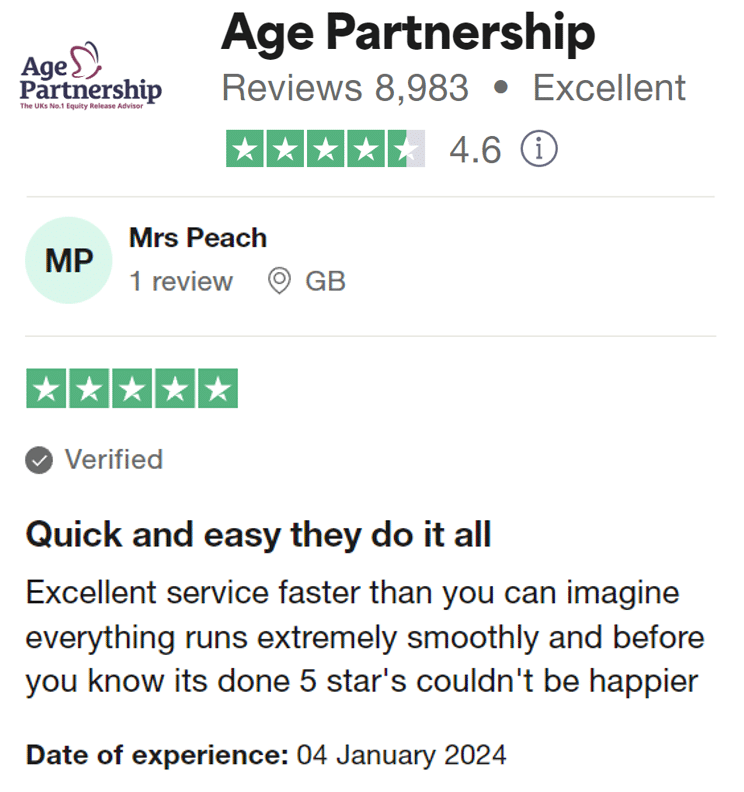
Reviews shown are for Age Partnership. Search powered by Age Partnership.
Is it accurate?
Interest-only lifetime mortgage calculators like ours above should only be used as a guide. Online calculators might not reflect the lifetime mortgage you’re offered, even if they’re found on the lender’s website.
Things to consider
Equity release includes lifetime mortgages and home reversion plans. A lifetime mortgage is a loan secured on your home; a home reversion plan sells part or all of the property. Equity release reduces what may be left in your estate and can affect means-tested benefits and future care funding. A lifetime mortgage is usually repaid when the last borrower dies or moves permanently into care, subject to the plan terms. Specialist financial and independent legal advice are needed. Any existing mortgage must normally be repaid from the proceeds or other funds. Age Partnership publishes an advice fee of £1,995 payable on completion; confirm the current fee in your personalised illustration. Lender and legal fees may also apply.