Parking Awareness Services: Charges and Appeals


Did you get a Parking Awareness Services ticket, and now you are not sure if you should pay or appeal it?
Read the actual notice, alleged breach and response deadline. General parking-ticket statistics do not determine whether this charge is valid.
In this article, we’ll give you clear and easy information about:
- What Parking Awareness Services is
- If you must pay Parking Awareness Services fines
- How to appeal a Parking Awareness Services ticket
- How much a Parking Awareness Services ticket can cost
- Tips on how to avoid getting a Parking Awareness Services ticket
We know that getting a private parking fine can make you feel upset. But don’t worry; we have lots of good advice and examples to help you know what to do next.
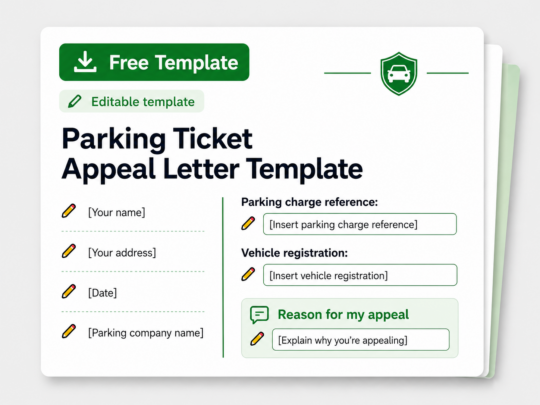
Not sure what to write in your parking appeal?
The form asks for contact details to deliver your free MoneyNerd template.
Add your notice details, reasons for disputing the charge and relevant evidence.
General information, not legal advice. Follow your notice’s instructions and deadlines; adapt the wording to your circumstances. No outcome is guaranteed.
Should I pay them?
If you accept liability, pay through the verified operator route and retain proof. If you dispute the charge, use the applicable appeal process in time. No generic rule guarantees the outcome.
A valid private parking debt can be owed before a court judgment. Check the parking terms, evidence, amount and whether the person pursued is legally liable.
A disputed contractual charge may be tested in court. Added costs depend on the contract, law and procedure; an ordinary collection letter does not authorise seizure.
Check the operator’s evidence and your responsibility as driver or keeper. Accredited membership concerns matters such as DVLA access and code compliance, not automatic validity of each charge.
Will they take you to court?
You have no way of knowing with absolute certainty that Parking Awareness Services will or won’t take legal action. Sometimes they might take people to court and at other times they might not.
A genuine letter before claim needs a considered response. It is not itself a court judgment and should not be dismissed as a scare tactic.
Instead of risking it by ignoring them, you could submit an appeal.
What to include in your parking appeal
The form asks for contact details to deliver your free MoneyNerd template.
Include the notice reference, your reasons, supporting evidence and the action you want the issuer to take.
The correct process depends on the notice and where it was issued.
General information, not legal advice. Follow your notice’s instructions and deadlines; adapt the wording to your circumstances. No outcome is guaranteed.
Appeal process
Parking Awareness Services’ current appeals policy accepts initial appeals after a Notice to Keeper is issued, online or by post, and says they are processed within 28 days. Follow the notice’s deadline and keep proof of submission.
If rejected, the policy provides 28 days to use the standard IAS appeal. It says no additional enforcement or fees will follow for 28 days after its or IAS’s decision. There is no blanket 56-day automatic-cancellation rule. A standard IAS decision binds the operator, not the motorist.
Here’s a quick table summarizing the standard appeal process.
| When | Action |
|---|---|
| On receiving a council PCN | Read the notice, keep it, gather evidence and note all payment and challenge deadlines. |
| Windscreen or handed-to-driver PCN | An informal challenge may be available before the Notice to Owner. Early challenge can preserve a discount under the authority’s policy; 14 days is not a universal final appeal deadline. |
| Postal PCN or Notice to Owner | Normally make formal representations within 28 days as stated on the notice. Do not assume there is an extra informal stage. |
| Representations rejected | The Notice of Rejection explains how to appeal to the appropriate independent tribunal, normally within 28 days. |
| Appeal unsuccessful | Pay by the deadline given in the decision or obtain advice on any available review. Further statutory charges can follow if you do neither. |
| Other ticket type | Private parking charges and FPNs use different procedures; follow the actual notice. |
Further guidance: Traffic Penalty Tribunal; Citizens Advice.
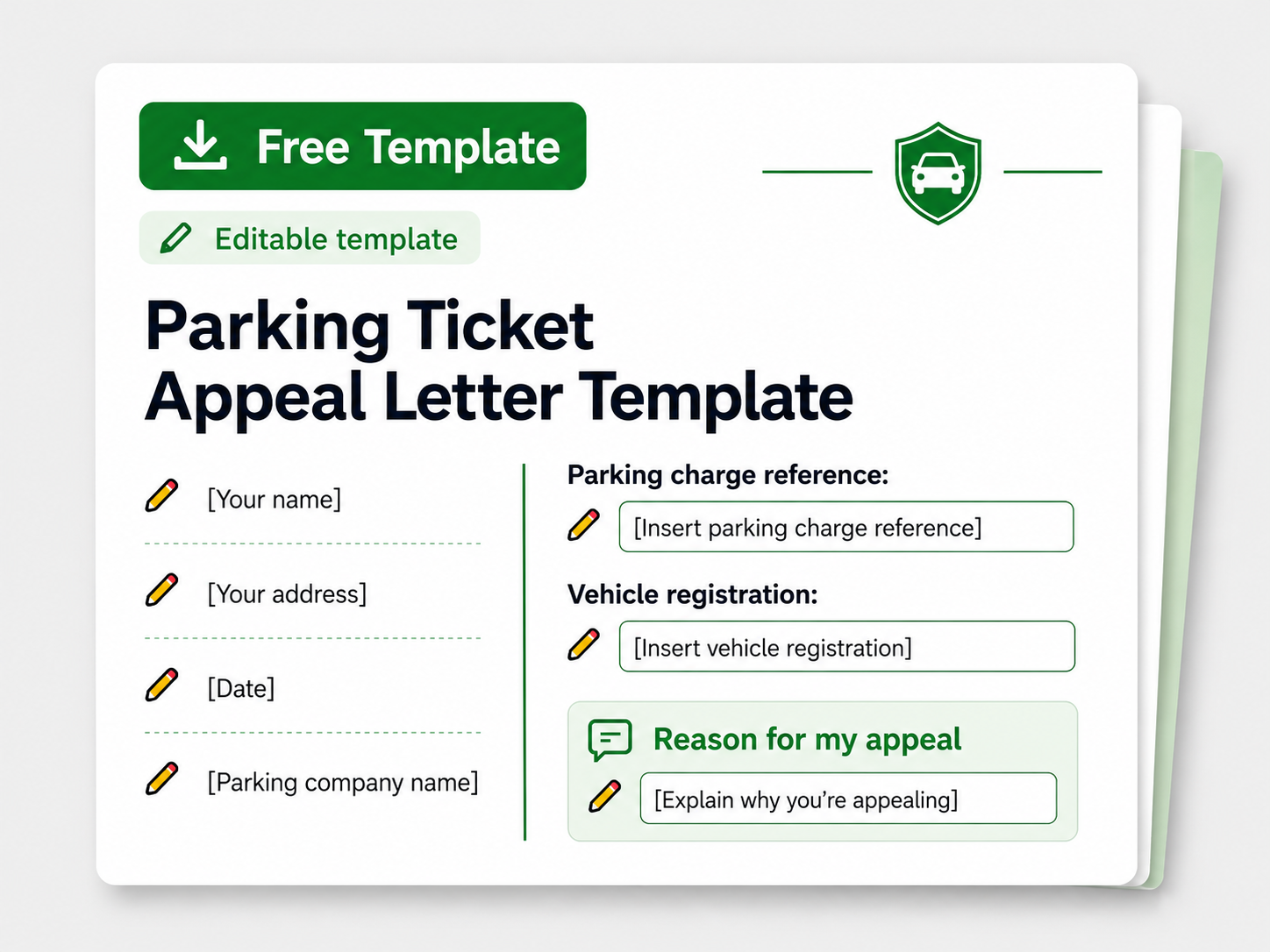
Free parking appeal letter template
The form asks for contact details to deliver your free MoneyNerd template.
Explain what happened, why you dispute the charge and include relevant evidence.
General information, not legal advice. Follow your notice’s instructions and deadlines; adapt the wording to your circumstances. No outcome is guaranteed.
Reviews and complaints
Online reviews describe individual experiences and do not establish the legal position in your own case.
Check the actual documents, images, signs and payment evidence. General statistics or another reviewer’s account are not proof that your charge is invalid.
The following historical comments are the reviewers’ allegations, not findings about the operator or advice to ignore a notice:
“Not compassionate not very nice people to deal with and I will not be paying you”
- Alan Robinson (Google review)
“Absolute nightmare to deal with. Viewed ‘evidence’ but the photo online is obscured and unable to make out the vehicle. This company will not listen only [threatens] to pay up or go to court.
See you in court. I will not pay if you cannot provide the correct evidence.”
- P C (Google review)
A reviewer’s stated intention not to pay does not establish a safe response for you. Use the actual appeal or court process.
Parking Awareness Services contact number
Use the current contact route shown on your verified notice or the operator’s appeals policy. The policy gives the postal address as Lytchett House, 13 Freeland Park, Wareham Road, Lytchett Matravers, Poole, Dorset, BH16 6FA. A general enquiry does not itself submit an appeal.
Prepare your parking appeal
The form asks for contact details to deliver your free MoneyNerd template.
Replace the examples with your own facts and check the recipient before sending.
General information, not legal advice. Follow your notice’s instructions and deadlines; adapt the wording to your circumstances. No outcome is guaranteed.
References