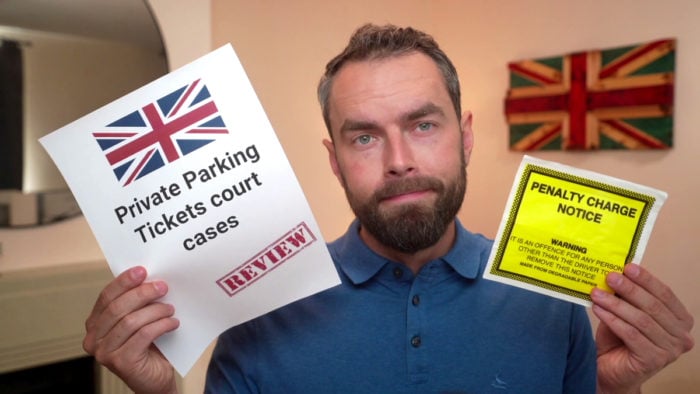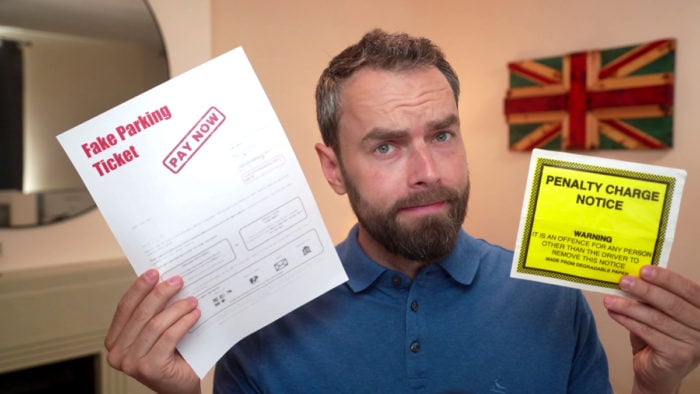












The similar names can be confusing. Check the issuer, wording and legal basis before deciding how to pay or challenge a parking notice.
Here is our quick guide to appealing parking tickets. In this article, we’ll take a look at:
- The different types of parking tickets that can be issued
- The key differences between a Penalty Charge Notice and a Parking Charge Notice
- Do you have to pay?
What parking tickets are there?
When dealing with parking tickets, the first hurdle you have to overcome is working out what type of ticket you have. There are a few different types:
- Penalty Charge Notice (PCN): a statutory civil notice issued by a council or another authorised body, such as TfL, for a parking, traffic or road-user-charging contravention.
- Excess Charge Notice (ECN): Like a PCN, an ECN is issued by a council or local authority for an infraction on public land.
- Parking Charge Notice: Not to be confused with a PCN, a parking charge notice is issued by a landowner or parking company for an infraction on private land.
- Fixed Penalty Notice (FPN): a fixed-penalty procedure for an alleged offence, often issued by police. A civil red-route PCN from TfL is different; check the notice rather than assuming every red-route ticket is a police FPN.
In our experience, people tend to get Parking Charge Notices and Penalty Charge Notices (PCNs) confused – they do sound similar! – but there are key differences.
Not sure what to write in your parking appeal?
You don’t need to start with a blank page.
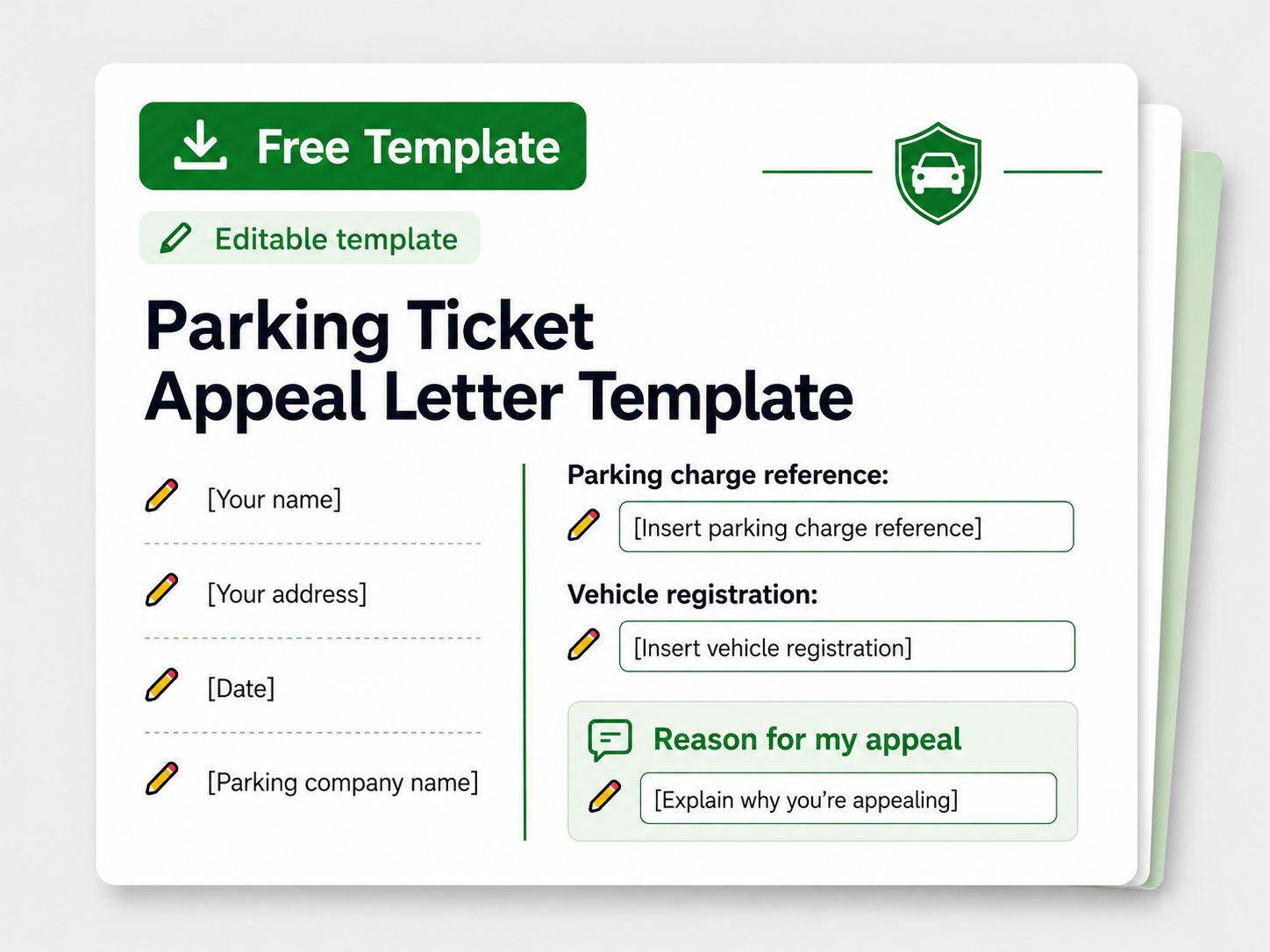
We’ve created a free parking ticket appeal letter template that gives you a clear structure to follow.
Free editable parking appeal letter template from MoneyNerd.
What is a Penalty Charge Notice?
Councils and other authorised bodies issue civil PCNs under the applicable legislation. The Traffic Management Act 2004 is important for England parking enforcement, but not every UK PCN uses that Act.
A civil PCN is not a criminal conviction and does not itself carry imprisonment. Police Fixed Penalty Notices are a different procedure and must not be treated as council PCNs.
There are a few different ways that a PCN can be issued:
- Fixed to your car
- Handed to you by a civil enforcement officer
- When your car is clamped or removed
- Post.
Keep in mind that you will only get a PCN via post if your incident was captured on CCTV or if you drove away from a civil enforcement officer as they were issuing the notice. Your PCN will also be posted to you if you prevented the civil enforcement officer from giving you the notice in any way.
Do I have to pay?
Payment normally closes the ordinary PCN challenge route; it is not a criminal admission of guilt. Removal cases can require payment to release a vehicle before exercising separate appeal rights. Check the notice and applicable procedure.
But if you are unsure, contact the issuing authority. They will be able to tell you their appeals process in detail and answer any questions you may have.
You can follow our guide on challenging all parking tickets, including PCNs, for some guidance.
If your informal, formal, and then tribunal appeals are rejected, you will have to pay. You could be taken to court if you don’t.
What’s Included in the Free Appeal Template
A clear structure
The template gives you a simple framework for putting your parking appeal together, so you don’t have to work out what to write from scratch.
What you’ll add
- Your parking charge details
- Why you’re appealing
- Any relevant evidence
- What you want the parking company to do
Easy to adapt
Just replace the sections in [square brackets] with the details of your own situation and edit the wording where needed.
You’ll get the template by email so you can save it, edit it and use it when you’re ready.
Free parking appeal letter template from MoneyNerd.
How do I pay?
PCNs commonly give 28 days for payment or representations, but the event starting that period depends on the scheme and notice. Follow the exact deadline rather than applying one rule to every PCN.
A 50% discount is commonly available for 14 days. Qualifying postal parking PCNs may allow 21 days, but not every postal traffic or charging PCN does. Follow the exact notice.
If you don’t pay your PCN within 28 days, you will receive a ‘notice to owner.’ However, if your PCN was sent to you via post, this is your notice, and you won’t get a second letter.
A notice to owner will tell you to:
- Pay the full PCN amount within 28 days, or
- Dispute the PCN by formally challenging the council within 28 days.
What is a Parking Charge Notice?
While they sound similar, a parking charge notice is entirely separate from a penalty charge notice.
Parking charge notices are only ever issued on private land, meaning they aren’t a criminal matter. In effect, you have broken the terms of contract between yourself and the landowner when you are issued a parking charge notice.
A Parking Charge Noitce will only ever be issued by a landowner or someone instructed by the landowner, when you have parked on private land.
Feel more confident before you send your appeal
Writing a parking appeal can be difficult when you’re not sure what to include or how to structure it.
Our free template gives you a clear starting point, helping you:
- Set out what happened clearly
- Explain why you’re disputing the charge
- Include the important details
- Avoid starting from a blank page
Simply adapt the template to your own circumstances before sending it.
Free parking appeal letter template from MoneyNerd.
Do I have to pay?
A private Parking Charge Notice is usually a demand based on an alleged breach of parking terms. A valid contractual debt can be owed before court; the notice is not merely an announcement that a court case might be started. It is a private parking charge rather than a statutory fine. Check the terms, evidence, amount and any appeal route before deciding what to do.
As such, you generally have three options if you receive a parking charge notice:
- Pay the fine
- Challenge the ticket
- Respond to a disputed charge and meet any letter-before-claim or court deadline; ignoring it can lead to avoidable costs or a default judgment.
You should check to see if the parking company that issued the ticket are a member of an accredited trade association (ATA). Only ATA members can get your information from the DVLA.
Do not assume a charge can be ignored because the issuer is not a trade-association member. DVLA access rules and the validity of the underlying claim are separate, and the issuer may hold information from another lawful source.
Raise any specific data-access concern with the operator and DVLA, and complain to the ICO where appropriate. Non-membership alone does not prove that data was obtained unlawfully.
Do this by writing to the Data Sharing Strategy and Compliance Team, DVLA, Swansea, SA99 1DY. You can then write to the Information Commissioner if you feel that your complaint hasn’t been dealt with adequately.
If you decide to challenge, you can follow our guide on challenging all types of parking tickets, including parking charge notices.
Ready to appeal your parking ticket?
Don’t start with a blank page.
Get our free parking ticket appeal letter template and use it as the starting point for your response.
Add the details of your parking charge, explain why you’re appealing and adapt the wording to your circumstances.
We’ll send the template straight to your email.
Free parking appeal letter template from MoneyNerd.