Speeding Fine Received after 14 Days – What to Do


Did you receive your speeding fine after 14 days? Are you feeling confused about what to do next?
Don’t worry; you’ve come to the right place. Every month, over 130,000 people visit our website for advice about fines and parking tickets.
In this easy-to-understand guide, we’ll explain:
- What a Fixed Penalty Notice is.
- If you need to pay this notice right away.
- How to say you don’t agree with the notice.
- Times when you might not need to pay.
- What could happen if you choose not to pay.
Getting a speeding fine can be frustrating; some of us have been there too. But remember, we’re here to help you understand what to do if you get your speeding fine after 14 days.
Paid legal information from JustAnswer
JustAnswer is a paid third-party question-and-answer service providing general information. Its standard service does not create a solicitor-client relationship. Membership can renew automatically with recurring charges until cancelled. Check the initial price, renewal price and cancellation terms before signing up. Buying this service does not guarantee a successful challenge. See JustAnswer’s membership and cancellation information.
You can use the official challenge process without buying a paid service. If you choose to use JustAnswer, visit JustAnswer to read its service and payment terms.
Commercial link to JustAnswer. MoneyNerd may receive a referral fee. No successful outcome is guaranteed.
Punishments when you’re caught speeding
If you’re caught speeding in the UK, you could be:
- Given a verbal warning
- Given a fine
- Give a fine and have points added to your licence.
- Offered to attend a speed awareness course (and pay for it!)
- Summoned to court
You’ll only be summoned to court for excessive speeding or if you already have at least eight penalty points on your licence under the UK road safety regulations. The most common punishment is a speeding fine, with more than two million UK motorists receiving one yearly.
How much are speeding fines in the UK?
The most you can be fined for speeding in the UK is £2,500 on a motorway or £1,000 on other roads. Your fine amount will be determined by how much you were over the speed limit and your weekly income.
Different “bands” and the speed limit breaches determine the exact amount you’re fined.
For example, someone just a couple miles above the speed limit will be in Band A and fined between 25% and 75% of their weekly income (plus three penalty points).
Whereas someone doing between 11mph and 20mph over the speed limit will be in Band B and fined between 75% and 125% of their weekly income (plus 4-6 penalty points or a short driving ban).
This is a guidance tool only and not an assessment. For accurate speeding fine figures, contact the issuing authority credit. Do not rely solely on this calculator’s results.
What is a Notice of Intended Prosecution?
A Notice of Intended Prosecution is sent to a registered vehicle owner when the vehicle they own has been identified as speeding or committing other motorist offences. These offences are usually caught on camera.
The Notice of Intended Prosecution is a legal notice for traffic violations and comes before the actual speeding fine. It is used as a way for the vehicle owner to respond and declare who was driving the vehicle and actually committed the alleged motor offences UK.
Once the offending individual has been confirmed, the police will send a Fixed Penalty Notice to that person. This is to notify them how much they have been fined and if penalty points will be added to their license. They can accept this or allow the matter to go to court, where the fine can become bigger.
Unlock says a Fixed Penalty Notice is not a conviction. It won’t affect your banking or housing, but the police will record it.1
It is important to remember that there is likely to be photographic evidence from the speed camera, so if you choose to go to court, you really need robust proof that you were not breaking the speed limit.
Check the right challenge process
A Fixed Penalty Notice does not normally use the council parking tribunal process. The notice explains how to dispute the allegation, which may require a court hearing. If convicted, the penalty and costs can be higher than the fixed penalty. Check the process and deadlines before deciding what to do.
General information. The procedure depends on the notice and jurisdiction. Check the issuer’s instructions.
What is the 14-day rule?
What is the speeding ticket 14-day rule? A speeding ticket (or NIP) must be sent to the vehicle with the purpose of being received by the registered owner within 14 days after the offence. If the ticket was issued or sent outside of the 14-day window, there is a possibility that the ticket could be cancelled. But this isn’t true for all cases.
For example, if the registered address is wrong or associated with a hire company, it may take longer than 14 days for the ticket to reach you. However, as long as the ticket was sent to the registered address in the appropriate time frame, it is still valid, regardless of how long it took to get to you.
What happens if I don’t receive the notice after 14 days?
If you don’t receive a Notice of Intended Prosecution (NIP) after 14 days, you can no longer be prosecuted for the alleged offence. You won’t have to pay the fine and you won’t have to accept penalty points on your license. This is as long as the NIP was sent within the 14 days.
However, it’s important to remember that a NIP doesn’t have to be sent to the registered vehicle keeper if a police officer gave you a verbal warning and collected the required details. In these instances, you should expect a Fixed Penalty Notice (FPN) instead of a NIP.
Does it include weekends?
The NIP 14-day rule is based on calendar days and therefore does include weekends and public holidays.
As per the Road Traffic Offenders Act (1998) Section One, the NIP must be sent, so it’s expected to arrive by the 14th day after the alleged speeding offence. Posting the NIP within 14 days but it not actually arriving until the 15th day or thereafter will break the rule, and you won’t have to accept a fine.
Legal information through JustAnswer
JustAnswer is a paid third-party question-and-answer service providing general information. Its standard service does not create a solicitor-client relationship. Membership can renew automatically with recurring charges until cancelled. Check the initial price, renewal price and cancellation terms before signing up. Buying this service does not guarantee a successful challenge. See JustAnswer’s membership and cancellation information.
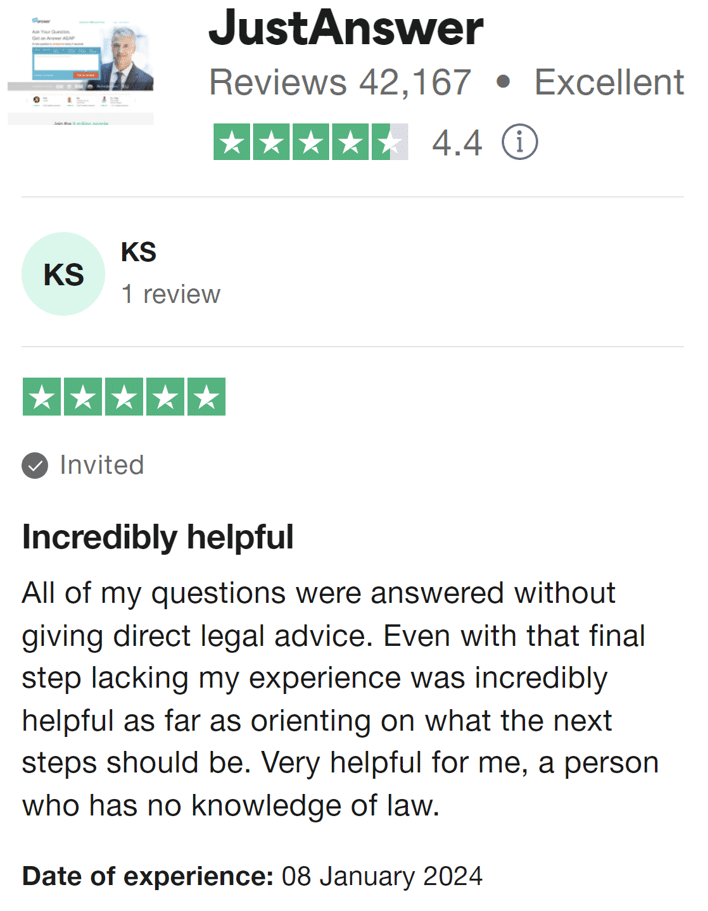
Historical JustAnswer review image. The displayed rating and review total are not live. Reviews do not predict your case outcome. Membership fees and renewal terms apply.
How long after a speeding offence can you be charged?
As such, you can only bear the consequences of speeding if you’re given an immediate verbal notice or the vehicle owner is issued a NIP within 14 days. The police know about this prosecution window, so endeavour to send the NIP to the registered vehicle keeper swiftly to keep within the legal timeframe for traffic offences.
Can I appeal my speeding fine?
You have the right to appeal a speeding ticket. But whether it’s worth it or not is another matter. A court may decide the police have enough evidence against you. The result? A relatively small speeding fine could be a lot more expensive.
Challenging traffic violations could be a gamble which is why many experts estimate that only a tiny percentage (1%) of speeding fines are challenged. Plus, only about half of the appeals succeed! It is also important to remember that there is likely to be a stack of photographic speeding camera evidence against you.
To ensure you have the best chance of successfully appealing your speeding ticket, here are some valid reasons you can use.
| Issue to check | Possible evidence | Important limit |
|---|---|---|
| The alleged offence did not occur | Contemporaneous photographs, video or reliable records. | The relevant legal elements and evidence must be assessed. |
| Valid insurance or entitlement | Policy documents or DVLA records covering the exact time and use. | Holding a document now does not prove cover or entitlement at the time. |
| A recognised statutory exemption | Evidence establishing the exact exemption, such as an applicable medical exemption. | An emergency or misunderstanding does not automatically amount to a defence. |
| Identity or vehicle details | Evidence of a mismatch, mistaken identity or cloned vehicle. | Follow the notice’s response requirements; do not invent a driver or account. |
| Signage or equipment | Photographs and reliable evidence relevant to the alleged offence. | A malfunctioning speedometer is not a general defence to speeding. Seek legal advice before contesting. |
FPNs do not use the same appeal procedure as council PCNs. Follow the notice; contesting the allegation may require a court hearing. Paper tax discs have not been required since 1 October 2014.
Possible impacts on insurance
If you are convicted of speeding and have points on your license, you can almost certainly expect to see your insurance premium rise. Not only that, but if you are a professional driver – taxi driver, HGV driver, courier etc -you may see other restrictions placed upon you by your employer or regulatory body.
Points last for three years on your license, and if you ‘tot up’ more than 12, you will find yourself with a ban. If you have held your license for two years or less, you can only get a maximum of six points before having to resit your theory and practical test.
» TAKE ACTION NOW: Get legal support from JustAnswer
Quick recap
The police have up to six months to issue you a speeding fine. But they can only fine you or add penalty points to your licence if they had previously sent a Notice of Intended Prosecution (NIP) to the registered vehicle owner. The NIP must have been received within 14 days from the date of the alleged speeding offence.
So, what is the speeding ticket 14-day rule? If the NIP was received after 14 days, the offender cannot:
- Be fined for speeding.
- Be subject to penalty points
- Be summoned to court and prosecuted
Before using a paid legal information service
JustAnswer is a paid third-party question-and-answer service providing general information. Its standard service does not create a solicitor-client relationship. Membership can renew automatically with recurring charges until cancelled. Check the initial price, renewal price and cancellation terms before signing up. Buying this service does not guarantee a successful challenge. See JustAnswer’s membership and cancellation information.
A paid service is optional. Gather your notice and evidence, check the deadline and decide whether you need professional advice about your circumstances.
Commercial link to JustAnswer. MoneyNerd may receive a referral fee. Check all charges and cancellation terms before signing up.
References