Ardent Credit Services Debt Recovery – Should You Pay?


MoneyNerd introduces enquiries to The Debt Advice Service and may receive a referral fee. For free, independent guidance and help finding a debt adviser, visit MoneyHelper.
This information and enquiry service is not a full financial assessment or a guarantee of suitability or debt write-off. Debt solutions are not suitable for everyone. Fees may apply, and your credit record and assets may be affected. Get advice on your circumstances before choosing a solution.
MoneyNerd introduces enquiries to The Debt Advice Service and may receive a referral fee. For free, independent guidance and help finding a debt adviser, visit MoneyHelper.
This information and enquiry service is not a full financial assessment or a guarantee of suitability or debt write-off. Debt solutions are not suitable for everyone. Fees may apply, and your credit record and assets may be affected. Get advice on your circumstances before choosing a solution.
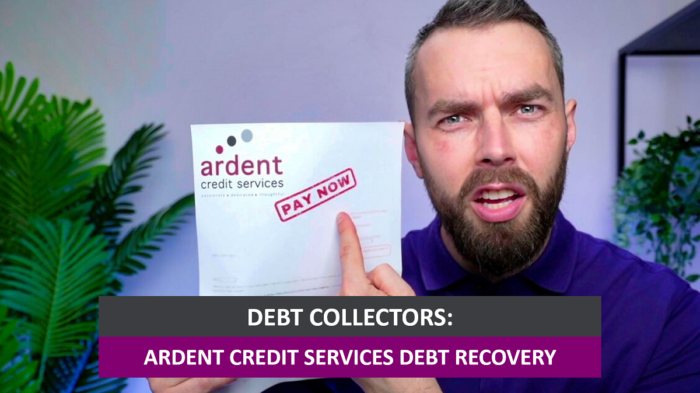
Did you get a surprise letter from Ardent Credit Services about a debt? Are you worried and confused about where this debt came from?
This guide explains how to check the account, identify the creditor and respond to a demand or legal notice.
In this article, we’ll explain:
- Who Ardent Credit Services are, and why you’re getting letters from them.
- How to check if the debt they say you owe is truly yours.
- What actions Ardent Credit Services can take if you don’t pay.
- How to request reasonable contact and support from Ardent.
- Options to manage or even get rid of the debt.
If collection contact is distressing, free debt advice can help you assess the account and available options.
Keep correspondence and payment records, and note any deadline that needs an immediate response.
Why Are You Getting Letters from Ardent Credit Services?
Ardent may be contacting you about an alleged balance for one of its clients. The letter alone does not prove that the account or amount is correct.
This may be a missed payment on a credit card or loan or perhaps an unpaid bill on an online platform such as eBay.
Check the creditor named on your own notice rather than assuming a current relationship with a particular mobile provider or other brand.
The lender to whom you owe the money has employed Ardent Credit Services Ltd to chase the debt on their behalf.
Being appointed to collect does not mean the debt has been sold. Ask who owns the account and what authority the collector has.
Debt advice: Continue to the debt enquiry form
Advertisement. MoneyNerd is a commercial introducer, not a debt adviser. The Debt Advice Service, a trading style of Pacific Financial Solutions Limited, offers free debt advice with no obligation. If you request an introduction, your details are shared with them so they can contact you.
Some debt solutions have fees and may negatively affect your credit rating. MoneyNerd may receive a fee if you proceed with a debt solution through The Debt Advice Service. MoneyHelper offers free, impartial money guidance and help finding free debt advice.
Typical Debt Collection Process
We know it can feel scary to receive letters from Ardent Credit Services. But don’t worry; this is quite normal, as it’s part of the first stage of the debt collection process.
We’ve put together this table to help you better understand the debt collector timeline. It’s important to be aware of the key stages and actions involved to learn how to manage your situation.
For more information, be sure to read our detailed guide.
| Possible stage | What can happen | What to do |
|---|---|---|
| Missed payments | The creditor or collector may contact you, apply contractual charges or issue required notices. There is no single timetable for every debt. | Check the debt and contact the creditor early. Prioritise essential bills and seek free debt advice. |
| Collection activity | Letters, calls or a proposed visit may follow. A collection agent has no power to seize your belongings. | Ask for identification and evidence of the debt. You do not have to let a debt collector into your home. |
| Letter of claim | A creditor may send a formal pre-action letter before making a claim. | Follow the response deadline and get advice; do not ignore it. |
| Court claim | In England and Wales, a creditor may apply for a county court judgment. A judgment and later enforcement are separate stages. | Respond to the claim by the court deadline, whether admitting it, disputing it or asking for time to pay. Attend if the court requires a hearing. |
| Enforcement after judgment | Where legally permitted, a creditor may seek enforcement such as an attachment of earnings, charging order or warrant of control. | Get advice promptly about the specific notice, available objections and affordable payment options. |
How to Check if the Debt is Legitimate (and Yours!)
Before you even consider a repayment plan, there are three simple steps you need to take to be sure the debt is legitimate:
1. Check whether the debt is yours
First things first, check whether the debt is yours and not a scam.
If you don’t remember the debt, use a reputable credit report agency such as Credit Karma to see if the debt is listed on your credit report.
Not every account is reported to every credit reference agency. Absence from your credit report does not by itself show an error or remove liability.
2. Request proof of the debt
Explain a dispute and request an itemised balance and evidence of liability. A valid or potentially valid dispute within FCA consumer-credit rules must be investigated with recovery paused, but a generic evidence request does not cancel a debt, override a court order or extend a court deadline.
The relevant evidence depends on the debt. An original signed credit agreement is not required for every account, and a statutory copy-agreement request has specific conditions and consequences.
This is a more common situation than you would think!
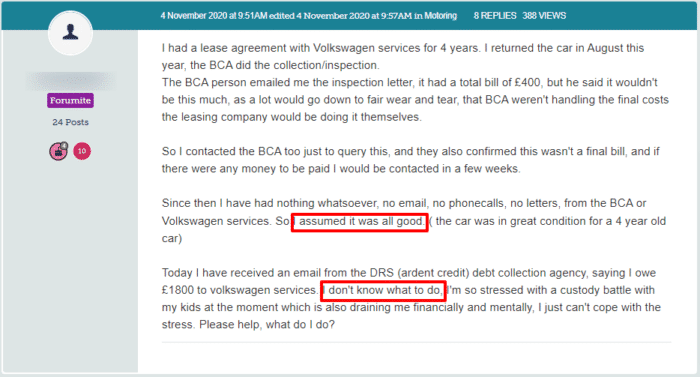
Explain any identity or account error and request investigation. Continue to respond to court papers even if you are waiting for documents.
3. Check if the debt is Statute Barred
Many ordinary unsecured debts may become statute-barred after six years in England and Wales, or prescribed after five years in Scotland. The start date, debt type, payments, legally relevant acknowledgments and any court claim all matter. A creditor’s letter alone does not restart the period. Ask a debt adviser to check the facts before paying or admitting liability, and respond to any court papers on time.
Whether limitation or prescription applies depends on the account history and law.
In England and Wales, limitation generally restricts a court remedy rather than cancelling a simple-contract debt. Scottish prescription can extinguish the obligation.
Keep in mind that not all debts become statute-barred!
Tax debts and judgments have different rules. A CCJ does not automatically expire after six years, although some later enforcement steps require court permission.
How the introduction works
The Debt Advice Service can discuss your circumstances and explain available options, including their benefits, costs and risks.
Options depend on your circumstances. You decide whether to proceed.
Advertisement. MoneyNerd introduces enquiries; we do not give debt advice or recommend solutions. The Debt Advice Service, a trading style of Pacific Financial Solutions Limited, offers free debt advice with no obligation. Complete the enquiry form to share your details and request a call.
Some debt solutions have fees and may negatively affect your credit rating. MoneyNerd may receive a fee if you go ahead with a debt solution through The Debt Advice Service. For free, impartial guidance and help finding free debt advice, visit MoneyHelper.
What Happens if You Ignore the Letters?
It’s a bad idea – the consequences of ignoring debt collectors that make things worse!
We don’t recommend ignoring letters from Ardent Credit Services Debt Recovery, as it will not make them go away. Since they have been employed by a third party, it’s their responsibility to make reasonable attempts to contact you and recover the debt.
For ordinary accounts, a collector may request a voluntary home visit, subject to applicable rules. HMRC states that private agencies collecting its tax debts do not visit homes or workplaces.
And if this still goes unanswered, they may take your case to court to recover the funds owed. Even if you’re pretty certain the amount owed is wrong, it’s always best to make contact to get the matter sorted.
What Legal Action Can They Take Against You?
Like most debt recovery companies, Ardent Credit Services will do all they can to recover the debt by sending you letters or calling you.
This is the easiest and cheapest way for them to recover the debt.
A creditor may bring a claim even for a relatively small balance. The following are separate court and enforcement stages, not powers an ordinary collection letter gives Ardent: See related guidance.
1. Bring a County Court claim
The creditor or its legal representative may issue a claim in England and Wales. Only the court can enter a judgment, so respond to the claim within the stated deadline. See related guidance.
A CCJ may order payment immediately or by instalments. Taking control of goods requires a further lawful warrant or writ; it is not an automatic consequence of the judgment alone.
Read more about the legal rights of Enforcement Agents here.
2. Apply for an Attachment of Earnings Order
For an unpaid qualifying judgment, the creditor may apply for an attachment of earnings order. The court decides the application and the protected income arrangements; an ordinary collector cannot deduct wages itself. See related guidance.
This will not apply if you are unemployed, self–employed, in the army, navy or air force, or a merchant seaman.
3. Apply for a Charging Order
After obtaining a judgment, the creditor may apply for a charging order over an eligible asset such as a home. It does not automatically require a sale; an order for sale is a separate application with additional requirements. See related guidance.
About The Debt Advice Service
Use the enquiry form to request a call about your circumstances and available options. You decide whether to proceed.

Advertisement. MoneyNerd introduces enquiries; we do not give debt advice or recommend solutions. The Debt Advice Service, a trading style of Pacific Financial Solutions Limited, offers free debt advice with no obligation. Complete the enquiry form to share your details and request a call.
Some debt solutions have fees and may negatively affect your credit rating. MoneyNerd may receive a fee if you go ahead with a debt solution through The Debt Advice Service. For free, impartial guidance and help finding free debt advice, visit MoneyHelper.
Should You Pay if You Can’t Afford it?
If you’ve done all the checks outlined above and the debt is yours, it is your responsibility to pay it. However, that does not mean you should put yourself into further debt to get it paid off.
It’s also important to figure out the maximum amount you could afford to repay each month before agreeing to a final figure.
They may offer a monthly repayment that seems affordable, but may end up putting you in more financial difficulty down the road.
If you are facing financial hardship, you may benefit from a debt solution. We have listed some options at the bottom of this page.
What are Your Options to Get Rid of Debt Owed to Them?
There are a couple of different options available to you. What’s best will depend on your circumstances, so we recommend speaking to a debt charity.
They will be able to walk you through all of the debt solutions available in the UK and help you work out what will be best for you.
Debt Management Plan (DMP)
A DMP is an informal debt solution that lets you pay off your debts via a single monthly payment.
A DMP generally aims to repay included unsecured debts in full. Creditors are not automatically required to freeze interest or stop legal action.
Individual Voluntary Arrangement (IVA)
An IVA is a formal insolvency arrangement managed by an insolvency practitioner. Your proposal sets out payments, any assets involved and fees. Once approved, it binds the creditors and debts covered by it and restricts recovery action; it is not a blanket ban on necessary correspondence.
Many IVAs involve payments for five or six years, but the agreed term varies. Qualifying unpaid debt is normally released only on successful completion. An IVA affects your credit record, may involve assets or home equity, and can fail if its terms are not met.
IVA suitability depends on your debts, affordable contributions or available assets, fees and creditor approval. There is no universal rule that you must owe several thousand pounds to more than one creditor. Get independent debt advice and compare other options before agreeing to an IVA.
Trust Deed
IVAs are not available in Scotland. A Scottish money adviser can compare a protected trust deed, the Debt Arrangement Scheme, sequestration and informal arrangements; a trust deed is not compulsory.
A protected trust deed is a Scottish insolvency arrangement, usually lasting at least four years of contributions. It can discharge qualifying unpaid debt on successful completion, but fees apply and your home or other assets may be at risk. Covered creditors cannot pursue payment outside it, but can still send required documents.
Debt Relief Order (DRO)
In England and Wales, a DRO may suit an eligible non-homeowner with low surplus income, limited assets and qualifying debts within the £50,000 limit. Detailed income, asset, vehicle and residence rules apply. An approved debt adviser checks eligibility and submits the application to the Insolvency Service.
During a DRO, included qualifying debts are protected from most recovery action under the moratorium rules. This is not a ban on every necessary communication, and excluded debts and ongoing bills still need attention.
A DRO normally lasts 12 months. If it remains in force, the qualifying debts listed in it are normally discharged at the end. You must report relevant changes and continue paying ongoing bills and excluded debts, such as court fines and student loans.
Bankruptcy
If you have debts but no realistic possibility of ever paying them off, you may need to declare bankruptcy.
Bankruptcy has an unfair stigma attached to it as it may be your only way of getting a financial fresh start. That said, it is a serious financial situation that should not be taken lightly.
Sequestration
Sequestration is the Scottish version of bankruptcy.
An approved Scottish money adviser can assess eligibility for the Minimal Asset Process (MAP), a form of sequestration, and compare other suitable options. Eligibility and consequences must be checked; it is not automatically the best choice for everyone with a low income. See related guidance.
How Do You Stop Ardent Credit Services Ltd From Contacting You?
Ask for a reasonable contact method and explain any vulnerability. The firm should consider your circumstances, but a preference or debt solution does not automatically prevent every necessary legal notice or communication.
A firm may send necessary communications about a valid account, but contact must be reasonable and take account of individual circumstances.
For regulated consumer-credit recovery, the firm should consider appropriate forbearance rather than pressure you into unaffordable payments.
An ordinary collector has no right to force entry or take goods. HMRC’s own enforcement officers have separate powers; do not confuse them with a private agency collecting for HMRC.
An ordinary debt collector has no power to force entry or take goods. It may request a voluntary visit or payment, but you can refuse entry and ask it to leave. Bailiff enforcement requires separate lawful authority.
Explain your preferred method and any vulnerability in writing, or authorise a debt adviser to help communicate. See related guidance.
Reasonable requests should be considered, but they do not prevent every legally required notice or court document.
How to Make a Complaint
If you think that Ardent Credit Services has been unreasonable or behaved inappropriately, you can make a complaint.
You can also make a complaint if you feel that they have broken any of the Financial Conduct Authority’s (FCA) guidelines.
Make your first complaint to Ardent so that they have the chance to sort out the issue themselves. If you feel that they have not taken your complaint seriously enough or have not addressed your issue properly, you can escalate matters.
Complain to the business first. If the activity falls within the Financial Ombudsman Service’s remit, you can normally escalate after a final response or eight weeks without one, usually within six months of the final response. The Ombudsman can require redress, such as compensation or correcting records; it does not fine firms or remove their authorisation.
Redress depends on the complaint and evidence; compensation is not automatic.
Ardent Credit Services Contact Details
| Website: | https://www.ardentcredit.co.uk/ |
| Registered Office: | 1st Floor, Moorgate Point, Moorgate Road, Knowsley Industrial Park, Liverpool L33 7XW |
| Telephone: | 0151 545 1500 9am – 5:30pm Monday to Friday |
References