





Car insurance after a cancelled or voided policy








The information in this article is for editorial purposes only and not intended as financial advice.

The information in this article is for editorial purposes only and not intended as financial advice.
You may still be able to obtain car insurance after a policy is cancelled or voided, but the reason matters. Ask the previous insurer for written confirmation of what happened, the reason and the exact date cover ended.
Cancellation and avoidance are different
Cancellation normally ends cover from a specified date. Avoidance treats the policy as though it had not existed, subject to the applicable rules. An insurer cannot fairly avoid a consumer policy merely because any detail was wrong: the questions asked, care taken and effect on its decision matter.
The Financial Ombudsman’s misrepresentation guidance explains the approach. Possible outcomes depend on the facts and can include amended terms, a proportionate claim payment or avoidance. An innocent mistake is not automatically fraud.
Missed payments or changes in circumstances
Contact the insurer and any premium-finance provider as soon as a payment fails. Ask about the amount owed, any deadline and whether cover is still active. Do not assume that cancelling a Direct Debit cancels the insurance contract or clears the amount owed.
If your address, vehicle, use or driving entitlement changes, check what the policy requires you to report. The insurer may adjust the cover or price, or may be unable to continue covering the risk. Ask it to explain the decision and any cancellation charge.
Can you drive after cancellation?
Do not drive unless you have valid insurance covering you, the vehicle and its use. Uninsured driving can result in penalties and seizure of the vehicle. These are road-traffic rules, not rules set by a local council. See GOV.UK’s guidance.
How can points affect car insurance?
| Factor | What it means for your quote |
|---|---|
| Penalty points and convictions | There is no fixed percentage increase that applies to every driver. Insurers assess the offence, its date and your wider circumstances. |
| Cover and excess | Compare the cover, excesses, exclusions and payment terms as well as the price. |
| Insurer criteria | Quotes and acceptance vary. A comparison does not guarantee a saving or an offer of insurance. |
Use the button below to compare quotes through Quotezone. Answer the insurer’s questions accurately. MoneyNerd may receive a referral fee.
In partnership with Quotezone.
If you keep the car off the road, check whether you must make a SORN declaration. A parked, unused car is not automatically exempt from insurance requirements.
What must you tell a new insurer?
Read the exact question about previous cancellation, avoidance or refusal and answer accurately. If it asks whether this has ever happened, do not assume you can omit it after five or six years. If you cancelled the policy yourself, distinguish that from an insurer cancelling it. Ask for clarification if the wording is unclear.
Find better convicted driver insurance deals for you
Quotezone helps thousands of drivers get insurance that suits their needs every year.
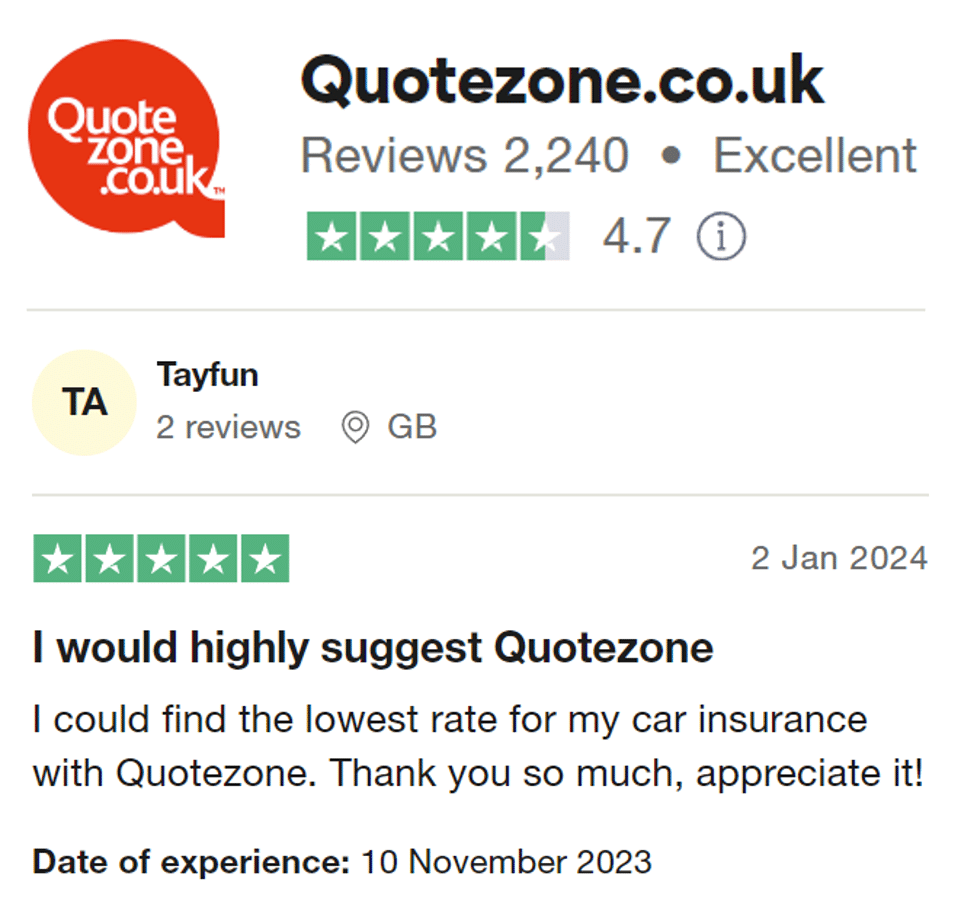
Reviews shown are for Quotezone. Search powered by Quotezone.
There is no single six-year or permanent database rule that determines all insurance disclosure obligations. Record-retention periods and the questions insurers ask are separate matters. Keep the previous insurer’s written explanation so that a new provider can assess the facts.
How to compare replacement cover
Compare the premium, compulsory and voluntary excess, cover limits, exclusions and any instalment interest. A specialist broker may help, but no insurer or comparison service is the cheapest for everyone. Only add a named driver who will genuinely drive the car, and identify the main driver accurately. Choose an excess you could afford to pay.
A specialist broker may be able to help explain the cancellation to insurers. Compare suitable cover rather than assuming that a telematics, pay-per-mile or third-party-only policy must cost less. Make sure any new policy has actually started before driving.
If you think the decision was unfair
Complain to the insurer first. If you remain unhappy with its final response, or it has not responded within eight weeks, you can usually refer an eligible complaint to the Financial Ombudsman Service. Keep the application, policy wording, payment records and relevant correspondence.