











A speeding case can be dealt with by a course offer, fixed penalty or court proceedings. This guide explains the court route and the need to follow the documents you receive.
In this article, we’ll cover:
- The meaning of a Fixed Penalty Notice.
- If it’s crucial to pay it straight away.
- How to challenge the notice.
- Situations where you might not have to pay.
- Possible outcomes if you decide not to pay.
An ordinary speeding fixed penalty is generally £100 and three points. Coronavirus fixed-penalty figures do not describe speeding penalties.
Don’t worry; we’re here to help you figure things out.
Paid legal information from JustAnswer
JustAnswer is a paid third-party question-and-answer service providing general information. Its standard service does not create a solicitor-client relationship. Membership can renew automatically with recurring charges until cancelled. Check the initial price, renewal price and cancellation terms before signing up. Buying this service does not guarantee a successful challenge. See JustAnswer’s membership and cancellation information.
You can use the official challenge process without buying a paid service. If you choose to use JustAnswer, visit JustAnswer to read its service and payment terms.
Commercial link to JustAnswer. MoneyNerd may receive a referral fee. No successful outcome is guaranteed.
How much does the fine for speeding cost?
The standard speeding fixed penalty is generally £100 and three points. A court fine in England and Wales is a separate process based on the guideline, relevant weekly income and circumstances.
Some people are offered a speed awareness course instead of points.
The National Speed Awareness Course is a short course that teaches attendees to: identify various speed limits and to stay within the limits, recognise why it is not safe to speed and UK road safety laws; and recognise the potential consequences if they speed.
Bands A, B and C belong to the England and Wales adult court speeding guideline. They are not three types of fixed-penalty ticket.
| Speed limit (mph) | Band A Recorded Speed | Band B Recorded Speed | Band C Recorded Speed |
| 20 | 21-30 | 31-40 | 41+ |
| 30 | 31-40 | 41-50 | 51+ |
| 40 | 41-55 | 56-65 | 66+ |
| 50 | 51-65 | 66-75 | 76+ |
| 60 | 61-80 | 81-90 | 91+ |
| 70 | 71-90 | 91-100 | 101+ |
| FINE | 25-75% of relevant weekly income | 75 – 125% of relevant weekly income | 125 – 175% of relevant weekly income |
| POINTS (alternative to the guideline disqualification below) | 3 | 4-6 | 6 |
| DRIVING BANS | – | 7-28 days | 7-56 days |
If you were driving on a motorway when pulled over for speeding, the maximum fine increases to £2,500. Otherwise, the maximum fine remains at £1,000.
Your fine may be reduced based on a number of criteria, including whether or not you have a criminal record, how reputable you are, and whether or not the reason you were speeding was a genuine emergency.
If you are in doubt, you can use my free speeding fine calculator to get an estimate of how much your fine will be.
This is a guidance tool only and not an assessment. For accurate speeding fine figures, contact the issuing authority credit. Do not rely solely on this calculator’s results.
What happens if you are caught speeding?
A NIP may be served on the registered keeper with a section 172 request asking who was driving. A roadside warning can instead satisfy the notice requirement.
Whether or not you agree with the NIP, you have 28 days to complete the Section 172 notification declaring who was driving the car at the time of the offence.
If a police officer pulls you over, they can issue you a verbal warning of prosecution.
What happens next?
After identifying the driver, police may offer an eligible course or fixed penalty, take no further action or prosecute. A fixed-penalty offer is not automatic.
Complying with an endorsable fixed penalty adds points; it does not deduct them. A course is available only if offered, and contesting the allegation requires the appropriate procedure.
The prosecution must prove the allegation to the criminal standard. A court considers the evidence and applicable legal requirements.
It is not a valid defence to say that you did not intend to speed, were unaware that you were speeding, or just went over the limit for a very short period.
Fixed Penalty Notice Appeal Reasons
I’ve put together this table detailing FPN appeal reasons, categorized based on the specific traffic violation.
The table identifies matters to check against the evidence and law. It does not provide excuses or guarantee a successful defence.
| Issue to check | Possible evidence | Important limit |
|---|---|---|
| The alleged offence did not occur | Contemporaneous photographs, video or reliable records. | The relevant legal elements and evidence must be assessed. |
| Valid insurance or entitlement | Policy documents or DVLA records covering the exact time and use. | Holding a document now does not prove cover or entitlement at the time. |
| A recognised statutory exemption | Evidence establishing the exact exemption, such as an applicable medical exemption. | An emergency or misunderstanding does not automatically amount to a defence. |
| Identity or vehicle details | Evidence of a mismatch, mistaken identity or cloned vehicle. | Follow the notice’s response requirements; do not invent a driver or account. |
| Signage or equipment | Photographs and reliable evidence relevant to the alleged offence. | A malfunctioning speedometer is not a general defence to speeding. Seek legal advice before contesting. |
FPNs do not use the same appeal procedure as council PCNs. Follow the notice; contesting the allegation may require a court hearing. Paper tax discs have not been required since 1 October 2014.
Check the right challenge process
A Fixed Penalty Notice does not normally use the council parking tribunal process. The notice explains how to dispute the allegation, which may require a court hearing. If convicted, the penalty and costs can be higher than the fixed penalty. Check the process and deadlines before deciding what to do.
General information. The procedure depends on the notice and jurisdiction. Check the issuer’s instructions.
What can you expect if you are prosecuted?
Existing points, the alleged speed and other circumstances can make a fixed penalty inappropriate. For example, an offer that would trigger totting-up disqualification may require court consideration; there is no universal eight-point threshold.
This decision may be made for them based on the circumstances described above.
For ordinary speeding in England and Wales, proceedings generally must begin within six months of the offence. This is not a rule that the driver must receive a summons within six months.
Motor insurance premiums are more expensive if you have received endorsements on a driving license or have a criminal record, and fewer companies will cover you.
This is because insurance premiums are calculated by considering the risk factors associated with a given customer.
If a driver has endorsements, the insurer will predict that they are more likely to make an expensive claim.
Twelve or more points within three years normally lead to a totting-up disqualification, subject to the relevant exceptions. New drivers normally have their licence revoked at six or more points within two years of passing their first test; that is a separate process.
Some professions may also have limits on how many points you can have on your license, such as taxi drivers, delivery drivers and couriers and HGV and bus drivers.
Legal information through JustAnswer
JustAnswer is a paid third-party question-and-answer service providing general information. Its standard service does not create a solicitor-client relationship. Membership can renew automatically with recurring charges until cancelled. Check the initial price, renewal price and cancellation terms before signing up. Buying this service does not guarantee a successful challenge. See JustAnswer’s membership and cancellation information.
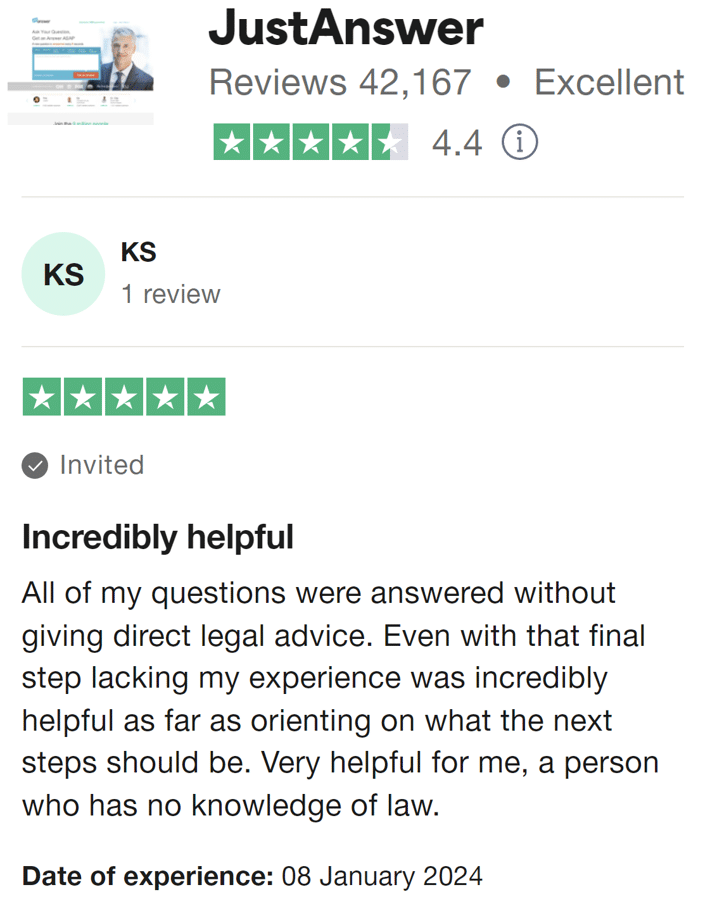
Historical JustAnswer review image. The displayed rating and review total are not live. Reviews do not predict your case outcome. Membership fees and renewal terms apply.
Appealing a speeding ticket
If you dispute the allegation, identify a genuine factual or legal issue and follow the court or fixed-penalty instructions. Examples to investigate include:
- You were not speeding.
- You were not driving at the time the violation was committed.
- Whether legally required signs were adequate. Some limits do not require repeater signs at every location, so the absence of a sign at one spot is not automatically a defence.
- The evidence relates to a different vehicle or driver; the fact that you did not own the vehicle is not itself a defence to driving it.
- Someone stole your car.
Raise any error promptly with the issuing force. If the matter is to be contested in court, follow the actual notice’s procedure; do not assume an informal enquiry is a formal appeal or stops time running.
You can accomplish this goal by filling out the appropriate section of your fixed penalty notice.
It is in your best interest to consult an expert before going to court to determine whether or not you have a legal defence for speeding and what the repercussions of a loss will be.
» TAKE ACTION NOW: Get legal support from JustAnswer
Going to court for a speeding ticket
Plea and any mitigation
Read the court documents and return the required response by the deadline. A not-guilty plea disputes the allegation; mitigation asks the court to take relevant circumstances into account when sentencing after guilt is accepted or established.
You have the option of pleading not guilty or guilty while citing extenuating circumstances.
Some guilty pleas can be dealt with without attendance, but the court decides whether a hearing is needed. Follow any direction to attend, especially where disqualification is possible.
In your statement of mitigation, you will be able to explain why you were speeding and why this justifies a less severe penalty than originally proposed.

This evidence will be presented in court, and the magistrate may be persuaded to reduce the severity of the punishment.
If you plead not guilty, the court gives directions for trial, evidence and attendance. You should not enter a particular plea merely because a template tells you to do so.
In order to defend your plea, either you or your legal representation will need to attend the trial.
Sometimes you will be offered the option to progress through the initial hearing procedure by post, in which case you will not need to attend the hearing. In other cases, however, you must appear in person at the hearing.
Are you guilty or innocent?
If it is determined that you are guilty:
On conviction, the court can impose a fine up to £1,000, or £2,500 on a motorway, and normally three to six points or disqualification. There is no universal rule that a ban starts only at 30mph above the limit; the guideline and circumstances matter.
If you are found not guilty, no further action will be taken against you.
Before using a paid legal information service
JustAnswer is a paid third-party question-and-answer service providing general information. Its standard service does not create a solicitor-client relationship. Membership can renew automatically with recurring charges until cancelled. Check the initial price, renewal price and cancellation terms before signing up. Buying this service does not guarantee a successful challenge. See JustAnswer’s membership and cancellation information.
A paid service is optional. Gather your notice and evidence, check the deadline and decide whether you need professional advice about your circumstances.
Commercial link to JustAnswer. MoneyNerd may receive a referral fee. Check all charges and cancellation terms before signing up.
References