Scott founded MoneyNerd after his own experience with debt. He runs the website and oversees its general information about debt and other money matters.
Scott does not provide personal debt advice or recommend debt solutions through MoneyNerd. If you make a debt enquiry, MoneyNerd may introduce you to The Debt Advice Service, which provides any personal debt advice.
Janine contributed articles and videos to MoneyNerd about everyday money, household costs, debt topics and parking matters. She has a background in broadcasting, including work with BBC Radio 5 Live and Bauer radio stations.
MoneyNerd does not provide debt advice or recommend debt solutions. We can introduce you to The Debt Advice Service, a trading style of Pacific Financial Solutions Limited. Their debt advice is free, and there is no obligation to proceed.
If you request an introduction, we’ll share your details with The Debt Advice Service so they can contact you.
Some debt solutions have fees and may negatively affect your credit rating. MoneyNerd is a commercial introducer and may receive a fee if you go ahead with a debt solution through The Debt Advice Service.
For free, impartial money guidance and help finding free debt advice, visit MoneyHelper.
MoneyNerd introduces enquiries to The Debt Advice Service and may receive a referral fee. For free, independent guidance and help finding a debt adviser, visit MoneyHelper.
This information and enquiry service is not a full financial assessment or a guarantee of suitability or debt write-off. Debt solutions are not suitable for everyone. Fees may apply, and your credit record and assets may be affected. Get advice on your circumstances before choosing a solution.
MoneyNerd introduces enquiries to The Debt Advice Service and may receive a referral fee. For free, independent guidance and help finding a debt adviser, visit MoneyHelper.
This information and enquiry service is not a full financial assessment or a guarantee of suitability or debt write-off. Debt solutions are not suitable for everyone. Fees may apply, and your credit record and assets may be affected. Get advice on your circumstances before choosing a solution.
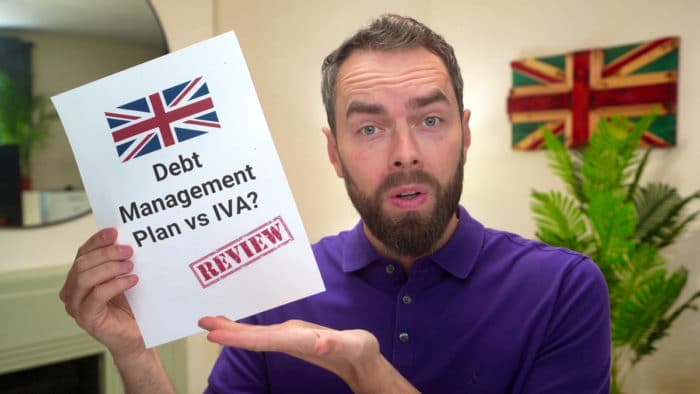
If you are facing debts and looking for a solution, you might be thinking about a Debt Management Plan (DMP) or an Individual Voluntary Arrangement (IVA).
The suitable option depends on your debts, budget, assets and circumstances. This comparison focuses on England and Wales; Northern Ireland has separate insolvency rules, and Scotland has different formal solutions.
In this article, we’ll talk about:
How an Individual Voluntary Arrangement (IVA) works
The steps to follow in a Debt Management Plan (DMP)
The big differences between an IVA and a DMP
How these plans could affect your job
Other choices you might have for managing your debt
Dealing with debt can be scary, and it’s common to feel unsure about seeking help. In fact, Citizens Advice revealed that 60% of adults facing financial difficulties hesitate to seek assistance.1
Some of our team have been in your shoes. But remember, you’re not alone in this – we’re here to help you understand your options.
Could you legally write off some debt?
MoneyNerd can introduce you to The Debt Advice Service for free debt advice. MoneyNerd does not provide debt advice or recommend debt solutions.
Answer a few questions to start your enquiry. Options available depend on your circumstances.
MoneyNerd does not provide debt advice or recommend debt solutions. We can introduce you to The Debt Advice Service, a trading style of Pacific Financial Solutions Limited. Their debt advice is free, and there is no obligation to proceed.
If you request an introduction, we’ll share your details with The Debt Advice Service so they can contact you.
Some debt solutions have fees and may negatively affect your credit rating. MoneyNerd is a commercial introducer and may receive a fee if you go ahead with a debt solution through The Debt Advice Service.
For free, impartial money guidance and help finding free debt advice, visit MoneyHelper.
How does a DMP Work?
A DMP is an informal arrangement to repay eligible non-priority unsecured debts through affordable payments. It normally aims to repay those debts in full; completing it does not automatically write off an unpaid balance.
You can manage offers yourself or use a provider that distributes one regular payment among the creditors. Free providers are available; commercial providers may deduct fees.
How long it takes depends on the balances, payments, fees and interest treatment. A DMP can be shorter or longer than an IVA.
Furthermore, DMPs are not legally binding.
Creditors may still take legal action even while you make the proposed payments. A DMP does not provide the statutory protection of a formal insolvency solution.
Neither option is automatically better. An adviser should also consider alternatives such as a Debt Relief Order, bankruptcy or temporary arrangements where appropriate.
Advantages
I’ve put together this quick table to help you better understand the advantages of a Debt Management Plan.
DMP Advantages
Consolidate debt payments – into simpler, more manageable, creditor-approved repayments.
Creditors may cease communications and legal action – less contact and worries, less stress!
An informal agreement – offers a more private alternative to insolvency solutions like bankruptcy or an IVA to clear unsecured debts.
Flexibility – for adjustments if circumstances change, such as loss of income or you can pay it off early, or when changing providers.
Free DMP providers – No need to pay a fee, ensuring full payment goes to debt repayment.
How does an IVA Work?
An IVA is a legally binding and formal agreement between you and your creditors (the people who you money to).
An insolvency practitioner prepares the proposal and supervises an approved IVA. It can require regular payments, lump sums or other contributions under agreed terms. Fees are payable and should be explained before you commit.
Only after successful completion are you released from the remaining debts covered by the IVA, subject to its terms. Excluded debts and separate obligations can remain.
An IVA is a serious insolvency procedure with costs, restrictions and a risk of failure. It is not suitable simply because a monthly payment initially looks affordable.
An approved IVA binds relevant creditors, but it does not erase every liability or prevent every type of legal action.
Understand your debt options
MoneyNerd can introduce you to The Debt Advice Service for free debt advice. MoneyNerd does not provide debt advice or recommend debt solutions.
The Debt Advice Service can explain your options, including their benefits, costs and risks. Options available depend on your circumstances. There’s no obligation to take a debt solution.
MoneyNerd does not provide debt advice or recommend debt solutions. The Debt Advice Service is a trading style of Pacific Financial Solutions Limited. If you request an introduction, we’ll share your details with their team so they can contact you.
Some debt solutions have fees and may negatively affect your credit rating. MoneyNerd is a commercial introducer and may receive a fee if you go ahead with a debt solution through The Debt Advice Service.
For free, impartial money guidance and help finding free debt advice, visit MoneyHelper.
Key Differences
The best way to help you determine which debt solution would be suitable for you is to highlight the differences between them.
Learning how a debt solution can affect you in different aspects of your life can help you make an informed decision about whether it would be right for you or not.
Eligibility
An insolvency practitioner must assess whether an IVA is suitable and whether the proposal is viable. Provider criteria are different from statutory requirements.
Important eligibility points include:
IVAs are available in England, Wales and Northern Ireland, with different legislation and procedures. This guide’s 2025 protocol details relate to England and Wales.
There is no universal statutory £6,000 minimum or requirement for three debts. The England and Wales 2025 protocol describes typical suitable cases as having at least £7,000 of debt and two creditors; exceptions and bespoke proposals can exist.
The proposed contributions must be sustainable. If a DRO is available, or income is mainly benefits, the reasons for recommending an IVA instead need careful explanation.
Regular income, assets, the types of debt and likely changes in circumstances affect suitability. Some IVAs use lump sums rather than regular payments.
A DMP is generally for people with non-priority unsecured debts who have enough money left after essential costs and priority payments to make a realistic repayment plan.
Providers may apply their own service criteria. A DMP may be unsuitable if the repayment period is unreasonable or the payments are not sustainable.
Failing one provider’s IVA criteria does not automatically make a DMP the right alternative. Obtain advice covering the available options.
Duration
The time it’s going to take to become debt-free is a factor that is at the top of every debtor’s priority list.
Under the 2025 IVA protocol in England and Wales, a regular-payment arrangement normally starts at 60 months, or 72 months where the assessed beneficial interest in the home is at least £10,000.
That assessment uses the protocol’s equity calculation, based on 85% of the property value less secured borrowing and the person’s ownership share. These protocol IVAs do not require a later equity release. Older, bespoke and Northern Ireland arrangements can have different terms.
Payment breaks or other changes can extend the term under the approved conditions. Ask the supervisor before missing a payment.
Finishing the scheduled payments is not the same as receiving confirmation of completion: all outstanding requirements must be dealt with.
Ask for a repayment estimate based on the actual balances, payment and interest assumptions, and review it when circumstances change.
Unlike an IVA, a DMP does not normally have a fixed date after which remaining included debt is written off.
If you have a high level of debt and can only afford small monthly repayments, then your DMP is going to last a long time. On the other hand, if you have a relatively smaller amount of debt, then your DMP will be over much more quickly.
Interest and Charges
One of the major aspects that keeps people in debt is interest. Many people take out loans at high interest rates and thus, start having trouble paying them back.
Interest can make repayment slower and more expensive.
Check how much of each payment reduces the balance. Ask the lender or provider for an explanation if the balance is rising despite agreed payments.
An IVA controls repayment of the debts it covers according to its approved terms. It does not stop interest on excluded debts such as a mortgage merely because an IVA exists.
In a 2025 protocol IVA, successful completion releases you from the remaining included debts, subject to the arrangement. Failure can leave you owing the unpaid balances and expose you to renewed recovery action.
For a DMP debt covered by FCA rules, an agreed forbearance arrangement must prevent the balance growing through further interest and charges while you comply with it.
That rule does not automatically freeze every debt’s interest at the point of application. Check creditor responses and challenge inappropriate charges with your provider. See FCA CONC 7.3.
DMP fees and interest that can properly continue affect the repayment period and total cost. Ask for those assumptions in writing.
Of course, the main source of stress that debtors have is any potential action that could be taken by their creditors.
A County Court claim is a request for the court to decide liability; a CCJ is the judgment. A claim form requires a response within its own deadline, even if negotiations are ongoing.
An approved IVA provides protection for debts bound by the arrangement while it remains in force.
In England and Wales, approval requires at least 75% by value of the creditor claims voting, rather than a majority by headcount. A separate non-associate creditor safeguard also applies. See Insolvency Rule 15.34.
Creditors bound by the IVA must follow its terms and cannot ordinarily pursue separate recovery of those included debts.
The protection is not universal. Excluded or new debts, secured creditors’ rights and proceedings arising from a breach or failed IVA need separate consideration.
Send demands for an included debt to your supervisor. Some statements, statutory notices or administrative communications may still arrive; an IVA is not a ban on all correspondence.
Your insolvency practitioner is a licensed individual that handles your IVA from start to finish.
A DMP provider can deal with creditors on your behalf, but creditors may still send statements, notices and other communications.
Ask for contact arrangements appropriate to your circumstances. Tell the provider about demands or threatened action promptly.
A DMP does not itself bar a court claim or bankruptcy petition. A creditor must still satisfy the relevant legal conditions and process; bankruptcy cannot happen merely because a creditor withdraws acceptance of a payment offer.
Protection of Assets
Many people are worried about their assets being seized whenever they are choosing between debt solutions.
An IVA does not automatically protect every asset. The proposal must explain which assets are retained, excluded, sold or contributed and how changes will be treated.
Review the effect on your home, vehicle, savings and other assets before agreeing to the proposal.
For a 2025 protocol IVA, the home-equity assessment normally determines a 60- or 72-month starting term rather than requiring a remortgage later. The £10,000 test applies to assessed beneficial interest, not the property’s whole market value.
A person without a home is not automatically given an extra year. Read the actual approved terms, especially for an older or bespoke IVA.
When it comes to a debt management plan, it’s an informal agreement. This means that it does not guarantee the protection of your assets.
For an ordinary unsecured consumer debt, a creditor normally needs a court judgment and the relevant enforcement authority before enforcement agents can take control of goods.
Even then, rules about notice, entry, ownership and exempt goods apply. A debt collector cannot simply seize possessions because a DMP offer was refused.
Do not ignore a claim, judgment or enforcement notice while making DMP payments.
Ask your adviser about the immediate deadline and any application needed to prevent or change enforcement.
Will an IVA Affect My Job?
An IVA does not automatically end employment, but some contracts, professional rules and security-vetting requirements can make it relevant.
For regulated professions such as accountancy or law, check the relevant professional body’s rules and any reporting obligations. An IVA is not an automatic universal ban on those careers.
You may need to notify your employer if you work in other areas of financial services or if you are part of a regulatory body that mentions IVAs in their terms.
When in doubt check your contract.
Read the contract and relevant regulatory or professional rules, and obtain a clear answer from an appropriate adviser or employer contact before committing.
Take the first step towards tackling your debt
Every day, our partner, The Debt Advice Service, helps people understand their options for dealing with debt. Their debt advice is free, with no obligation to proceed.
MoneyNerd introduces you to The Debt Advice Service. We do not provide debt advice or recommend debt solutions.
If you submit the enquiry form, MoneyNerd will share your details with The Debt Advice Service so they can contact you.
Some debt solutions have fees and may negatively affect your credit rating. MoneyNerd may receive a fee if you go ahead with a debt solution through The Debt Advice Service.
The Debt Advice Service is a trading style of Pacific Financial Solutions Limited.
For free, impartial help and access to not-for-profit debt advice, visit MoneyHelper.
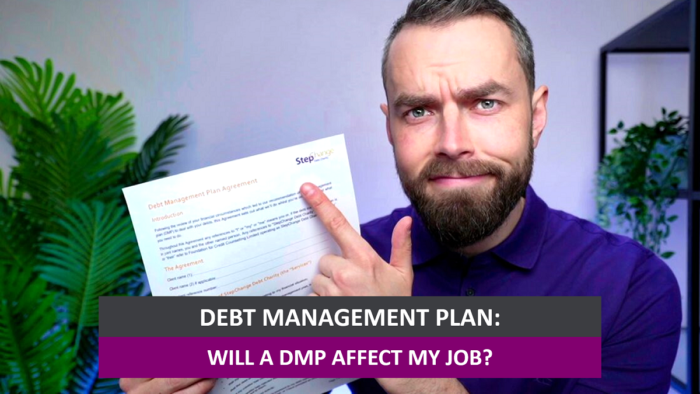
Will a DMP Affect My Job?
A DMP usually has no direct effect on employment, but it cannot be guaranteed to have no effect in every role.
Check contract, disclosure and vetting requirements. The underlying debts, defaults or court judgments may matter even though a DMP is informal.
Credit Rating
Both options can make borrowing harder, but the information recorded and how long it remains are different.
Under the 2025 protocol standard terms, credit over £500 generally requires the supervisor’s prior written approval, with specified exceptions for utilities, insurance and certain budgeted payments. Check your own IVA conditions.
Furthermore, even if you get permission for it, you will find that you’ll have a lot of trouble finding a lender that is going to approve you for any type of credit.
An IVA is normally recorded for six years from approval and can remain longer if it has not ended. Confirm completion and check the record is accurate.
Taking more credit during a DMP can make the plan unaffordable and may breach the provider’s terms. Ask the provider before borrowing.
DMP payments may be recorded as arrangements, arrears or defaults. There is no single six-year period starting when the DMP begins: a default normally stays six years from its default date, while a non-defaulted account can remain for six years after closure.
Will Either Debt Solution Affect Future Borrowing?
Yes, having a DMP or an IVA can affect borrowing in the future.
Partly because both an IVA and a DMP will have a negative impact on your credit score. A lower credit score makes it more difficult to easily get credit.
Check how DMP accounts are reported and the actual entries on your credit files. An IVA entry and the records for individual debts follow different reporting rules.
Lenders also consider affordability, existing commitments and their own criteria. Completing a solution does not guarantee immediate access to cheaper credit.
Could you legally write off some debt?
MoneyNerd can introduce you to The Debt Advice Service for free debt advice. MoneyNerd does not provide debt advice or recommend debt solutions.
Answer a few questions to start your enquiry. Options available depend on your circumstances.
MoneyNerd does not provide debt advice or recommend debt solutions. We can introduce you to The Debt Advice Service, a trading style of Pacific Financial Solutions Limited. Their debt advice is free, and there is no obligation to proceed.
If you request an introduction, we’ll share your details with The Debt Advice Service so they can contact you.
Some debt solutions have fees and may negatively affect your credit rating. MoneyNerd is a commercial introducer and may receive a fee if you go ahead with a debt solution through The Debt Advice Service.
For free, impartial money guidance and help finding free debt advice, visit MoneyHelper.
We're glad you liked the article! As a small team, your support means everything to us. If you could rate us on Google, it would be amazing. Thank you!
Scott founded MoneyNerd after his own experience with debt. He runs the website and oversees its general information about debt and other money matters.
Scott does not provide personal debt advice or recommend debt solutions through MoneyNerd. If you make a debt enquiry, MoneyNerd may introduce you to The Debt Advice Service, which provides any personal debt advice.
Janine contributed articles and videos to MoneyNerd about everyday money, household costs, debt topics and parking matters. She has a background in broadcasting, including work with BBC Radio 5 Live and Bauer radio stations.
MoneyNerd does not provide debt advice or recommend debt solutions. We can introduce you to The Debt Advice Service, a trading style of Pacific Financial Solutions Limited. Their debt advice is free, and there is no obligation to proceed.
If you request an introduction, we’ll share your details with The Debt Advice Service so they can contact you.
Some debt solutions have fees and may negatively affect your credit rating. MoneyNerd is a commercial introducer and may receive a fee if you go ahead with a debt solution through The Debt Advice Service.
For free, impartial money guidance and help finding free debt advice, visit MoneyHelper.