






Equity Release after Divorce or Separation – Guide with Warnings








MoneyNerd introduces enquiries to Age Partnership and may receive a referral fee. MoneyNerd does not provide equity release advice. Equity release reduces the value of your estate and can affect means-tested benefits. With a lifetime mortgage, unpaid interest compounds and increases the amount owed. Fees and early repayment charges may apply.
Ask a regulated adviser to explain suitability, costs and alternatives. For free, impartial guidance, visit MoneyHelper.
MoneyNerd introduces enquiries to Age Partnership and may receive a referral fee. MoneyNerd does not provide equity release advice. Equity release reduces the value of your estate and can affect means-tested benefits. With a lifetime mortgage, unpaid interest compounds and increases the amount owed. Fees and early repayment charges may apply.
Ask a regulated adviser to explain suitability, costs and alternatives. For free, impartial guidance, visit MoneyHelper.
If you're asking, 'can I use equity release to buy out my partner?' then you've come to the right place.
In this article, we will guide you through:
- What equity release is.
- How to keep your home’s equity safe.
- Who can apply for equity release plans.
- Ways to get a realistic quote.
- The difference between lifetime mortgages and home reversion plans.
We know that understanding equity release after divorce or separation can seem complex. But don’t worry; we’re here to make it clearer. With our expert advice, you can gain a better understanding of your options. We’re familiar with the worries you might have about equity release and separation. Together, we can explore how equity release can help you buy a new home or cover divorce costs.
By sharing our knowledge and experience, we aim to make your journey through equity release a bit easier.
Here are the options and benefits of equity release after separation.
Can you get equity release if you are separated?
Equity release after separation depends on legal ownership, any financial settlement, lender criteria and all required consents. A sole application may require an agreed transfer of the other owner’s share.
There might be a way to take out an equity release mortgage on your joint home during the separation process. Read on!
» TAKE ACTION NOW: Find out how much equity you could release
How can it help me buy a new home after separating?
Many couples separate and leave one person in a tricky situation to find new housing. This forum user paints a familiar picture:
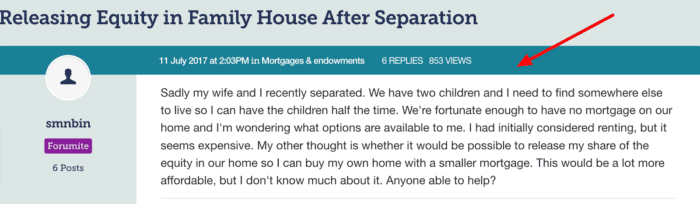
An equity release plan could be the solution for both parties.
There are some equity release providers who will help you to buy out your ex-partner’s percentage of your property using an equity release plan.
They will provide you with a lifetime mortgage providing the loan is first used to buy out your ex-partner who has agreed to sell their percentage of the property to you.
This will allow the home to become your sole and permanent home, and it would allow the other party to receive significant funds from their share of the property.
This is a complex situation which is best discussed with professionals and alternative borrowing options should be considered. Nevertheless, some media reports suggest that more people are using lifetime mortgages as a way to split assets after a divorce.
Consider the costs and risks of equity release
Equity release is a long-term financial decision. A lifetime mortgage is a loan secured against your home. If interest is added to the loan, the debt can grow substantially and reduce the inheritance you leave.
Consider the fees, effect on means-tested benefits, early repayment charges and future care needs. Alternatives may include downsizing, using other assets or a retirement interest-only mortgage where affordable.
Use the button below to start an enquiry with Age Partnership. An estimate does not confirm eligibility or suitability. Get specialist financial and independent legal advice before proceeding.
In partnership with Age Partnership, which advises on lifetime mortgages. MoneyNerd introduces enquiries and may receive a referral fee. Equity release can reduce your estate and affect means-tested benefits and future care funding. Fees may apply and interest added to a lifetime mortgage increases the amount owed. Specialist financial and independent legal advice are required before proceeding.
Can it help with the costs?
Divorce costs vary widely and contested proceedings can cost substantially more than £2,000. Compare affordable funding options and any help with court fees; equity release may be unsuitable for a relatively small or short-term expense.
Alternatively, you might be able to take out a home equity loan or unsecured personal loan to help with divorce costs. There is also government funding to help with divorce fees for those on a low income.
What will happen with the plan?
Getting divorced is less likely in later life when you may have already taken out a lifetime mortgage or home reversion plan. But it could happen.
Divorce does not automatically convert a joint plan to a sole plan. The lender must agree any borrower or ownership change, and repayment, new underwriting, legal work or charges may be required.
If the property is to be sold as part of the divorce, the sale proceeds will need to pay off the equity release debt first.
An Age Partnership customer’s experience
Individual experiences vary. Equity release is a long-term decision, and specialist advice is needed to assess whether it is suitable for you. Compare the costs, risks and alternatives before proceeding.

Mrs Wareham
“I am more than pleased to have taken out Equity Release with Age Partnership.”
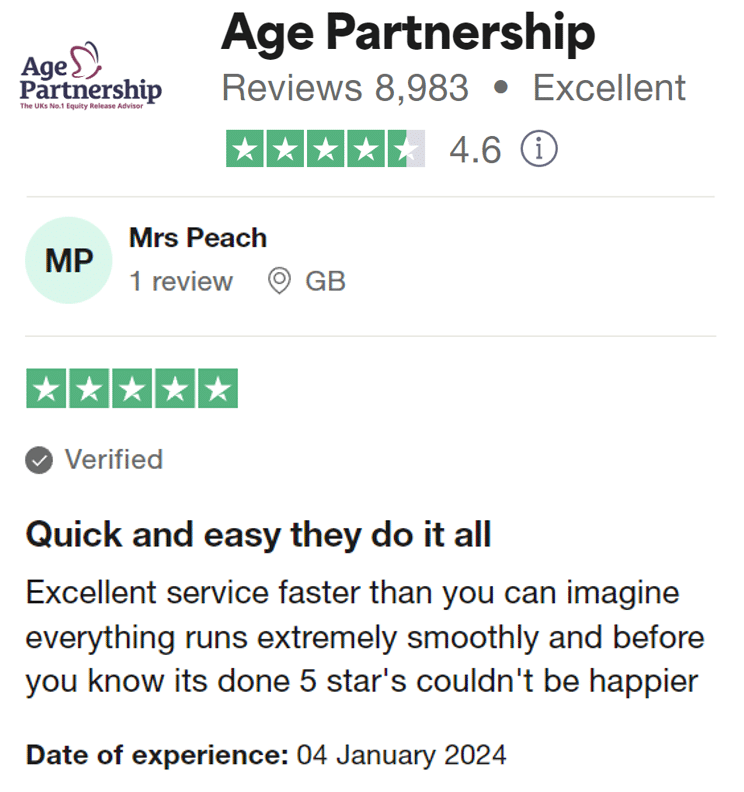
Reviews shown are for Age Partnership. Search powered by Age Partnership.
What if you move?
If you move to a new property, you might be able to take your equity release plan
to the new property, providing the new property is deemed suitable.
The new property must meet the lender’s current criteria. Equal or higher value is not a universal requirement; a lower value may require partial repayment.
You can also take your plan to a less valuable property, but you might have to pay off some of the loan in the process which could also trigger early repayment fees – unless a downsizing clause is included in the agreement.