






Can You Do Equity Release More Than Once?








MoneyNerd introduces enquiries to Age Partnership and may receive a referral fee. MoneyNerd does not provide equity release advice. Equity release reduces the value of your estate and can affect means-tested benefits. With a lifetime mortgage, unpaid interest compounds and increases the amount owed. Fees and early repayment charges may apply.
Ask a regulated adviser to explain suitability, costs and alternatives. For free, impartial guidance, visit MoneyHelper.

MoneyNerd introduces enquiries to Age Partnership and may receive a referral fee. MoneyNerd does not provide equity release advice. Equity release reduces the value of your estate and can affect means-tested benefits. With a lifetime mortgage, unpaid interest compounds and increases the amount owed. Fees and early repayment charges may apply.
Ask a regulated adviser to explain suitability, costs and alternatives. For free, impartial guidance, visit MoneyHelper.
Are you keen to learn about equity release? Curious if it's possible to do it more than once? Then, this is the right place for you. We know it can be a bit tricky to understand, but don't worry; our aim is to make it as simple as possible for you.
In this article, we’ll explain:
- What equity release is and how it works.
- How to get a fair quote for your home.
- The possible pitfalls of releasing equity.
- How many times you can take out equity.
- The chance of having more than one equity release plan.
Equity release could be a helpful way to use the value of your home, but it’s important to know all the facts before you decide. So, let’s take this journey together and make sure you’re well-informed.
How often can you take it out?
Can you do equity release more than once? It’s a question that crops up time and again on forums like these:
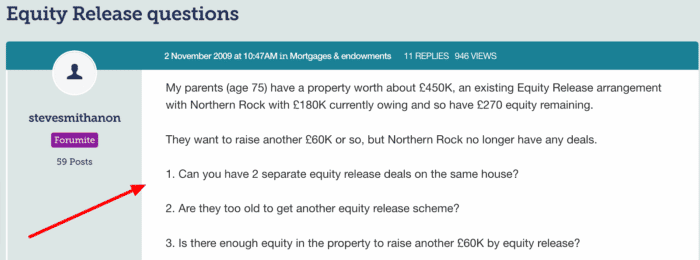
A standard residential lifetime mortgage is normally secured on your main home. Owning other residential property is possible; that does not mean each property qualifies for the same type of plan.
But does this mean you can’t do equity release more than once? Not exactly!
» TAKE ACTION NOW: Find out how much equity you could release
Is it possible to do it again?
You may be able to access further funds through an existing facility, obtain a further advance or replace a plan, subject to the lender’s terms and fresh advice where required.
There are three scenarios when you may take out equity release more than once within your lifetime. These are:
- Borrowing additional funds from your drawdown equity release plan
- Equity release further advances
- Re-equity release
Each of these has been explained in the sections below.
#1: Borrowing additional funds from a drawdown
A drawdown facility may allow later withdrawals, subject to limits, minimum amounts, terms and the rates available for each withdrawal.
Although a drawdown equity release plan is really just one plan, it can act as a second equity release loan if you choose to drawdown from the cash reserve.
#2: Further advance
An equity release further advance is when you ask your current equity release lender for more money that isn’t from a drawdown facility. For example, your property may have increased in value and you might then be able to access more of the equity by asking your current plan provider for more borrowing.
Technically, you will have done equity release more than once but remained on the same extended plan. You must receive equity release advice and have your property re-valued before you can proceed with this option.
#3: Re-equity release
You can also do an equity release more than once through a re-equity release, which is comparable to remortgaging.
You simply take out a new equity release plan with the condition that some of the money will be used to pay off your existing equity release plan and any applicable charges. You might do this for additional borrowing or for a plan with better terms and conditions that weren’t offered when you initially took out a plan.
Consider the costs and risks of equity release
Equity release is a long-term financial decision. A lifetime mortgage is a loan secured against your home. If interest is added to the loan, the debt can grow substantially and reduce the inheritance you leave.
Consider the fees, effect on means-tested benefits, early repayment charges and future care needs. Alternatives may include downsizing, using other assets or a retirement interest-only mortgage where affordable.
Use the button below to start an enquiry with Age Partnership. An estimate does not confirm eligibility or suitability. Get specialist financial and independent legal advice before proceeding.
In partnership with Age Partnership, which advises on lifetime mortgages. MoneyNerd introduces enquiries and may receive a referral fee. Equity release can reduce your estate and affect means-tested benefits and future care funding. Fees may apply and interest added to a lifetime mortgage increases the amount owed. Specialist financial and independent legal advice are required before proceeding.
Can you have two plans at once?
Do not assume you can add another lifetime mortgage or secured loan to the same property. Existing lender consent, security priority and the new lender’s criteria are required; many products prohibit additional charges.
Standard residential lifetime mortgages generally concern a main residence. Other property or specialist borrowing requires separate advice and a current availability check.
Can you be refused by a lender?
Yes, you can be refused equity release for several reasons. You may not meet the lender’s criteria in terms of age, or the property may be determined as unsuitable for the lender because it’s at risk of depreciation or will be difficult to sell in the future.
For example, retirement flats and properties prone to flooding may not be accepted for equity release.
An Age Partnership customer’s experience
Individual experiences vary. Equity release is a long-term decision, and specialist advice is needed to assess whether it is suitable for you. Compare the costs, risks and alternatives before proceeding.

Mrs Wareham
“I am more than pleased to have taken out Equity Release with Age Partnership.”
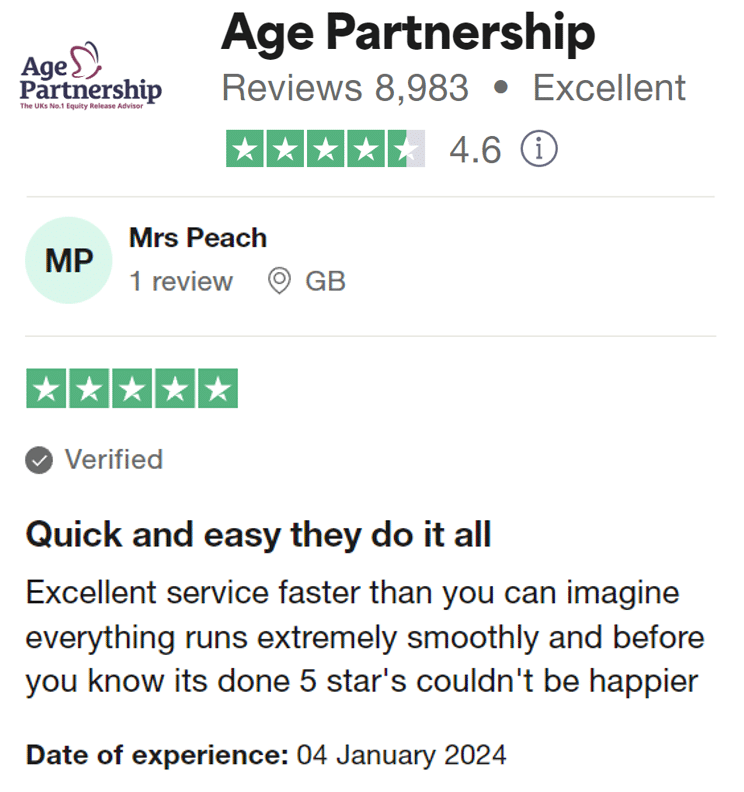
Reviews shown are for Age Partnership. Search powered by Age Partnership.
Timescales
If you’re considering switching up your current equity release plan, you’ll probably want to know the timescales involved. They are comparable to the initial timescale when first taking out a lifetime mortgage. We’ve explained this in detail here.