







HFC Bank: What Happened and How to Check an Old Account








MoneyNerd introduces enquiries to The Debt Advice Service and may receive a referral fee. For free, independent guidance and help finding a debt adviser, visit MoneyHelper.
This information and enquiry service is not a full financial assessment or a guarantee of suitability or debt write-off. Debt solutions are not suitable for everyone. Fees may apply, and your credit record and assets may be affected. Get advice on your circumstances before choosing a solution.
MoneyNerd introduces enquiries to The Debt Advice Service and may receive a referral fee. For free, independent guidance and help finding a debt adviser, visit MoneyHelper.
This information and enquiry service is not a full financial assessment or a guarantee of suitability or debt write-off. Debt solutions are not suitable for everyone. Fees may apply, and your credit record and assets may be affected. Get advice on your circumstances before choosing a solution.
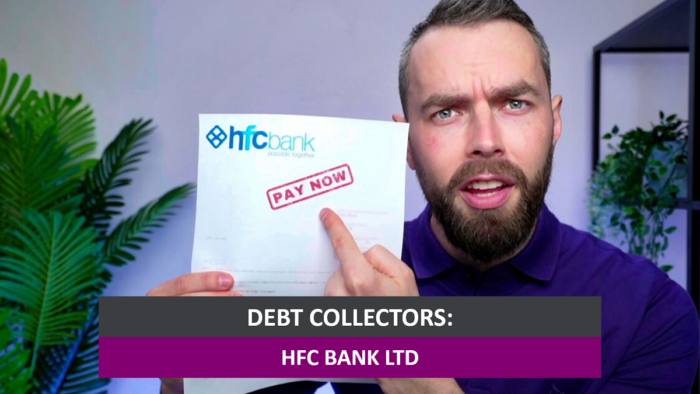
A debt letter can be worrying. Keep the correspondence, check the creditor and balance, and note any response deadline. Free independent debt advice is available.
In this article, we’ll:
- Explain what happened to HFC Bank Ltd.
- Help you find out if you still owe money to HFC Bank Ltd.
- Discuss what to do if you can’t afford to repay your debts.
- Talk about how to manage your debts.
- Guide you on where to get professional help.
If dealing with debt is affecting your wellbeing, seek support and tell the firm about any communication or accessibility needs. A debt adviser can help you decide what to do next.
Our team has faced these same issues. So, we’re here to help you make sense of things. Our aim is to give you the information you need to deal with this situation in the best way possible.
What Happened to HFC Bank Ltd?
HFC Bank Limited entered members’ voluntary liquidation on 13 January 2017. Companies House records show it was dissolved following liquidation on 29 April 2026.
For legacy-account correspondence, check HSBC’s current HFC Bank information page or the verified administrator of your particular account. An old liquidator’s address is not a general payment route.
Historical company number: 01117305.
HSBC’s HFC customer-services number: 0370 0100453. Confirm the current contact route through HSBC’s official website.
HSBC publishes [email protected] for other HFC legacy queries, including charging orders.
Current account information: HSBC’s official HFC Bank information page at https://www.hsbc.co.uk/hfc-bank/.
HFC Bank was a lender. It should not be described as a bailiff or as several invented companies ending in “Ltd. Limited” or “Debt Collection Agency”. Check the actual creditor and collector on your documents.
» TAKE ACTION NOW: Fill out the short debt form
Do I Still Owe Money to Them?
A lender’s liquidation does not by itself cancel a borrower’s debt. Check the current creditor, balance and any legal defence before making payment.
Members’ voluntary liquidation is a process used for a solvent company. It is not evidence that HFC had failed or was about to become insolvent.
Account transfers can happen before or independently of liquidation. The actual transfer documents and the bank’s official account information matter.
HSBC states that in February 2013 HFC agreed to sell part of its secured-loan portfolio to Sancopia Portfolios No 1 SARL, with remaining accounts transferred to HSBC Bank plc.
HSBC states that those remaining accounts are now held by HSBC UK Bank plc. An individual account may subsequently have changed owner or administrator; verify its present status rather than assuming all former HFC debts go to one of two payees.
Typical Debt Collection Process
When the debt transfer occurs, it’s common for the new creditors to initiate contact by calling or sending letters. This is part of the debt collection process.
Here’s a quick table that will help you better understand the debt collector timeline. For more information, be sure to check out our specialized guide.
| Possible stage | What can happen | What to do |
|---|---|---|
| Missed payments | The creditor or collector may contact you, apply contractual charges or issue required notices. There is no single timetable for every debt. | Check the debt and contact the creditor early. Prioritise essential bills and seek free debt advice. |
| Collection activity | Letters, calls or a proposed visit may follow. A collection agent has no power to seize your belongings. | Ask for identification and evidence of the debt. You do not have to let a debt collector into your home. |
| Letter of claim | A creditor may send a formal pre-action letter before making a claim. | Follow the response deadline and get advice; do not ignore it. |
| Court claim | In England and Wales, a creditor may apply for a county court judgment. A judgment and later enforcement are separate stages. | Respond to the claim by the court deadline, whether admitting it, disputing it or asking for time to pay. Attend if the court requires a hearing. |
| Enforcement after judgment | Where legally permitted, a creditor may seek enforcement such as an attachment of earnings, charging order or warrant of control. | Get advice promptly about the specific notice, available objections and affordable payment options. |
The creditor, or solicitors acting for it, may bring a court claim if entitled to do so. Only the court can issue a judgment. A claim form is not a CCJ: respond within its deadline, as judgment can be entered in default without a hearing. Contact or a payment offer does not guarantee that a creditor will not bring a claim.
Understand your debt options
MoneyNerd can introduce you to The Debt Advice Service for free debt advice. MoneyNerd does not provide debt advice or recommend debt solutions.
The Debt Advice Service can explain your options, including their benefits, costs and risks. Options available depend on your circumstances. There’s no obligation to take a debt solution.
MoneyNerd does not provide debt advice or recommend debt solutions. The Debt Advice Service is a trading style of Pacific Financial Solutions Limited. If you request an introduction, we’ll share your details with their team so they can contact you.
Some debt solutions have fees and may negatively affect your credit rating. MoneyNerd is a commercial introducer and may receive a fee if you go ahead with a debt solution through The Debt Advice Service.
For free, impartial money guidance and help finding free debt advice, visit MoneyHelper.
What Do I Do If I Can’t Afford to Repay My Debts?
If you cannot afford the claimed payments, obtain a complete account statement and free independent advice before agreeing to a new arrangement.
If that’s your case, and you can’t afford to repay your unsecured debts, you may need to consider a debt solution.
There are several solutions for unaffordable debts in the UK, so we recommend speaking to a debt charity to get some free financial advice. Their advisors will be able to walk you through your options in detail and find the best debt solution for your finances.
We have linked some charities that offer these services for free in the next section.
Debt Management Plan (DMP)
A DMP is an informal debt solution that lets you pay off your debts via a single monthly payment.
Because it is informal, it is not legally binding so you are not tied into a DMP for a minimum number of payments.
Individual Voluntary Arrangement (IVA)
An IVA is a formal insolvency arrangement managed by an insolvency practitioner. Your proposal sets out payments, any assets involved and fees. Once approved, it binds the creditors and debts covered by it and restricts recovery action; it is not a blanket ban on necessary correspondence.
Many IVAs involve payments for five or six years, but the agreed term varies. Qualifying unpaid debt is normally released only on successful completion. An IVA affects your credit record, may involve assets or home equity, and can fail if its terms are not met.
IVA suitability depends on your debts, affordable contributions or available assets, fees and creditor approval. There is no universal rule that you must owe several thousand pounds to more than one creditor. Get independent debt advice and compare other options before agreeing to an IVA.
Trust Deed
IVAs are not available in Scotland. A Scottish money adviser can compare a protected trust deed, the Debt Arrangement Scheme, sequestration and informal arrangements; a trust deed is not compulsory.
A protected trust deed is a Scottish insolvency arrangement, usually lasting at least four years of contributions. It can discharge qualifying unpaid debt on successful completion, but fees apply and your home or other assets may be at risk. Covered creditors cannot pursue payment outside it, but can still send required documents.
Debt Relief Order (DRO)
In England and Wales, a DRO may suit an eligible non-homeowner with low surplus income, limited assets and qualifying debts within the £50,000 limit. Detailed income, asset, vehicle and residence rules apply. An approved debt adviser checks eligibility and submits the application to the Insolvency Service.
During the usual 12-month DRO period, recovery of listed qualifying debts is restricted and you generally do not pay those debts. Ongoing bills and excluded debts still need attention. Creditors may send statements and other permitted correspondence.
A DRO normally lasts 12 months. If it remains in force, the qualifying debts listed in it are normally discharged at the end. You must report relevant changes and continue paying ongoing bills and excluded debts, such as court fines and student loans.
Bankruptcy
If you have debts but no realistic possibility of ever paying them off, you may need to declare bankruptcy.
Bankruptcy has an unfair stigma attached to it as it may be your only way of getting a financial fresh start. That said, it is a serious financial situation that should not be taken lightly.
Sequestration
Scotland’s Minimal Asset Process is a form of bankruptcy for people meeting specific debt, income and asset conditions. It has consequences for credit and finances and should be assessed with an approved money adviser. See related guidance, Minimal Asset Process guide.
References






