






If a Debt Is Sold, Do You Still Have to Pay?








MoneyNerd introduces enquiries to The Debt Advice Service and may receive a referral fee. For free, independent guidance and help finding a debt adviser, visit MoneyHelper.
This information and enquiry service is not a full financial assessment or a guarantee of suitability or debt write-off. Debt solutions are not suitable for everyone. Fees may apply, and your credit record and assets may be affected. Get advice on your circumstances before choosing a solution.
MoneyNerd introduces enquiries to The Debt Advice Service and may receive a referral fee. For free, independent guidance and help finding a debt adviser, visit MoneyHelper.
This information and enquiry service is not a full financial assessment or a guarantee of suitability or debt write-off. Debt solutions are not suitable for everyone. Fees may apply, and your credit record and assets may be affected. Get advice on your circumstances before choosing a solution.
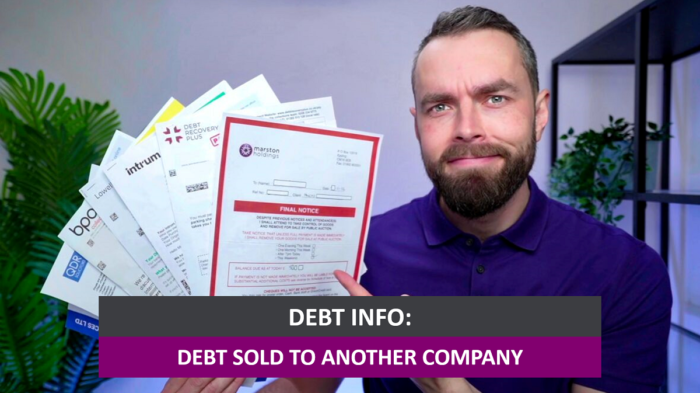
A debt sale usually changes who is entitled to collect the balance. It does not automatically cancel the debt, remove your defences or create a new default date.
In this article, we’ll help you understand:
- What happens when your debt is sold to another company
- How this might affect your credit score
- If you can pay less if your debt is sold for less
- What to do if your creditor goes bust
- How you can legally write off some of your debt
We’re here to guide you through this. Let’s take a step-by-step look at what happens when a debt is sold and what you can do next.
If a Debt Is Sold to Another Company, Do You Have to Pay?
In the UK, your debt may be sold to another company that specialises in collecting debts.
Debts can be assigned under the relevant law and agreement; assignment is not limited to debts regulated by the Consumer Credit Act. The rules differ across UK jurisdictions.
Verify the new owner, the assignment and the balance before changing payment details. Existing disputes, legal defences and applicable debt-solution protections still need to be considered.
When can a debt be sold?
A creditor may sell an account at different stages, including before or after arrears. Check the agreement, notices and applicable law rather than assuming default is always required.
A missed-payment history is one reason a balance may be sold, but the sale itself is not a court judgment or proof that the amount is correct.
It applies to most types of consumer debt which include:
- Loans
- Overdrafts
- Credit cards
- Store cards
- Catalogue debts
- Hire purchase debts
Will you be told when a debt is sold?
You should receive information identifying the new owner. For a legal assignment under section 136 of the Law of Property Act 1925 in England and Wales, express written notice is required.
Do not assume two separate letters are always legally necessary. Verify any notice and new payment instructions independently with the existing creditor.
Plus, the new owner should write to let you know who they are and the amount you owe with reference details for easy identification.
Understand your debt options
MoneyNerd can introduce you to The Debt Advice Service for free debt advice. MoneyNerd does not provide debt advice or recommend debt solutions.
The Debt Advice Service can explain your options, including their benefits, costs and risks. Options available depend on your circumstances. There’s no obligation to take a debt solution.
MoneyNerd does not provide debt advice or recommend debt solutions. The Debt Advice Service is a trading style of Pacific Financial Solutions Limited. If you request an introduction, we’ll share your details with their team so they can contact you.
Some debt solutions have fees and may negatively affect your credit rating. MoneyNerd is a commercial introducer and may receive a fee if you go ahead with a debt solution through The Debt Advice Service.
For free, impartial money guidance and help finding free debt advice, visit MoneyHelper.
If They Sell for Less, Do You Pay Less?
You might be hoping that if a creditor sells your debt for less than it is worth, the debt will be reduced and you don’t have to pay the whole amount back.
The purchase price does not set the amount you legally owe. Check the contractual balance, any dispute or defence, and whether a reduced settlement is agreed.
Accounts may be sold at a discount for commercial reasons. You are not automatically entitled to pay the purchaser’s acquisition price.
A settlement must be agreed with the authorised creditor. Obtain clear written confirmation of what the payment will settle before paying.
Who Else Sells Debt to Other Companies?
It is not just creditors that sell their debts to debt collection businesses.
Sometimes debt collection businesses will sell debts on to other debt collection businesses.
Accounts may be sold for different commercial reasons. A sale does not prove that the previous owner could not find you or was insolvent.
What If You Were Already Paying the Debt with a DMP?
A debt can be sold while a DMP is running.
Tell the DMP provider promptly and ask it to verify the new owner and payment details.
Ask for written confirmation of how the existing repayment arrangement and interest treatment will be handled.
A DMP is informal, but regulated firms still have duties to treat customers in financial difficulty fairly and consider affordable proposals.
For regulated consumer-credit debts, firms must consider appropriate forbearance. Where a repayment arrangement is used as forbearance and you meet its terms, interest and charges must be reduced, waived or cancelled as needed so the balance does not grow during the arrangement.
» TAKE ACTION NOW: Fill out the short debt form
What If You Were Using a Formal Debt Solution?
You might have been paying back the debt with a formal debt solution like an Individual Voluntary Arrangement (IVA).
A sale does not normally remove the protection of an approved formal arrangement for an included debt. The position depends on the solution, its terms and whether it remains in force.
Tell the supervisor or relevant adviser so that records and distributions can be updated. Do not assume every debt is covered.
What If You Had No Debt Repayment Agreement?
If you did not have a debt solution in place with the original owner of your debt and you have received threatening letters from the new owner, there are ways you can make the situation better.
An affordable agreement or suitable formal solution may help, but does not universally guarantee that legal proceedings will be avoided.
Take the first step towards tackling your debt
Every day, our partner, The Debt Advice Service, helps people understand their options for dealing with debt. Their debt advice is free, with no obligation to proceed.
MoneyNerd introduces you to The Debt Advice Service. We do not provide debt advice or recommend debt solutions.

Natasha
Very helpful and informative thank you
If you submit the enquiry form, MoneyNerd will share your details with The Debt Advice Service so they can contact you.
Some debt solutions have fees and may negatively affect your credit rating. MoneyNerd may receive a fee if you go ahead with a debt solution through The Debt Advice Service.
The Debt Advice Service is a trading style of Pacific Financial Solutions Limited.
For free, impartial help and access to not-for-profit debt advice, visit MoneyHelper.
Will a sold debt affect your credit score?
Selling a debt does not itself require a fresh credit-file default. A purchaser’s entry should reflect the same account and original default date where there was one.
A reported default may harm your credit record. Duplicate entries must not misleadingly appear to be two separate debts.
An accurate default normally remains for six years from its original date, not six years from the sale or later payment. Paying it normally updates the status rather than removing it early.
Do you have to pay a debt if a creditor goes bust?
Administration does not automatically cancel an account balance. Check the administrator’s current account-specific instructions and whether the debt was transferred, settled or released.
Do not send money to old bank details or an unverified successor. Confirm the authorised recipient independently.
A free debt adviser can check liability, old-debt time limits and available repayment options.
How do debt collectors contact you?
Depending on the account and applicable rules, a collector may use the following methods. Contact must be reasonable; you can explain suitable contact preferences and support needs.
- Letter
- Phone
- Text
- In-person visit