






PO Box 486, West Byfleet – Who’s Contacted Me?






For free & impartial money advice you can visit MoneyHelper. We work with The Debt Advice Service who provide information about your options. This isn’t a full fact-find, some debt solutions may not be suitable in all circumstances, ongoing fees might apply & your credit rating may be affected.



For free & impartial money advice you can visit MoneyHelper. We work with The Debt Advice Service who provide information about your options. This isn’t a full fact-find, some debt solutions may not be suitable in all circumstances, ongoing fees might apply & your credit rating may be affected.
Have you received a letter from PO Box 486, West Byfleet and you’re not sure who it’s from or what to do next? You’re in the right place. Every month, thousands of people come to MoneyNerd looking for clear, step-by-step help with surprise debt letters just like this.
In this easy guide, we’ll help you:
- Work out who’s writing to you from PO Box 486, West Byfleet.
- Check if the letter is genuine or a phishing attempt.
- Know what to do before you pay anything.
- Understand your rights and options if you can’t afford to pay.
- Use MoneyNerd’s free letter templates and tools to take control.
You’re not alone. Many of us have been in your shoes and know how stressful this can feel. Let’s sort it together, one step at a time.
Who is contacting me from PO Box 486, West Byfleet?
PO Boxes in West Byfleet are commonly used by companies that send high volumes of mail, including debt collection firms, solicitors working for lenders, retailers and utilities. More than one organisation may use (or have used) a similar PO Box at different times. That’s why it’s vital to identify the sender from the letterhead, reference number and contact details, not just the PO Box.
Look for a company name (often near the top or in the footer), an FCA or SRA number (if it’s a debt firm or solicitor), a client name (the original lender), and a reference or account number. If the letter doesn’t clearly state who’s writing to you, treat it with caution and follow the checks below.
Is your letter real? (Must Read!)
Sadly, scam letters and texts do exist. Use these quick checks:
- Verify the sender independently. Search the company name on Companies House, the Financial Services Register (for debt collectors) or the SRA register (for law firms). Use a phone or email listed on their official site, not the one in the letter.
- Be wary of demands to pay immediately by bank transfer, or threats that feel extreme. Real firms should allow you to query the debt and will provide ways to respond, not just pay.
- Check your details. Spelling errors in your name/address, missing account history, or vague wording are red flags.
If you’re unsure, don’t ignore it — but don’t pay yet either. Move to the next steps.
What to do first (before you pay a penny)
- Step 1: Ask them to prove it. You only need to pay a debt collector once they’ve shown you evidence that the debt is yours and enforceable (for example, a signed credit agreement or account statements). Use our free Prove-It Letter template and keep copies.
- Step 2: Check if the debt may be too old to enforce. If it’s been 6 years (5 in Scotland) since you last paid or wrote about the debt, and there’s no County Court Judgment (CCJ), it might be statute-barred. Use our Statute-Barred Letter template.
- Step 3: Not your debt? If the letter is for someone else, write back explaining they have the wrong person and ask them to update their records. You can also return the letter marked “Not known at this address”.
- Step 4: Keep everything in writing. It gives you a clear paper trail if things escalate.
» TAKE ACTION NOW: Fill out the short debt form
Do you have to reply?
Yes — always respond, even if it’s just to question the debt. Ignoring letters can lead to court action. If a genuine claim is issued and you don’t respond, you could end up with a County Court Judgment (CCJ) by default, which harms your credit file for six years.
What if they prove the debt?
If the collector or solicitor provides solid evidence that you owe the balance, it’s time to plan. You still have options:
- Affordable payment plan. Offer monthly payments that fit your budget. They should consider your circumstances.
- Full & final settlement. If you can raise a lump sum, the creditor might accept less than the full balance.
- Debt solutions. If you have multiple debts or can’t afford repayments, a formal solution could help (see below).
Your debt solution options (simple overview)
- Debt Management Plan (DMP) – An informal plan to pay what you can each month. Interest and charges may be reduced or frozen.
- Individual Voluntary Arrangement (IVA) – A formal agreement (usually 5–6 years). You make fixed monthly payments and any remaining eligible debt can be written off at the end.
- Debt Relief Order (DRO) – For people with low income, low assets and qualifying debt under a set limit. Debts are written off after 12 months if you still can’t pay.
- Bankruptcy – A legal process that can write off most unsecured debts. Serious, but a clean slate for the right situation.
- Debt consolidation – Replacing several debts with one new loan. Only suitable if it lowers costs and is affordable.
Everyone’s situation is different. For tailored help, you can use our quick assessment or speak to our trusted partners at the Debt Advice Service for free guidance.
How a debt solution could help
Some debt solutions can:
- Stop nasty calls from creditors
- Freeze interest and charges
- Reduce your monthly payments
A few debt solutions can even result in writing off some of your debt.
Here’s an example:
Situation
| Monthly income | £2,504 |
| Monthly expenses | £2,345 |
| Total debt | £32,049 |
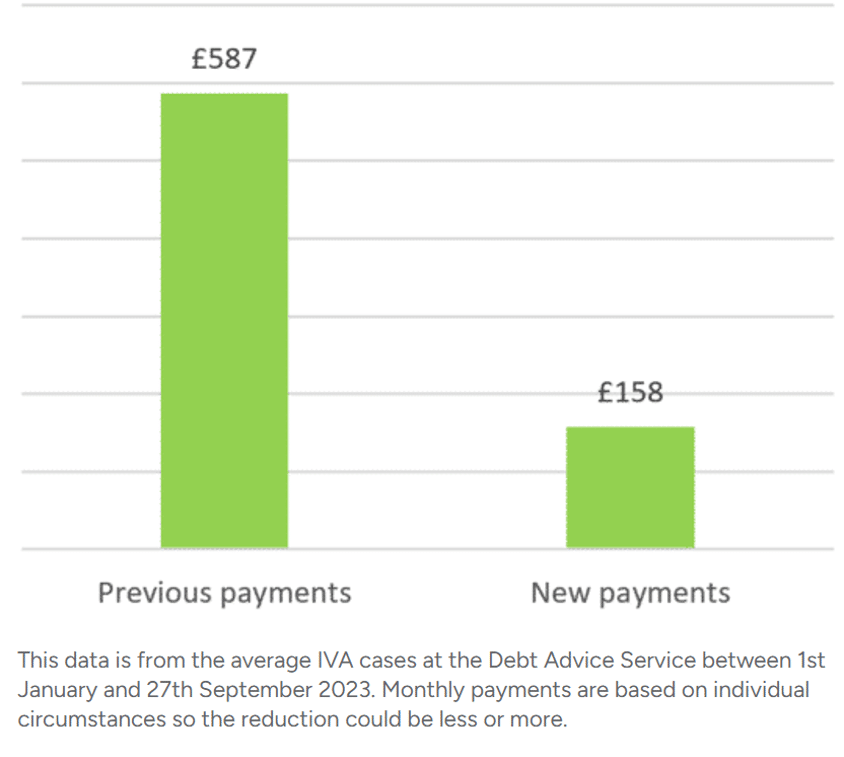
Monthly debt repayments
| Before | £587 |
| After | £158 |
£429 reduction in monthly payments
If you want to learn what debt solutions are available to you, click the button below to get started.
What happens if you ignore letters from PO Box 486?
If the debt is genuine and you ignore letters, the creditor may escalate. This can include default notices, court claims and, if a CCJ is granted and not paid, enforcement such as bailiffs (enforcement agents). Bailiffs can only attend if a court has already made an order — debt collectors are not bailiffs and cannot enter your home or take goods.
How to stop repeated calls and letters
- Put everything in writing. Ask them to contact you by letter or email only while the debt is in dispute.
- Complain if needed. Use the firm’s complaints process. If unresolved after eight weeks (or you get a final response you disagree with), you can escalate to the Financial Ombudsman Service for debt collectors or to the Legal Ombudsman for law firms.
- Harassment? Keep a log. Unfair pressure, excessive calls or misleading threats are not allowed. You can report serious concerns to the FCA (for debt firms) or the SRA (for solicitors).
Need the right words? Use our free templates
- Prove-It Letter – Ask for evidence the debt is yours before you pay.
- Statute-Barred Letter – Use if the debt is too old to enforce (no CCJ and outside the limitation period).
- Debt & Mental Health support – Extra help if you’re unwell or vulnerable.
Not sure who sent your PO Box 486 letter?
- Check the letter carefully for a sender name, website, or reference.
- Search the company name on Companies House, the FCA Register (for debt collectors), or the SRA (for solicitors).
- Contact the original creditor (e.g. your bank, lender, utility) using details from their official website to confirm who’s acting for them.
- Still unsure? Don’t pay. Send a Prove-It Letter and ask them to identify the account, creditor, and provide evidence.
Struggling? MoneyNerd can help
MoneyNerd is a UK-based debt help resource with plain-English guides, videos, templates and interactive tools. If you want 1-to-1 support, we can introduce you to our partners at the Debt Advice Service for free, confidential advice on your options, including DMPs, IVAs, DROs, bankruptcy and consolidation.
Take a breath — you’ve started the right way by checking the facts before paying. Use the steps above, keep everything in writing, and don’t be pushed into unaffordable payments. You’ve got this, and we’ve got your back.