











Have you received a parking fine from Private Parking Solutions and are unsure whether to pay or appeal?
You’ve come to the right place. Every month, more than 130,000 people visit our website for guidance on dealing with fines and parking tickets.
This article aims to provide clear, simple guidance on:
- Who Private Parking Solutions are.
- Whether you need to pay their parking fines.
- How to appeal against a Private Parking Solutions fine.
- The payment and appeal deadlines on a private Parking Charge Notice (PCN).
- What happens if you decide not to pay.
Which? discovered that even though 78% of its members consider private parking fines unfair, many don’t contest them due to low confidence in appeal success.1
If that’s your case, don’t worry. We’re here to help every step of the way with practical advice and real-life examples.
Not sure what to write in your parking appeal?
You don’t need to start with a blank page.
We’ve created a free parking ticket appeal letter template that gives you a clear structure to follow.
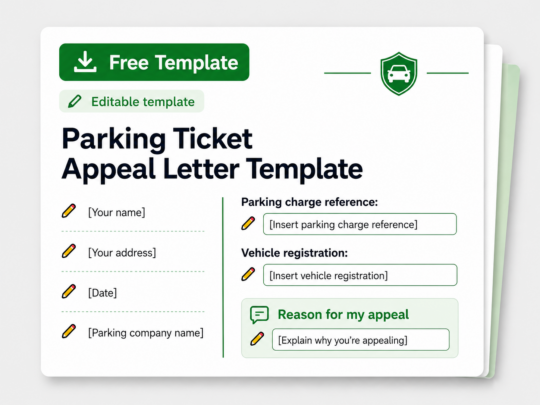
Free editable parking appeal letter template from MoneyNerd.
Should you pay or appeal the private parking fine?
Decide on the evidence and the parking terms. If you accept the charge, paying within the discount period shown on the notice will usually cost less. If you dispute it, appeal by the stated deadline and keep a copy and proof of submission.
Check the operator’s policy on the discount during an initial appeal. Do not assume that making any appeal automatically loses it, or that it will always be re-offered. An independent appeal can mean giving up the reduced amount. Payment normally closes the appeal route, so check before paying if you intend to challenge the charge.
Do you have to pay Private Parking Solutions (London)?
Check the full company name on the notice. Private Parking Solutions (London) Ltd is distinct from similarly named parking businesses. Its official website identifies the operator and its payment and appeal routes.
A private Parking Charge Notice is a claim under contract law, rather than a council penalty or criminal fine. A valid charge can be owed before court proceedings start. It is incorrect to assume that you only have to pay if a judge orders it.
Check the notice, the signs and what happened. Pay by the stated deadline if you accept the charge, or use the operator’s appeal process if you dispute it. Ignoring it can lead to a court claim and additional costs. A court decides a disputed claim; the operator does not automatically win.
What’s Included in the Free Appeal Template
A clear structure
The template gives you a simple framework for putting your parking appeal together, so you don’t have to work out what to write from scratch.
What you’ll add
- Your parking charge details
- Why you’re appealing
- Any relevant evidence
- What you want the parking company to do
Easy to adapt
Just replace the sections in [square brackets] with the details of your own situation and edit the wording where needed.
You’ll get the template by email so you can save it, edit it and use it when you’re ready.
Free parking appeal letter template from MoneyNerd.
How to appeal a Private Parking Solutions PCN
Appeal to the operator first using the instructions on the notice and its official website. Initial appeals are commonly required within 28 days, but follow the deadline on your notice. Include the charge reference, vehicle registration, reasons for disputing the charge and supporting evidence. Keep the submission confirmation.
If you have missed a deadline, explain why and ask whether a late appeal will be accepted; acceptance is not guaranteed. An appeal is intended to resolve a genuine dispute. It should not be used simply to delay payment.
A timely appeal should be handled under the applicable appeals process, with the charge put on hold as required by that process. Do not assume this removes a separate court deadline: respond promptly to any claim papers.
» TAKE ACTION NOW: Get legal support from JustAnswer
Appeal Process Steps
I’ve put together this table to help you better understand the appeal process. If you want to learn more about the steps you should take, please read our detailed guide.
| When | Action |
|---|---|
| On receiving a council PCN | Read the notice, keep it, gather evidence and note all payment and challenge deadlines. |
| Windscreen or handed-to-driver PCN | An informal challenge may be available before the Notice to Owner. Early challenge can preserve a discount under the authority’s policy; 14 days is not a universal final appeal deadline. |
| Postal PCN or Notice to Owner | Normally make formal representations within 28 days as stated on the notice. Do not assume there is an extra informal stage. |
| Representations rejected | The Notice of Rejection explains how to appeal to the appropriate independent tribunal, normally within 28 days. |
| Appeal unsuccessful | Pay by the deadline given in the decision or obtain advice on any available review. Further statutory charges can follow if you do neither. |
| Other ticket type | Private parking charges and FPNs use different procedures; follow the actual notice. |
Further guidance: Traffic Penalty Tribunal; Citizens Advice.
What happens if my appeal gets rejected?
If the operator rejects your appeal, check its rejection letter for a POPLA verification code and instructions. A POPLA appeal is normally due within 28 days of rejection and is free for the motorist. Include your evidence and address the operator’s reasons.
POPLA’s decision binds the operator, but it is not a court judgment binding the motorist. If you win, the charge must be cancelled. If you lose, the operator can continue to seek payment and may bring a court claim; you can still defend a claim. The discounted amount is generally no longer available after a POPLA appeal.
Feel more confident before you send your appeal
Writing a parking appeal can be difficult when you’re not sure what to include or how to structure it.
Our free template gives you a clear starting point, helping you:
- Set out what happened clearly
- Explain why you’re disputing the charge
- Include the important details
- Avoid starting from a blank page
Simply adapt the template to your own circumstances before sending it.
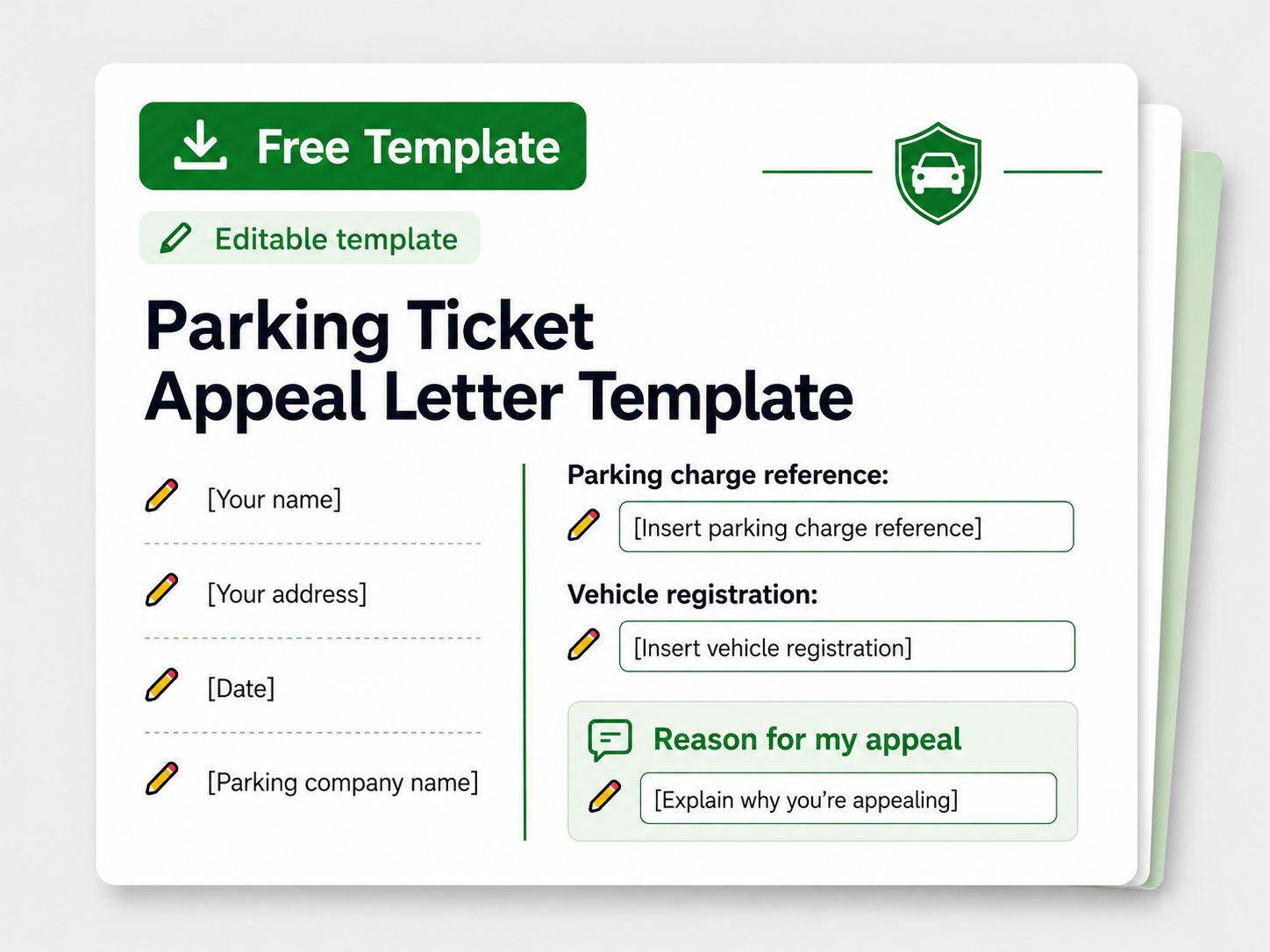
Free parking appeal letter template from MoneyNerd.
Will Private Parking Solutions take me to court?
The operator can seek payment, use a debt collection agency or bring a court claim. An ordinary debt collector is not a bailiff and cannot seize your belongings. Added fees are not automatically valid: ask for their basis and challenge amounts you dispute.
Do not ignore a formal Letter of Claim or court papers. In England and Wales, the Debt Claims Protocol normally gives an individual 30 days to reply to a business’s Letter of Claim. Use the reply form, ask for relevant documents and explain any dispute. Court papers have their own deadlines, which still need a response.
A County Court Judgment (CCJ) is made by a court; a parking ticket or debt collector’s letter is not itself a CCJ. If a judgment in England and Wales is paid in full within one calendar month, you can have it removed from the register. Otherwise it normally remains for six years; later payment can mark it satisfied. Bailiff action requires further enforcement steps and is not automatic. Court procedures differ elsewhere in the UK.
Private Parking Solutions Contact Details
For a notice issued by Private Parking Solutions (London) Ltd, start with the operator’s official website. It lists telephone 01895 713136 and postal address PO Box 1115, West Drayton, UB8 9XD. Submit an appeal through the appeal route shown on the notice rather than assuming a general enquiry counts as an appeal.
Ready to appeal your parking ticket?
Don’t start with a blank page.
Get our free parking ticket appeal letter template and use it as the starting point for your response.
Add the details of your parking charge, explain why you’re appealing and adapt the wording to your circumstances.
We’ll send the template straight to your email.
Free parking appeal letter template from MoneyNerd.
References
For the underlying rules, see Schedule 4 of the Protection of Freedoms Act 2012, the current POPLA appeal guide and IAS appeal guidance. For court matters in England and Wales, see the Civil Procedure Rules pre-action protocols and GOV.UK guidance on CCJs.