







Ross & Roberts Bailiffs: Your Rights and Payment Options








MoneyNerd introduces enquiries to The Debt Advice Service and may receive a referral fee. For free, independent guidance and help finding a debt adviser, visit MoneyHelper.
This information and enquiry service is not a full financial assessment or a guarantee of suitability or debt write-off. Debt solutions are not suitable for everyone. Fees may apply, and your credit record and assets may be affected. Get advice on your circumstances before choosing a solution.
MoneyNerd introduces enquiries to The Debt Advice Service and may receive a referral fee. For free, independent guidance and help finding a debt adviser, visit MoneyHelper.
This information and enquiry service is not a full financial assessment or a guarantee of suitability or debt write-off. Debt solutions are not suitable for everyone. Fees may apply, and your credit record and assets may be affected. Get advice on your circumstances before choosing a solution.
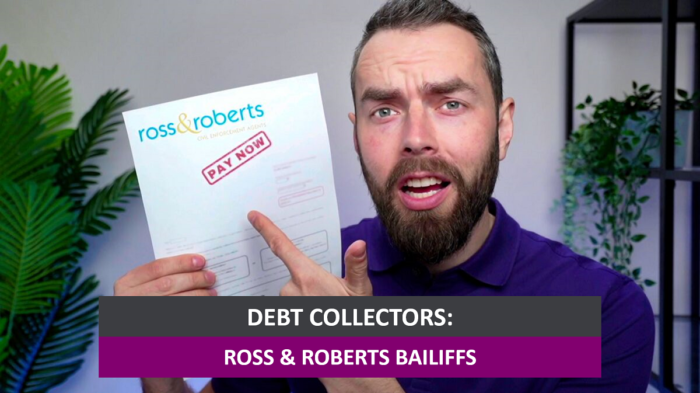
If Ross & Roberts have contacted you about enforcement, check the debt and the authority in the notice promptly. This guide explains the main rules for England and Wales and where to get free advice.
In this helpful article, you’ll find the following:
- Who Ross & Roberts enforcement agents are.
- Why they might be contacting you.
- How to know if the debt is really yours.
- What to do if you dispute the debt or cannot afford payment.
- The rules for enforcement agents and how they differ from ordinary debt collectors.
We know how stressful it can be when dealing with debt collectors. We’re here to help. We’ve lots of useful advice and examples to guide you through the process. We understand your worries and are committed to helping you find the best solution.
Let’s get to work.
Why are they contacting you?
Ross & Roberts acts as an enforcement company, including for local-authority debts. This work should not be described as buying your debt from the original creditor.
The powers available depend on the debt and the legal authority being used. Confirm the creditor, reference number and enforcement stage rather than relying on general statements about debt collection agencies.
A genuine enforcement notice requires prompt attention. If you doubt that it is genuine, check it with the named creditor using independently verified contact details.
Is this my debt?
If you don’t recognise the debt, you should get confirmation, as it may not be yours, or it might be incorrect. Debt verification is a crucial step that, in my experience, too many people skip.
Ask for the creditor, debt type, relevant dates, authority to enforce and an itemised balance. If liability is disputed, contact the creditor as well as the enforcement company and obtain urgent advice on the proper challenge. A request for evidence does not itself suspend enforcement or extend a deadline.
A prove it letter can help you ask for information, but it does not itself stop enforcement. Council tax and statutory penalty debts do not depend on a signed consumer credit agreement. Failure to produce such an agreement does not cancel a liability order or warrant. Check the actual legal basis of the debt and the available review or court procedure.
» TAKE ACTION NOW: Fill out the short debt form
Is it still enforceable?
Older debts need a case-specific check of the limitation or prescription rules; there is no single UK rule covering every debt.
Some unsecured contractual debts in England and Wales have a six-year time limit for starting court proceedings, normally measured from when the creditor could sue. A payment or qualifying signed written acknowledgment before expiry can restart the period. A conversation alone does not restart it, and court proceedings begun in time can change the position.
Scotland has different prescription rules: certain debts are extinguished after five years without a relevant claim or acknowledgment, subject to the applicable rules. This is not the same as the England and Wales limitation defence. Ask an adviser to check the debt type, dates and any court action.
Keep in mind that not all debts become statute-barred!
A debt with an existing judgment, council tax liability order or enforcement warrant cannot be assessed using a simple six-years-since-last-payment rule. Tax debts also have special rules. A judgment does not disappear when its six-year credit-file entry ends, although later enforcement may require court permission.
Get advice before using a statute-barred letter, making a payment or acknowledging an old debt. An adviser can check the type of debt, relevant dates and any court action. Do not ignore an existing notice or deadline. See statute-barred debt letter template.
What if you cannot afford to pay?
If the liability and fees are valid, discuss an affordable resolution promptly. If they are disputed, seek advice about the correct challenge and ask whether enforcement can be paused.
If you cannot afford payment in full, provide an income-and-expenditure budget and propose affordable instalments. The company does not have to accept every offer. Ask for written confirmation of any agreement and whether enforcement is paused; merely making an offer does not stop action or fees.
An offer of payment does not itself require all contact or enforcement to stop. Complain about harassment or inappropriate conduct, and tell the company and creditor about any vulnerability or communication needs.
Understand your debt options
MoneyNerd can introduce you to The Debt Advice Service for free debt advice. MoneyNerd does not provide debt advice or recommend debt solutions.
The Debt Advice Service can explain your options, including their benefits, costs and risks. Options available depend on your circumstances. There’s no obligation to take a debt solution.
MoneyNerd does not provide debt advice or recommend debt solutions. The Debt Advice Service is a trading style of Pacific Financial Solutions Limited. If you request an introduction, we’ll share your details with their team so they can contact you.
Some debt solutions have fees and may negatively affect your credit rating. MoneyNerd is a commercial introducer and may receive a fee if you go ahead with a debt solution through The Debt Advice Service.
For free, impartial money guidance and help finding free debt advice, visit MoneyHelper.
Can you ever get rid of your debt?
Debt solutions have eligibility rules, costs and consequences. Get free independent advice before deciding whether a solution that can write off included debt is suitable.
There are several different debt solutions available in the UK, so I recommend speaking to a debt charity as soon as possible. Their advisors will be able to look at your finances in detail and help you work out which debt solution will work best for you.
I have linked a few charities that offer these advisory services for free below.
Debt Management Plan (DMP)
A Debt Management Plan can organise affordable payments towards suitable unsecured debts, but is informal and does not automatically stop interest, court action or bailiff enforcement. Priority debts need separate attention.
Because a DMP is informal, creditors are not bound by it in the same way as by a formal insolvency arrangement. Review priority bills and enforcement risks with a free debt adviser.
Individual Voluntary Arrangement (IVA)
An IVA is a formal insolvency arrangement with creditors. It can include agreed payments or other contributions and binds creditors covered by the arrangement once approved. Fees, effects on assets and credit, and the risk of failure need to be considered with an authorised insolvency practitioner.
An IVA can write off the unpaid balance of included debts on successful completion, subject to its terms. Excluded debts remain payable, and failure can leave you liable for remaining debt and further action.
There is no universal statutory requirement to owe several thousand pounds or have more than one creditor. Suitability depends on the debts, available income or assets, alternatives and the provider’s criteria.
Trust Deed
Scotland has different debt remedies, including protected trust deeds, the Debt Arrangement Scheme and bankruptcy. A trust deed is one option, not a compulsory replacement for an IVA; ask a Scottish debt adviser which options fit your situation. See trust deed guide.
A protected trust deed is a formal Scottish insolvency arrangement with conditions, costs and risks to assets and credit. Protection and discharge depend on its status and successful completion; it does not automatically cover every debt or prevent every type of contact.
Debt Relief Order (DRO)
In England and Wales, a Debt Relief Order may be available if qualifying debts are no more than £50,000, spare monthly income is no more than £75, assets are no more than £2,000 and any qualifying vehicle is worth no more than £4,000. Other conditions apply, including not owning your home. An approved adviser must assess eligibility. See Debt Relief Order guide.
A DRO normally gives 12 months of protection for the debts included in it. Ongoing bills and excluded debts still need to be paid. Follow your adviser’s guidance, especially where rent arrears or eviction are involved.
Included debts are normally discharged at the end of the DRO period if the order remains in force. Changes in circumstances must be reported and can affect the order; excluded debts are not written off.
Bankruptcy
Bankruptcy is a formal insolvency option with eligibility rules and serious consequences for assets, housing, credit and sometimes employment. It does not cover every debt. Get independent advice on all available options before applying.
Bankruptcy has an unfair stigma attached to it as it may be your only way of getting a financial fresh start. That said, it is a serious financial situation that should not be taken lightly.
Sequestration
Sequestration is the Scottish version of bankruptcy.
Scotland’s Minimal Asset Process is a form of bankruptcy for people meeting specific debt, income and asset conditions. It has consequences for credit and finances and should be assessed with an approved money adviser. See Minimal Asset Process guide.
How do I complain?
Complain to the enforcement company and the creditor, identifying the conduct or charge you dispute. For a County Court bailiff employed by HMCTS, complain to the court. A complaint does not itself suspend enforcement or extend a court deadline. FCA consumer-credit rules are relevant only where the activity falls within their scope; they are not the general legal framework for council tax enforcement. See FCA handbook information.
Bailiff enforcement is governed by its statutory rules and applicable standards. FCA consumer-credit rules and Financial Ombudsman jurisdiction are not a universal complaints route for council tax or penalty enforcement.
Follow Ross & Roberts’ current complaints process and also complain to the instructing creditor where appropriate. Keep your evidence and ask for a written response. A complaint does not itself pause enforcement.
The Financial Ombudsman Service is not a general appeal body for bailiff enforcement and does not fine bailiffs. The correct escalation route depends on the agent and creditor: it may involve an eligible enforcement complaints scheme, a council ombudsman complaint or an application to court. Obtain advice on the route and any deadline. See Financial Ombudsman eligibility and complaints information.
Take the first step towards tackling your debt
Every day, our partner, The Debt Advice Service, helps people understand their options for dealing with debt. Their debt advice is free, with no obligation to proceed.
MoneyNerd introduces you to The Debt Advice Service. We do not provide debt advice or recommend debt solutions.

Natasha
Very helpful and informative thank you

If you submit the enquiry form, MoneyNerd will share your details with The Debt Advice Service so they can contact you.
Some debt solutions have fees and may negatively affect your credit rating. MoneyNerd may receive a fee if you go ahead with a debt solution through The Debt Advice Service.
The Debt Advice Service is a trading style of Pacific Financial Solutions Limited.
For free, impartial help and access to not-for-profit debt advice, visit MoneyHelper.
Ross & Roberts Ltd. Contact Number
References
Schedule 12, Tribunals, Courts and Enforcements Act, 2007
Part 1, Regulation 10, Certification of enforcement agents, 2014.