







Someone else’s debt at your address: letters, disputes and visits








MoneyNerd introduces enquiries to The Debt Advice Service and may receive a referral fee. For free, independent guidance and help finding a debt adviser, visit MoneyHelper.
This information and enquiry service is not a full financial assessment or a guarantee of suitability or debt write-off. Debt solutions are not suitable for everyone. Fees may apply, and your credit record and assets may be affected. Get advice on your circumstances before choosing a solution.
MoneyNerd introduces enquiries to The Debt Advice Service and may receive a referral fee. For free, independent guidance and help finding a debt adviser, visit MoneyHelper.
This information and enquiry service is not a full financial assessment or a guarantee of suitability or debt write-off. Debt solutions are not suitable for everyone. Fees may apply, and your credit record and assets may be affected. Get advice on your circumstances before choosing a solution.
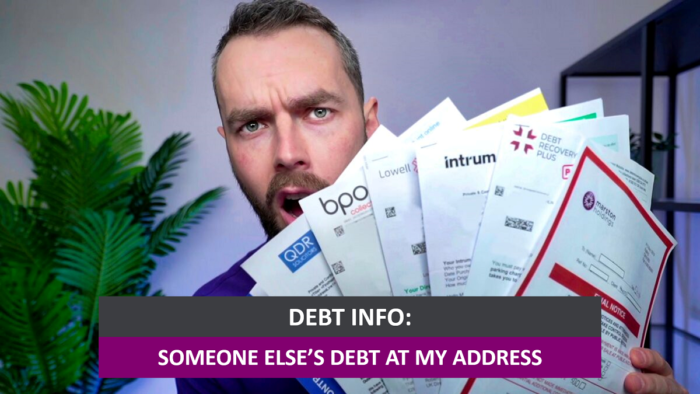
Receiving a debt letter for someone else does not make their debt yours. Check whose name is on it and whether there is any separate reason you could be liable, such as a genuine joint agreement, guarantee or legal responsibility for a household bill.
What should I do with a previous resident’s letters?
Return unopened post marked “not known at this address” or “no longer at this address”. If correspondence continues, use the sender’s independently verified contact details to ask it to correct the address. You do not have to find the person or pay their balance.
Keep a record of repeated contact and any complaint. Returning one envelope may not immediately correct every system, so do not assume that one letter guarantees all contact will stop.
What if the debt is in my name but I do not recognise it?
Check the company independently and ask for the agreement or other evidence showing why it believes you are liable. Clearly explain the dispute. Do not give sensitive documents or payment details to an unverified caller.
For regulated consumer-credit collection, firms must investigate a debt disputed on valid grounds and suspend recovery steps while doing so. There is no universal UK thirty-day deadline after which silence makes another person’s debt yours, and no general requirement for a US-style debt validation notice. See FCA dispute rules.
» TAKE ACTION NOW: Fill out the short debt form
If you suspect identity fraud, contact the lender’s fraud team and the credit-reference agencies to challenge affected entries. Use the appropriate police or Report Fraud reporting route. Do not ignore a court claim while a fraud complaint is being investigated.
What if I get calls or texts?
A message can be a mistaken trace, a legitimate contact or a scam. Do not decide solely from its format, click an unexpected payment link or disclose sensitive information. Check through a contact route you obtain independently and ask for wrong contact details to be removed.
Complain to the firm if inappropriate contact continues. For an eligible financial complaint, the Financial Ombudsman may be able to help after the firm’s complaints process. The FCA can receive reports but does not normally resolve individual compensation complaints.
Understand your debt options
MoneyNerd can introduce you to The Debt Advice Service for free debt advice. MoneyNerd does not provide debt advice or recommend debt solutions.
The Debt Advice Service can explain your options, including their benefits, costs and risks. Options available depend on your circumstances. There’s no obligation to take a debt solution.
MoneyNerd does not provide debt advice or recommend debt solutions. The Debt Advice Service is a trading style of Pacific Financial Solutions Limited. If you request an introduction, we’ll share your details with their team so they can contact you.
Some debt solutions have fees and may negatively affect your credit rating. MoneyNerd is a commercial introducer and may receive a fee if you go ahead with a debt solution through The Debt Advice Service.
For free, impartial money guidance and help finding free debt advice, visit MoneyHelper.
Can a debt collector enter or take goods?
An ordinary collection agent has no bailiff powers. You do not have to invite them in, and they cannot seize belongings just because they have asked for payment. Tell them they have the wrong person and ask them to leave.
An enforcement agent or bailiff is different. In England and Wales, powers depend on the warrant or other authority and the circumstances. Contact the enforcement company and creditor promptly if the address or person is wrong. Evidence such as a tenancy agreement or council-tax bill may help establish who lives there, but is not conclusive proof about every person or item.
Take the first step towards tackling your debt
Every day, our partner, The Debt Advice Service, helps people understand their options for dealing with debt. Their debt advice is free, with no obligation to proceed.
MoneyNerd introduces you to The Debt Advice Service. We do not provide debt advice or recommend debt solutions.

Natasha
Very helpful and informative thank you

If you submit the enquiry form, MoneyNerd will share your details with The Debt Advice Service so they can contact you.
Some debt solutions have fees and may negatively affect your credit rating. MoneyNerd may receive a fee if you go ahead with a debt solution through The Debt Advice Service.
The Debt Advice Service is a trading style of Pacific Financial Solutions Limited.
For free, impartial help and access to not-for-profit debt advice, visit MoneyHelper.
They should not take goods belonging solely to someone other than the debtor. Jointly owned goods and a debtor who actually lives at the address need separate advice. Keep ownership evidence and seek urgent help if goods are threatened or taken. Read GOV.UK’s bailiff guidance; Scotland and Northern Ireland have different enforcement systems.
What about my partner, relative or a joint debt?
A family relationship or marriage alone does not make individual borrowing joint. However, a joint borrower can usually be pursued for the full balance, and a guarantor can be liable under the guarantee. Some household bills have statutory liability rules. An additional credit-card user is not normally the account holder liable to the card company.
If an apparent agreement involved forgery, coercion or financial abuse, obtain advice rather than assuming the debt cannot be challenged. After a death, debts are normally dealt with through the estate; joint liability, guarantees and the duties of an executor or administrator can change the position.
Does an address become blacklisted?
Credit records relate to people, not an inherited blacklist attached to a home. Sharing an address with a debtor does not itself create a financial association. Address history is nevertheless used to match records, and joint credit can link people financially. Check your own credit reports and ask for incorrect links or entries to be investigated.
What if a court document arrives?
Tell the court or sender if it names someone who does not live there. If it names you, get advice and respond using the document’s procedure and deadline, even if the claim is wrong. A complaint or evidence request does not automatically extend a court deadline.






