







Allied International Credit (AIC): Debt Letters and Your Rights








MoneyNerd introduces enquiries to The Debt Advice Service and may receive a referral fee. For free, independent guidance and help finding a debt adviser, visit MoneyHelper.
This information and enquiry service is not a full financial assessment or a guarantee of suitability or debt write-off. Debt solutions are not suitable for everyone. Fees may apply, and your credit record and assets may be affected. Get advice on your circumstances before choosing a solution.
MoneyNerd introduces enquiries to The Debt Advice Service and may receive a referral fee. For free, independent guidance and help finding a debt adviser, visit MoneyHelper.
This information and enquiry service is not a full financial assessment or a guarantee of suitability or debt write-off. Debt solutions are not suitable for everyone. Fees may apply, and your credit record and assets may be affected. Get advice on your circumstances before choosing a solution.
If dealing with debt is affecting your wellbeing, seek support and tell the firm about any communication or accessibility needs. A debt adviser can help you decide what to do next.
You’re not alone! This article is here to help. We’ll cover common worries such as:
- What is Allied International Credit?
- Should I pay Allied International Credit Debt?
- How could I maybe write off some of this debt?
- What can I do if I can’t afford to pay?
A debt letter can be worrying. Keep the correspondence, check the creditor and balance, and note any response deadline. Free independent debt advice is available.
Remember, it’s important not to ignore the situation. We’ll explain your options and how to deal with it in a clear way. After all, we know dealing with debt can be tough, but together, we can handle it.
Have You Received a Letter?
Allied International Credit (AIC) is a trading name of Bill Gosling Outsourcing Limited. Its UK website describes managing unpaid accounts for clients; do not assume it has purchased your debt.
Not every collection letter is a formal Letter of Claim. Read the document carefully, identify the creditor and account, and note any response deadline.
If you dispute the debt, explain why and request an itemised balance and evidence of liability. For recovery covered by FCA consumer-credit rules, a valid or potentially valid dispute must be investigated and recovery paused. A generic proof request does not cancel a debt, override an existing judgment or extend a court deadline.
State your reasonable preferences for how, when and where you are contacted, and explain any health or accessibility needs. FCA-regulated recovery must give those preferences due regard. This is not an absolute right to prevent every call or required notice.
Your Rights
As mentioned above, debt collectors may try to intimidate you to make you pay. However, they should never harass you.
To prevent unfair treatment, it’s crucial to understand your rights when dealing with debt collectors. That’s why we’ve created this quick table that explains what they can and can’t do. If you want to learn more about your rights, make sure to check out our detailed guide.
| Debt collectors may | Limits and protections |
|---|---|
| Contact you to seek payment | For regulated consumer credit, contact must be at reasonable times and respect reasonable requests about when, where and how you are contacted. |
| Ask to discuss the debt at a home visit | A collector has no bailiff powers, cannot force entry or take goods, and should leave when asked. |
| Explain possible court action | They must not mislead you about their powers or threaten action they cannot lawfully take. |
| Discuss an affordable repayment or settlement | Get agreed terms in writing and obtain free advice if you dispute the debt or cannot afford payments. |
| A creditor may seek a separate court enforcement order | A CCJ alone does not give a collector access to your bank account. A third-party debt order requires a separate court process. |
| A creditor may assign a debt | Check who owns it and who is authorised to collect; do not disclose payment details to an unverified caller. |
| Make proportionate follow-up contact | Harassment is prohibited. Requests about contact must be considered; necessary legal notices may still be sent. |
Collectors must protect your privacy and must not unfairly disclose a debt to relatives, neighbours or an employer. They can communicate with an authorised representative or make other legally permitted disclosures. Contact must be proportionate and must not amount to harassment. An ordinary debt collector has no bailiff powers: it cannot force entry or seize your goods. You can decline a doorstep discussion and ask the visitor to leave. The creditor may still take lawful court action; authorised enforcement after judgment is a separate process.
Ask Them to Prove It
If you dispute the debt, explain why and request an itemised balance and evidence of liability. For recovery covered by FCA consumer-credit rules, a valid or potentially valid dispute must be investigated and recovery paused. A generic proof request does not cancel a debt, override an existing judgment or extend a court deadline.
A creditor bringing a court claim must establish its case, but the court can enter default judgment if you fail to respond. A request to the collector does not replace your court response.
Use evidence requests to resolve a genuine dispute or uncertainty. There is no basis to assume most collectors lack documents or are deliberately hiding them.
Seek advice while evidence is checked. Do not assume a request suspends every deadline or makes a valid debt disappear.
We have made sending this request for proof effortless with our free prove the debt templates.
Keep the evidence request and response. If a claim is issued, use the proper court procedure to explain any missing evidence or genuine defence; correspondence alone does not answer the claim.
Understand your debt options
MoneyNerd can introduce you to The Debt Advice Service for free debt advice. MoneyNerd does not provide debt advice or recommend debt solutions.
The Debt Advice Service can explain your options, including their benefits, costs and risks. Options available depend on your circumstances. There’s no obligation to take a debt solution.
MoneyNerd does not provide debt advice or recommend debt solutions. The Debt Advice Service is a trading style of Pacific Financial Solutions Limited. If you request an introduction, we’ll share your details with their team so they can contact you.
Some debt solutions have fees and may negatively affect your credit rating. MoneyNerd is a commercial introducer and may receive a fee if you go ahead with a debt solution through The Debt Advice Service.
For free, impartial money guidance and help finding free debt advice, visit MoneyHelper.
They Proved I Owe the Money, Help!
If documents arrive, check whether they support your identity, the balance and the creditor’s entitlement. A signed credit agreement is only one possible kind of evidence.
Check the account and independently verify the payment destination first. If the debt is enforceable and affordable after essential costs and priority debts, consider payment or an agreed plan. Do not borrow further or miss essential bills simply to meet a collection demand. Ask for a breakdown and the contractual or legal basis of any added interest or charges. Referring an account to a collector does not automatically make every collection fee payable.
Prepare a budget covering essential living costs and priority debts first. Propose only instalments you can afford, and obtain written acceptance and confirmation of any interest or action being paused. An offer alone does not guarantee agreement or stop a court claim.
Always conduct a thorough budget before agreeing to a plan with them. If you do not know your disposable income then you might commit to paying back too much and get into other debts.
Use this friendly budgeting article for help!
UK Personal Debt 2021 Update:
As of April 2021, the average total debt per UK household was £61,509
(Source: The Money Charity)
But there are other ways to get out of debt – and they could be cheaper!
A collector’s repayment proposal is one option. A free independent adviser can compare alternatives across all your debts.
Read about these and more on our debt solutions page.
There are several debt solutions available in the UK. We recommend speaking to a debt charity to help you find out which will work best for you.
Debt Management Plan (DMP)
A Debt Management Plan is an informal arrangement for suitable unsecured debts. It does not automatically freeze interest, prevent court action or cover priority debts, and reduced payments can harm your credit record. Free providers are available; affordability and suitability should be checked before starting.
Because it is informal, it is not legally binding so you are not tied into a DMP for a minimum number of payments.
Individual Voluntary Arrangement (IVA)
An IVA is a formal insolvency arrangement managed by an insolvency practitioner. Your proposal sets out payments, any assets involved and fees. Once approved, it binds the creditors and debts covered by it and restricts recovery action; it is not a blanket ban on necessary correspondence.
Many IVAs involve payments for five or six years, but the agreed term varies. Qualifying unpaid debt is normally released only on successful completion. An IVA affects your credit record, may involve assets or home equity, and can fail if its terms are not met.
IVA suitability depends on your debts, affordable contributions or available assets, fees and creditor approval. There is no universal rule that you must owe several thousand pounds to more than one creditor. Get independent debt advice and compare other options before agreeing to an IVA.
Trust Deed
IVAs are not available in Scotland. A Scottish money adviser can compare a protected trust deed, the Debt Arrangement Scheme, sequestration and informal arrangements; a trust deed is not compulsory.
A protected trust deed is a Scottish insolvency arrangement, usually lasting at least four years of contributions. It can discharge qualifying unpaid debt on successful completion, but fees apply and your home or other assets may be at risk. Covered creditors cannot pursue payment outside it, but can still send required documents.
Debt Relief Order (DRO)
In England and Wales, a DRO may suit an eligible non-homeowner with low surplus income, limited assets and qualifying debts within the £50,000 limit. Detailed income, asset, vehicle and residence rules apply. An approved debt adviser checks eligibility and submits the application to the Insolvency Service.
During the usual 12-month DRO period, recovery of listed qualifying debts is restricted and you generally do not pay those debts. Ongoing bills and excluded debts still need attention. Creditors may send statements and other permitted correspondence.
A DRO normally lasts 12 months. If it remains in force, the qualifying debts listed in it are normally discharged at the end. You must report relevant changes and continue paying ongoing bills and excluded debts, such as court fines and student loans.
Bankruptcy
If you have debts but no realistic possibility of ever paying them off, you may need to declare bankruptcy.
Bankruptcy has an unfair stigma attached to it as it may be your only way of getting a financial fresh start. That said, it is a serious financial situation that should not be taken lightly.
Sequestration
Sequestration is the Scottish version of bankruptcy.
Scotland’s Minimal Asset Process is a form of bankruptcy for people meeting specific debt, income and asset conditions. It has consequences for credit and finances and should be assessed with an approved money adviser. See Minimal Asset Process guide.
How to Make a Payment
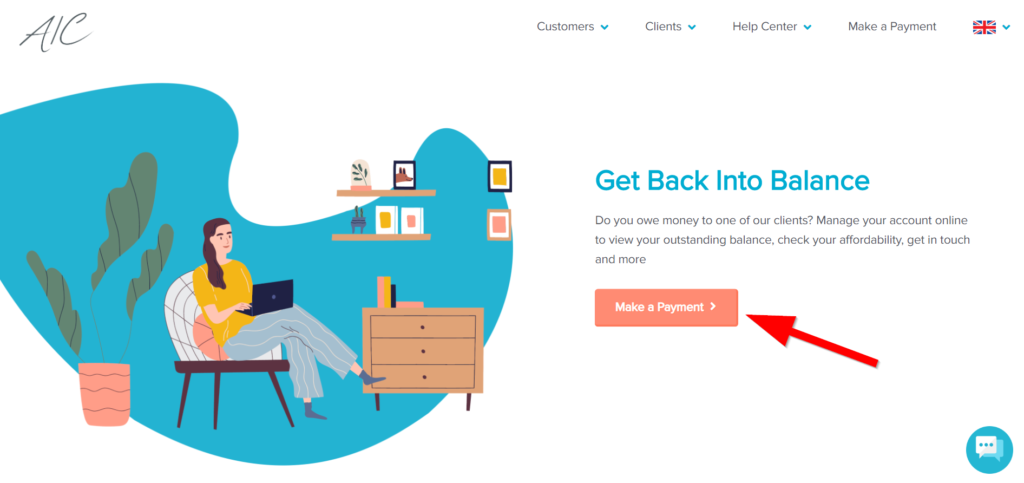
AIC’s UK website provides a payment portal, including debit card and digital-wallet options. Confirm the account and route independently before paying.
Use the official UK site, https://aiccorp.co.uk/, if choosing online payment. Pay only an amount affordable after essential costs and priority debts.
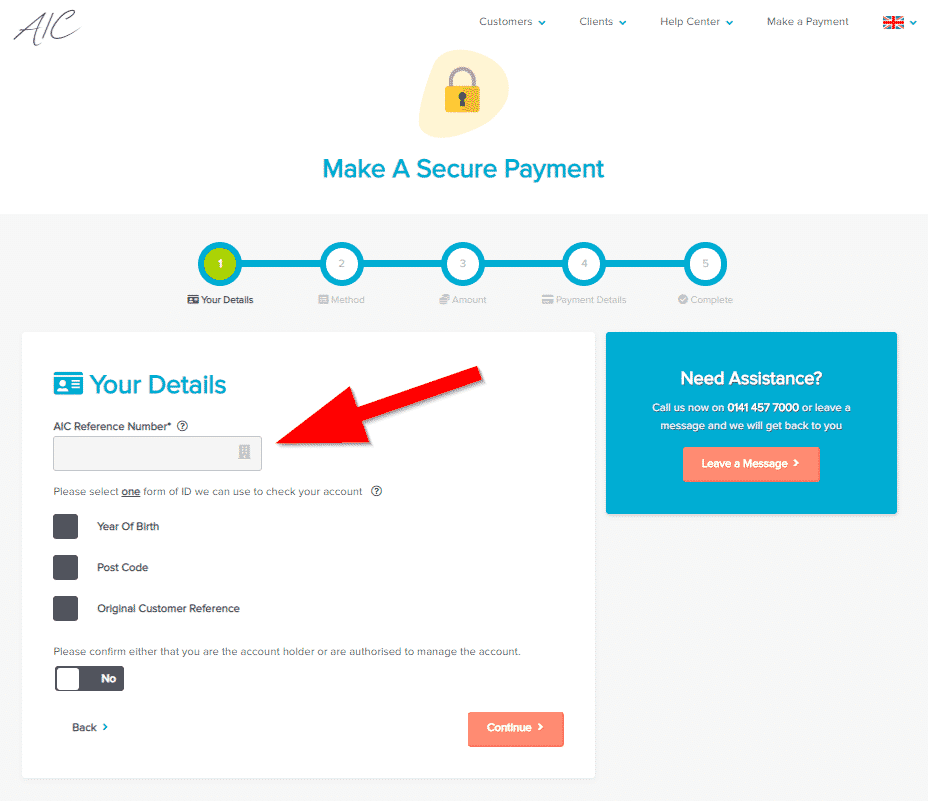
Have your account reference ready and follow the current official portal instructions. Do not give account-security information through an unverified link.
What Laws Must They Stick to?
Relevant FCA rules require fair treatment and proportionate recovery. Complain about specific conduct or charges you believe breach the applicable rules.
They must:
- Give due regard to reasonable communication preferences and explain any necessary alternative.
- Explain all terms and phrases they use when asked, to ensure they do not confuse and mislead you
- Point you to debt advice and support channels
- Consider financial difficulty fairly and assess affordable proposals; this does not mean every proposed instalment must be accepted.
- Give you reasonable time to decide how to get out of debt
- Show an understanding of the situation
- Never lie or intend to deceive you
Thousands have already tackled their debt
Every day, our partner, The Debt Advice Service, helps people understand their options for dealing with debt. Their debt advice is free, with no obligation to proceed.
MoneyNerd introduces you to The Debt Advice Service. We do not provide debt advice or recommend debt solutions.

Natasha
Very helpful and informative thank you

If you submit the enquiry form, MoneyNerd will share your details with The Debt Advice Service so they can contact you.
Some debt solutions have fees and may negatively affect your credit rating. MoneyNerd may receive a fee if you go ahead with a debt solution through The Debt Advice Service.
The Debt Advice Service is a trading style of Pacific Financial Solutions Limited.
For free, impartial help and access to not-for-profit debt advice, visit MoneyHelper.
Is There a Way to Get It Written Off?
A collection agency may need the creditor’s authority to agree a settlement or write-off. Ask for a written decision rather than assuming every request must be refused.
But there are ways to get some or most of the debt wiped, usually with a formal debt solution for AIC debts:
- An IVA can write off the unpaid balance of included debts on successful completion, subject to its terms. Excluded debts remain payable, and failure can leave you liable for remaining debt and further action. The percentage depends on the approved terms and circumstances; no particular saving is guaranteed.
- A creditor may consider a reduced full-and-final settlement, but does not have to accept it. Obtain written confirmation that the agreed payment settles the account and releases the remaining balance before paying. Do not use money needed for essential living costs or priority debts.
- In England and Wales, a Debt Relief Order may be available if qualifying debts are no more than £50,000, spare monthly income is no more than £75, assets are no more than £2,000 and any qualifying vehicle is worth no more than £4,000. Other conditions apply, including not owning your home. An approved adviser must assess eligibility. Included debts are normally discharged at the end of the DRO period if the order remains in force. Changes in circumstances must be reported and can affect the order; excluded debts are not written off.
- Bankruptcy is a formal insolvency option with eligibility rules and serious consequences for assets, housing, credit and sometimes employment. It does not cover every debt. Get independent advice on all available options before applying.
You should be aware that having debt wiped may save you having to pay, but it can decrease your credit score. This will make it less likely you will be given credit in the future and could stop you getting a mortgage, or even something as insignificant as a mobile phone contract.
When Can I Complain?
If you think that Allied International has been unreasonable or behaved inappropriately, you can make a complaint. You can also make a complaint if you feel that they have broken any of the Financial Conduct Authority’s (FCA) guidelines.
Fortunately, filing a complaint against AIC is quite straightforward.
Make your first complaint to Allied International so that they have the chance to sort out the issue themselves. If you feel that they have not taken your complaint seriously enough or have not addressed your issue properly, you can escalate matters.
Complain to the business first. If the activity falls within the Financial Ombudsman Service’s remit, you can normally escalate after a final response or eight weeks without one, usually within six months of the final response. The Ombudsman can require redress, such as compensation or correcting records; it does not fine firms or remove their authorisation.
» TAKE ACTION NOW: Fill out the short debt form
Here are some of the things to complain about:
If they are aggressive and intimidating
Keep a record of any conduct you consider misleading, threatening or excessive. A lawful warning of possible court action is different from pretending to have powers the firm does not possess. A complaint should identify the actual words, dates and evidence.
If they call you too much
State your reasonable preferences for how, when and where you are contacted, and explain any health or accessibility needs. FCA-regulated recovery must give those preferences due regard. This is not an absolute right to prevent every call or required notice.
If they threaten to take your possessions
An ordinary debt collector has no bailiff powers: it cannot force entry or seize your goods. You can decline a doorstep discussion and ask the visitor to leave. The creditor may still take lawful court action; authorised enforcement after judgment is a separate process. An accurate explanation that a creditor may later seek court enforcement is not itself a false claim of bailiff powers.
If they tell others about it
Collectors must protect your privacy and must not unfairly disclose a debt to relatives, neighbours or an employer. They can communicate with an authorised representative or make other legally permitted disclosures. Contact must be proportionate and must not amount to harassment.
Allied International Credit Contact Details
| Website: | https://aiccorp.co.uk/ |
| Registered Address: | Adamson House, Towers Business Park, Didsbury, Manchester, M20 2YY |
| Postal address | 310 St Vincent Street, Glasgow, G2 5RU. |
| Phone number: | 0141 457 7000 |
| Email: | [email protected] |
| Checking a caller | Verify contact through the official UK website; caller ID can be spoofed and an old outbound-number list is not proof of identity. |
References