






Prove It Letter Templates: Query a Debt or Mistaken Identity








MoneyNerd introduces enquiries to The Debt Advice Service and may receive a referral fee. For free, independent guidance and help finding a debt adviser, visit MoneyHelper.
This information and enquiry service is not a full financial assessment or a guarantee of suitability or debt write-off. Debt solutions are not suitable for everyone. Fees may apply, and your credit record and assets may be affected. Get advice on your circumstances before choosing a solution.
MoneyNerd introduces enquiries to The Debt Advice Service and may receive a referral fee. For free, independent guidance and help finding a debt adviser, visit MoneyHelper.
This information and enquiry service is not a full financial assessment or a guarantee of suitability or debt write-off. Debt solutions are not suitable for everyone. Fees may apply, and your credit record and assets may be affected. Get advice on your circumstances before choosing a solution.
When a debt collector sends a letter, it can feel scary. You might not know where this debt comes from or if you really need to pay it.
This guide includes letters you can copy and adapt when an account is unfamiliar or a collector has contacted the wrong person.
In this easy guide, we’ll show you:
- How to query an unfamiliar debt.
- How to request suitable contact arrangements.
- Tips to set up plans to pay back what you owe.
- When to obtain free debt advice.
Use a template only if it accurately describes your circumstances. It does not replace the Reply Form for a Letter of Claim, a court defence or any statutory appeal. Keep copies and follow every deadline. If the debt may be time-barred, seek free advice before making a payment or a written acknowledgement; adding “I do not acknowledge liability” does not undo an admission elsewhere in your letter.
A letter can help clarify an account, but it does not guarantee cancellation of a debt.
Someone Else Owes the Money
A collector may have an out-of-date address or incorrect information about the account holder.
As a result, you might have received a letter from a debt collection agency that relates to a debt that is owed by someone who lived in your home before you moved into it.
You do not become liable for someone else’s debt simply by living at their former address. Credit files relate to individuals, although joint financial commitments can create a financial association.
Tell the verified collector if it has contacted the wrong person. Do not ignore court papers addressed to you; obtain advice even if you believe the claim is a mistake.
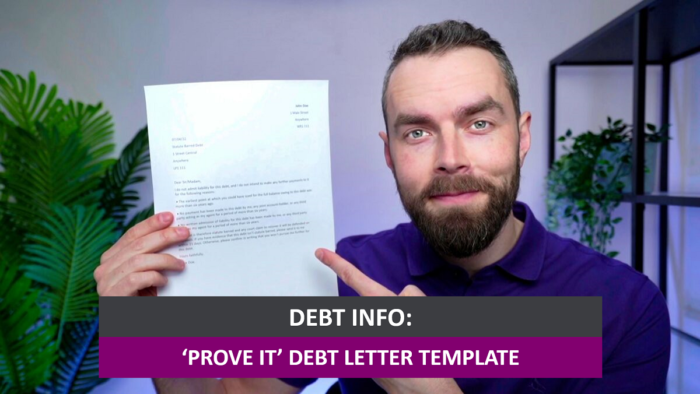
The easiest way to do this is to send them the following letter:
Dear Sir/Madam,
Re: [reference]
I am responding to your letter dated [date], addressed to [name]. I am not the person named and I do not owe this debt. [If accurate: That person does not live at this address.]
Please investigate the mistaken contact, correct your records and confirm that you will stop pursuing me for this account. Please communicate in writing while you investigate.
Yours faithfully,
[your name]
The firm may ask for proportionate information to investigate mistaken identity. Verify it independently before supplying anything, and redact unrelated details from documents.
You do not generally have to trace a former occupier or supply a forwarding address simply because a collector asks. Provide only accurate and necessary information, and seek advice if you receive a formal legal request.
» TAKE ACTION NOW: Fill out the short debt form
You Don’t Think You Owe the Money
There are a number of reasons that you might think you don’t owe the money that is being claimed. You might think that you have already settled the debt. You might have forgotten that you owe the money.
But commonly, the reason you don’t know if the debt is yours is because you don’t recognise the name of the debt collector.
A creditor may appoint an agent or sell an account, so a new company name does not by itself show whether a debt is yours. Ask the original creditor to confirm the arrangement.
A disputed debt must not automatically be marked as settled. For regulated consumer credit, the firm must investigate a dispute on valid or potentially valid grounds, suspend recovery during that investigation and provide the outcome. Incorrect credit-file information should be corrected.
If you don’t think that you owe the money that they are claiming you owe, you can send them the following letter:
Dear Sir/Madam,
Re: [reference]
I do not acknowledge liability for the debt referred to in your letter dated [date]. [Explain the genuine reason for your query or dispute, for example that you do not recognise the account or believe the balance is wrong.]
Please identify the original creditor and provide the account reference, a breakdown of the balance, evidence that I am liable, and details of your authority to collect it.
Where FCA consumer credit rules apply, please suspend recovery while you investigate this dispute on valid or potentially valid grounds, and explain the outcome in writing. This request refers to CONC 7.14; it is a summary of the relevant rules, not a quotation.
Please use [your preferred contact method].
Yours faithfully,
[your name]
You can type your name at the end and keep a copy. Check that every statement in your letter is accurate.
There is no basis for assuming that a collector will copy your signature onto a credit agreement. The issue is whether the account and amount are supported by proper evidence.
Ask for documents that address the actual dispute: for example account statements, the creditor’s details and evidence of the balance or your liability.
A general proof request is different from a statutory request under sections 77–79 of the Consumer Credit Act. Those provisions apply to particular credit agreements and have their own requirements; a compliant copy is not always a photocopy bearing your signature.
It’s important to know your rights when dealing with debt collectors to prevent any unwanted situations. That’s why I’ve put together this table.
If you want to learn more about your rights, don’t forget to check out our detailed guide.
| Debt collectors may | Limits and protections |
|---|---|
| Contact you to seek payment | For regulated consumer credit, contact must be at reasonable times and respect reasonable requests about when, where and how you are contacted. |
| Ask to discuss the debt at a home visit | A collector has no bailiff powers, cannot force entry or take goods, and should leave when asked. |
| Explain possible court action | They must not mislead you about their powers or threaten action they cannot lawfully take. |
| Discuss an affordable repayment or settlement | Get agreed terms in writing and obtain free advice if you dispute the debt or cannot afford payments. |
| A creditor may seek a separate court enforcement order | A CCJ alone does not give a collector access to your bank account. A third-party debt order requires a separate court process. |
| A creditor may assign a debt | Check who owns it and who is authorised to collect; do not disclose payment details to an unverified caller. |
| Make proportionate follow-up contact | Harassment is prohibited. Requests about contact must be considered; necessary legal notices may still be sent. |
Understand your debt options
MoneyNerd can introduce you to The Debt Advice Service for free debt advice. MoneyNerd does not provide debt advice or recommend debt solutions.
The Debt Advice Service can explain your options, including their benefits, costs and risks. Options available depend on your circumstances. There’s no obligation to take a debt solution.
MoneyNerd does not provide debt advice or recommend debt solutions. The Debt Advice Service is a trading style of Pacific Financial Solutions Limited. If you request an introduction, we’ll share your details with their team so they can contact you.
Some debt solutions have fees and may negatively affect your credit rating. MoneyNerd is a commercial introducer and may receive a fee if you go ahead with a debt solution through The Debt Advice Service.
For free, impartial money guidance and help finding free debt advice, visit MoneyHelper.
Staying On Top Of Your Debts
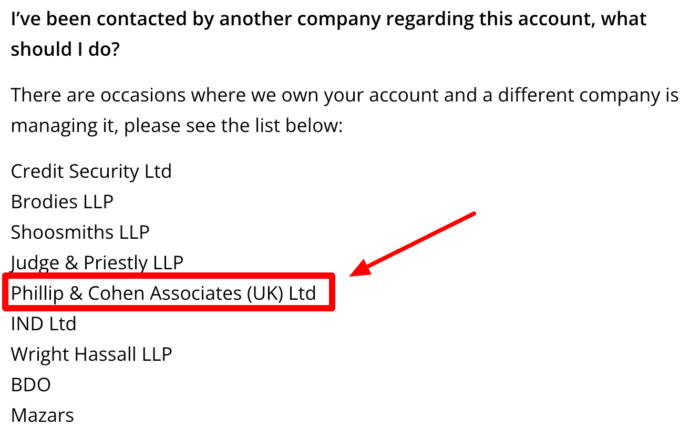
A letter may come from the original creditor, a debt purchaser or a separate collection agency. Check the business name and contact details against reliable records, and ask it to explain who owns the debt and its authority to collect. Keep earlier correspondence so you can trace any change of owner or representative.
- Robinson Way will sometimes contact you under the name Hoist Finance.
- Cabot Financial Group recently bought Wescot Credit Services
- Credit Style communicate as both Credit Style and CST Law.
- Lowell Financial also owns Overdales and collects debts under both names.
Thousands have already tackled their debt
Every day, our partner, The Debt Advice Service, helps people understand their options for dealing with debt. Their debt advice is free, with no obligation to proceed.
MoneyNerd introduces you to The Debt Advice Service. We do not provide debt advice or recommend debt solutions.

Natasha
Very helpful and informative thank you

If you submit the enquiry form, MoneyNerd will share your details with The Debt Advice Service so they can contact you.
Some debt solutions have fees and may negatively affect your credit rating. MoneyNerd may receive a fee if you go ahead with a debt solution through The Debt Advice Service.
The Debt Advice Service is a trading style of Pacific Financial Solutions Limited.
For free, impartial help and access to not-for-profit debt advice, visit MoneyHelper.
Do you need to keep records?
Yes, I recommend keeping a record of all of your communications with debt collectors.
This will make it much easier for you if the debt collectors challenge or argue with you in the future!
Keep sent letters, proof of delivery, responses and dated call notes. You can request written contact, but this does not automatically stop every required notice or reasonable communication.
Up-to-date and accurate records will help you prove any wrongful debt collection or mistaken debt identity. Good record keeping will also help you more generally with your personal financial management.
References