





Council and Police Fines
Fixed Penalty Notice

How To Get Out Of A Fixed Penalty Notice

Scott Nelson MoneyNerd Janine Marsh MoneyNerd
By
Scott
Scott Nelson MoneyNerd

Scott Nelson

Debt Expert

Scott founded MoneyNerd after his own experience with debt. He runs the website and oversees its general information about debt and other money matters. Scott does not provide personal debt advice or recommend debt solutions through MoneyNerd. If you make a debt enquiry, MoneyNerd may introduce you to The Debt Advice Service, which provides any personal debt advice.

Learn more about Scott
&
Janine
Janine Marsh MoneyNerd

Janine Marsh

Financial Expert

Janine contributed articles and videos to MoneyNerd about everyday money, household costs, debt topics and parking matters. She has a background in broadcasting, including work with BBC Radio 5 Live and Bauer radio stations.

Learn more about Janine
· May 28th, 2024
Paid legal information from JustAnswer

JustAnswer is a paid third-party service. Membership can renew automatically with recurring charges until cancelled. Check the initial price, renewal price and cancellation terms before signing up. Buying this service does not guarantee a successful challenge. Read membership and cancellation information.

Get Out Of A Fixed Penalty Notice

Have you received a Fixed Penalty Notice (FPN) and are unsure what to do next? You’ve come to the right place. Every month, over 130,000 people visit our site seeking advice on fines and parking tickets.

Our guide aims to clearly answer your questions about FPNs and provide simple explanations about:

  • What an FPN is.
  • Whether you must pay it.
  • How to appeal against it.
  • Times when you might not need to pay.
  • What happens if you don’t pay.

A group of MPs and Peers say FPNs, which can cost up to £10,000, are hard to understand and might be unfair.1 Our team has experienced these challenges as well, so we’re familiar with the concerns you may have.

We aim to ease your worries and help you understand your options. Let’s get started!

JustAnswer is a paid third-party question-and-answer service providing general information. Its standard service does not create a solicitor-client relationship. Membership can renew automatically with recurring charges until cancelled. Check the initial price, renewal price and cancellation terms before signing up. Buying this service does not guarantee a successful challenge. See JustAnswer’s membership and cancellation information.

You can use the official challenge process without buying a paid service. If you choose to use JustAnswer, visit JustAnswer to read its service and payment terms.

Commercial link to JustAnswer. MoneyNerd may receive a referral fee. No successful outcome is guaranteed.

How do I challenge a fine issued by the police?

You can’t ‘formally’ appeal an FPN issued by the police because there’s no actual process in place. 

That said, when you disagree with it, you could:

  • Choose not to pay the fixed penalty fine
  • Go to Court and let a judge decide whether it is merited or given correctly

The downside to taking this route is that it’s incredibly time-consuming. Plus, it can work out expensive.

Note: Some local authorities have their own internal appeals processes, which means a dispute can be resolved without going to Court.

Check out what happened to one motorist who tried to pay a FPN twice but was told the police hadn’t processed it yet after several days.
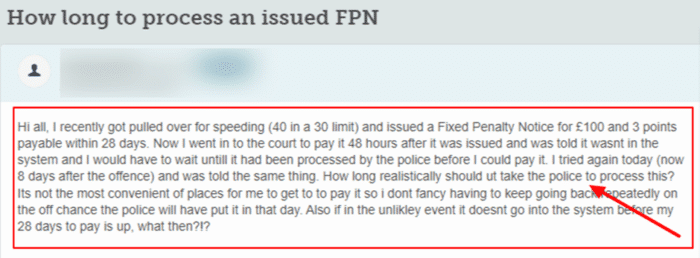
Source: Moneysavingexpert

FPN Appeal Reasons

If you believe the FPN was unfairly issued, it’s important to understand the different reasons there are to challenge it.

I’ve put together this table to help you increase your chances of success.

Issue to check Possible evidence Important limit
The alleged offence did not occur Contemporaneous photographs, video or reliable records. The relevant legal elements and evidence must be assessed.
Valid insurance or entitlement Policy documents or DVLA records covering the exact time and use. Holding a document now does not prove cover or entitlement at the time.
A recognised statutory exemption Evidence establishing the exact exemption, such as an applicable medical exemption. An emergency or misunderstanding does not automatically amount to a defence.
Identity or vehicle details Evidence of a mismatch, mistaken identity or cloned vehicle. Follow the notice’s response requirements; do not invent a driver or account.
Signage or equipment Photographs and reliable evidence relevant to the alleged offence. A malfunctioning speedometer is not a general defence to speeding. Seek legal advice before contesting.

FPNs do not use the same appeal procedure as council PCNs. Follow the notice; contesting the allegation may require a court hearing. Paper tax discs have not been required since 1 October 2014.

Check the right challenge process

A Fixed Penalty Notice does not normally use the council parking tribunal process. The notice explains how to dispute the allegation, which may require a court hearing. If convicted, the penalty and costs can be higher than the fixed penalty. Check the process and deadlines before deciding what to do.

Get started

General information. The procedure depends on the notice and jurisdiction. Check the issuer’s instructions.

What about those issued by councils?

You could appeal a fixed penalty notice issued by a local council if:

  • To the best of your knowledge, you didn’t commit an offence
  • The FPN was not issued correctly – an example, there was an exception under the law
  • Someone else committed the offence
  • You could not prevent the offence from being committed, yet you got the FPN
  • The FPN should not have been served because you are under 18, mentally or physically incapacitated, or did not have the understanding an offence was committed
  • There were extenuating circumstances that affected you temporarily 
  • That service the FPN was not in the public interest

Note: A local authority may have evidence of an offence, so when you appeal, you must provide proof for it to be cancelled.

What proof do I need to provide?

You must provide proof to support your appeal against an FPN.

This includes:

  • Photos
  • Witness statements

The more evidence you can provide, the stronger your appeal is. An appeal against a fixed penalty notice gets turned down if the following reasons apply:

  • You did not know the law (ignorance of the law doesn’t get you out of paying an FPN)
  • You didn’t think you’d committed an offence
  • You were unable to prevent the offence
  • It was only a minor offence. Therefore, you should be let off

Can you ignore it?

When you ignore a fixed penalty notice, the offence is referred to the Courts.

You may have to appear before a magistrate. Then you have a couple of choices:

  • Plead guilty by letter to avoid going to Court
  • Appear in Court to argue your case against the FPN

The amount you pay increases if you lose and are found guilty of committing the offence. Plus, you’ll have to pay court costs!

Keep in mind that if you rejected the Fixed Penalty Notice and challenged the case in court, but lost, it could negatively affect the outcome of a visa application.

JustAnswer is a paid third-party question-and-answer service providing general information. Its standard service does not create a solicitor-client relationship. Membership can renew automatically with recurring charges until cancelled. Check the initial price, renewal price and cancellation terms before signing up. Buying this service does not guarantee a successful challenge. See JustAnswer’s membership and cancellation information.
Get started

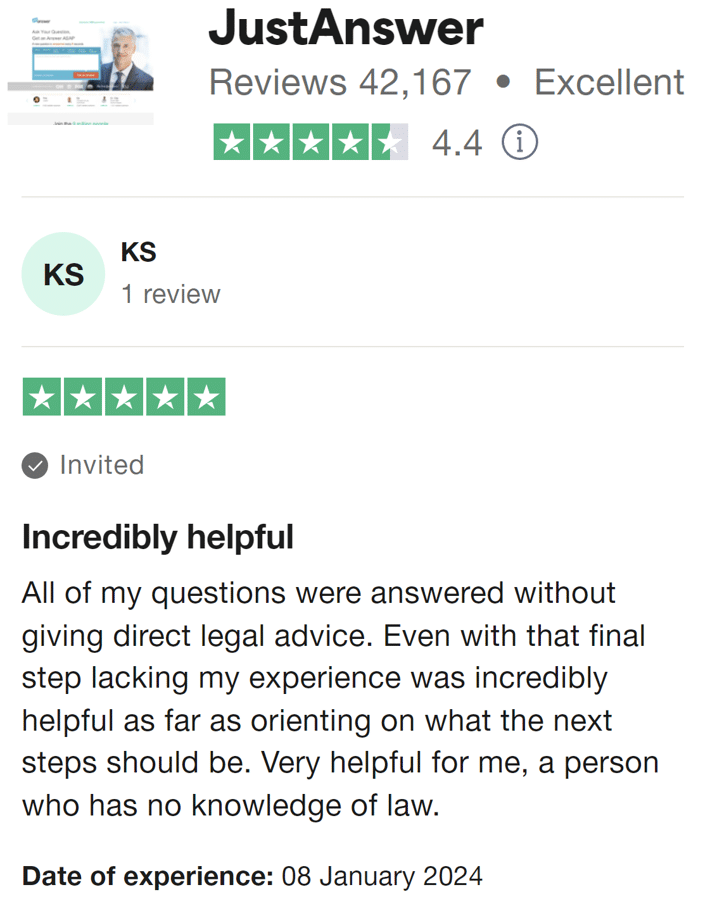
Historical JustAnswer review image. The displayed rating and review total are not live. Reviews do not predict your case outcome. Membership fees and renewal terms apply.

Can you appeal against penalty points for speeding?

Yes, you can appeal a fixed penalty notice by refusing to pay and going to Court.

The decision on whether you have to pay or not is made through the Courts.

So, first request a Court hearing. Then gather as much evidence as possible to support your request to have the FPN quashed.

I suggest you pay the fine and accept the penalty points if you committed the offence. It could work out cheaper in the end.

Can I have it removed from my licence?

No. You can’t have penalty points removed from a licence once they’re issued.

In short, the points stay on your licence for the duration. Then the DVLA removes the points automatically.

Potential consequences of multiple FPNs

You risk being banned from driving if you have multiple FPNs for speeding and other serious motoring offences.

Plus, you also risk getting more penalty points on your licence.

If you amass 12+ points within three years, you will be disqualified from driving.

What’s the time limit for the police to issue a conditional offer?

The police must issue you a conditional offer or fixed penalty notice within 6 months of the alleged offence.

The police have 14 days to serve you with a Notice of Intended Prosecution (NIP) if you weren’t given the FPN in person.

Note. The NIP is set to the registered keeper of the vehicle.

Paid legal question service: Ask a legal question on JustAnswer

JustAnswer is a paid question-and-answer service, not legal representation. Check the price, trial period, recurring subscription, renewal and cancellation terms at checkout before paying. MoneyNerd may receive a referral fee.

Do I have to tell insurance providers?

Yes. You must inform an insurance provider you got penalty points on your licence.

Plus, you’re obliged to tell new insurance providers of the penalty points. When you don’t disclose the points, the consequences are severe.

Furthermore, motor insurance companies can access the National Vehicle and Driver File.

It means they can check whether you have a clean licence or not!

Insurers can check what the points are for, which includes drink driving, speeding and all 14 other offences.

Note: Your motor insurance risks being invalid when you don’t disclose penalty points on your driving licence.

Will it affect my car insurance?

Yes. If you get penalty points on your licence with an FPN, you must tell the insurer about them when you renew your policy.

As such, it’s likely that your annual insurance premium will go up.

Will it appear on my DBS certificate?

No, an FPH won’t impact your DBS certificate.

They are on-the-spot fines the police and local councils issue for relatively minor offences.

Quick recap

When the police issue you with a fixed penalty notice, I suggest you deal with it rather than ignore it.

You could end up paying double if you go to court and lose. Plus, you’ll have to pay court costs.

As I see it, you should only challenge a fixed penalty notice when you are sure you’ll win.

Moreover, seek advice from a legal adviser before deciding anything. It could save you a lot of money in the end!

Thanks for reading this post on how to get out of a fixed penalty notice (FPN). I hope the info helps you decide whether to pay or challenge the fine.

JustAnswer is a paid third-party question-and-answer service providing general information. Its standard service does not create a solicitor-client relationship. Membership can renew automatically with recurring charges until cancelled. Check the initial price, renewal price and cancellation terms before signing up. Buying this service does not guarantee a successful challenge. See JustAnswer’s membership and cancellation information.

A paid service is optional. Gather your notice and evidence, check the deadline and decide whether you need professional advice about your circumstances.

Get started

Commercial link to JustAnswer. MoneyNerd may receive a referral fee. Check all charges and cancellation terms before signing up.

References

  1. UK Parliament — FPN
Did you like this article?
Show your support ❤️
We're glad you liked the article! As a small team, your support means everything to us. If you could rate us on Google, it would be amazing. Thank you!
We are so sorry...

Is there something missing? We’re all ears and eager to improve. Send us a message and let us know how we can make our article more useful for you.

You can email us directly at [email protected] to share your feedback.

The authors
Scott Nelson MoneyNerd
Author
Scott founded MoneyNerd after his own experience with debt. He runs the website and oversees its general information about debt and other money matters. Scott does not provide personal debt advice or recommend debt solutions through MoneyNerd. If you make a debt enquiry, MoneyNerd may introduce you to The Debt Advice Service, which provides any personal debt advice.
Janine Marsh MoneyNerd
Appeals Expert
Janine contributed articles and videos to MoneyNerd about everyday money, household costs, debt topics and parking matters. She has a background in broadcasting, including work with BBC Radio 5 Live and Bauer radio stations.