







Bankruptcy with No Assets in England and Wales








MoneyNerd introduces enquiries to The Debt Advice Service and may receive a referral fee. For free, independent guidance and help finding a debt adviser, visit MoneyHelper.
This information and enquiry service is not a full financial assessment or a guarantee of suitability or debt write-off. Debt solutions are not suitable for everyone. Fees may apply, and your credit record and assets may be affected. Get advice on your circumstances before choosing a solution.
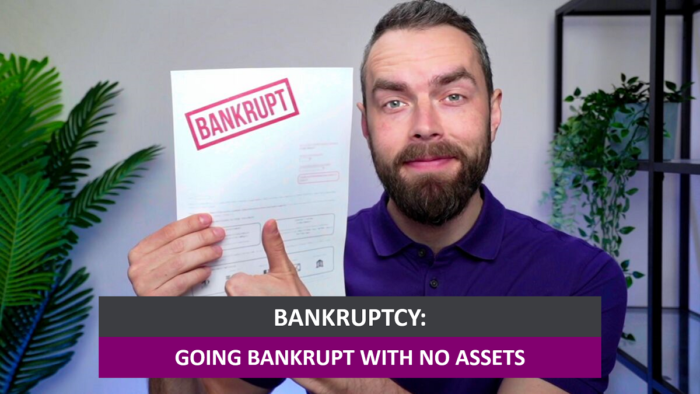
MoneyNerd introduces enquiries to The Debt Advice Service and may receive a referral fee. For free, independent guidance and help finding a debt adviser, visit MoneyHelper.
This information and enquiry service is not a full financial assessment or a guarantee of suitability or debt write-off. Debt solutions are not suitable for everyone. Fees may apply, and your credit record and assets may be affected. Get advice on your circumstances before choosing a solution.
Are you worried about your debts and thinking about bankruptcy? You’ve come to the right place. More than 170,000 people visit our website each month seeking advice on debt problems.
In this easy-to-understand guide, we’ll cover:
- What bankruptcy is and how it works.
- How to figure out if bankruptcy is the best option for you.
- The process of applying for bankruptcy and how much it costs.
- What happens if you go bankrupt without any assets.
- The effects of bankruptcy on your life and your credit file.
Dealing with debt can be challenging, and it’s common to feel unsure about seeking help. In fact, Citizens Advice revealed that 60% of adults facing financial difficulties hesitate to seek assistance.1
This guide covers bankruptcy in England and Wales. You do not need to own assets to apply, but bankruptcy has important consequences. An adviser can compare it with a Debt Relief Order (DRO) and other options. Scotland and Northern Ireland have different rules.
What if it happens and you don’t have assets?
Your assets are used to repay creditors as much as possible, but before creditors are paid, the sale of any assets is used to pay for the fees associated with bankruptcy.
If the official receiver administers your case, fees taken from money realised include an administration fee of £2,390 for a debtor application or £3,300 for a creditor petition, plus a £7,200 general fee. Other realisation and distribution fees can apply. These are separate from the £680 application fee.
Having insufficient assets to cover those administration costs does not prevent the official receiver from processing a bankruptcy. You do not have to find that entire amount before applying.
You will still have to pay to apply.
If an insolvency practitioner is dealing with your case instead, they may still apply fees to carry out the insolvency service even if you have no assets.
Bankruptcy can proceed without assets. You may still need to make affordable payments from surplus income, and some debts are not discharged.
Consider a Debt Relief Order (DRO)
If you have limited assets and little spare income, ask an approved debt adviser whether a DRO would be suitable before paying to apply for bankruptcy.
There is no DRO application fee in England and Wales. The main limits are no more than £50,000 in debts counted for DRO eligibility, £75 or less spare monthly income and £2,000 of assets, subject to exclusions. One domestic vehicle worth no more than £4,000 can normally be disregarded. Other eligibility conditions also apply.
A DRO normally lasts 12 months. It protects you from most collection action for the qualifying debts included in it, which are normally written off at the end. Excluded debts and debts arising from fraud can remain payable. A DRO does not necessarily stop eviction for rent arrears.
There are lots of other alternatives to bankruptcy in the UK, and I’d recommend checking them all out before making a final decision.
Bankruptcy Comparison
I’ve put together this quick table to help you better understand the differences between Bankruptcy and a DRO (Debt Relief Order) or other potential solutions.
| Bankruptcy vs Alternative Solutions | How It Can Help Tackle Debt | Suitable For Individuals… |
|---|---|---|
| Bankruptcy | A formal legal process that writes off most debts but has significant consequences, including potentially losing your home and negatively impacting your credit rating and job prospects. | …with significant debts that cannot realistically pay them off. More severe option with substantial consequences. |
| Debt Relief Order (DRO) | A formal solution that freezes debts for a year, after which they may be written off. | England and Wales: people meeting the current £50,000 qualifying-debt limit and strict income, asset, vehicle and residence conditions. Homeowners are not eligible. A debt adviser must assess eligibility; other UK nations have different rules. |
| Individual Voluntary Arrangement (IVA) | A formal agreement that may write off eligible unpaid debts on successful completion. Duration, payments and fees depend on the agreed proposal. Credit rating will be negatively affected. Home ownership and equity must be assessed under the proposal; keeping your home is not guaranteed. | …with a larger amount of debt who can commit to a fixed repayment plan and want to avoid bankruptcy. |
| Debt Management Plan (DMP) | An informal agreement to pay back non-priority debts in a more manageable way, but does not write off any debt. | …seeking a flexible arrangement without legal proceedings. |
| Consolidation Loan | A consolidation loan involves taking out new credit to pay off existing debts. It can simplify payments and potentially reduce interest rates. But, you could also end up paying more interest overall. | .. with multiple debts looking to consolidate into a single payment, usually with a good credit score to obtain favourable terms. |
| Payment Holiday | Payment holidays offer short-term relief by pausing or reducing payments. Payment holidays don’t reduce the total debt amount and are usually for a short duration. | ..with short-term financial difficulties needing temporary relief from debt payments. |
| Equity Release | Equity release involves homeowners releasing equity from their property. It provides a lump sum or additional income by using the home’s value but reduces the property’s equity. | Eligible homeowners considering property-based funding after specialist advice. Costs, estate reduction, benefits and future care needs must be assessed; it is not a general recommendation for debt repayment. |
| Informal Negotiation | Informal negotiation is not legally binding and involves negotiating with creditors for better terms. | …with debts and wish to negotiate terms independently and prefer to have a flexible, non-binding arrangement with creditors. |
Get free debt advice to compare options for your country and circumstances. A table cannot confirm suitability.
Understand your debt options
MoneyNerd can introduce you to The Debt Advice Service for free debt advice. MoneyNerd does not provide debt advice or recommend debt solutions.
The Debt Advice Service can explain your options, including their benefits, costs and risks. Options available depend on your circumstances. There’s no obligation to take a debt solution.
MoneyNerd does not provide debt advice or recommend debt solutions. The Debt Advice Service is a trading style of Pacific Financial Solutions Limited. If you request an introduction, we’ll share your details with their team so they can contact you.
Some debt solutions have fees and may negatively affect your credit rating. MoneyNerd is a commercial introducer and may receive a fee if you go ahead with a debt solution through The Debt Advice Service.
For free, impartial money guidance and help finding free debt advice, visit MoneyHelper.
Does it clear all debts?
Bankruptcy normally covers unsecured debts such as credit cards and personal loans. Some debts remain payable, including:
- Magistrate Court fines
- Other types of court fines
- Debts arising from fraud and some compensation awards
- Child maintenance debts
- Student Finance loans
- Social loan debt
If you can afford contributions after reasonable living costs, an Income Payments Agreement (IPA) or Income Payments Order (IPO) can require payments for up to three years, including after discharge.
An IPA is agreed with the trustee. An IPO is made by a court. Payments are made through the bankruptcy arrangements, rather than directly to the creditors included in the bankruptcy.
Can you keep your bank account?
Only some. Your bank accounts will be frozen while being made bankrupt and the financial institution will decide whether to close your accounts or leave them open.
A basic bank account may be available, subject to the bank’s eligibility checks. Choose an account without borrowing facilities and discuss it with your trustee.
Therefore, banks offer a basic account that allows simple transactions.
» TAKE ACTION NOW: Fill out the short debt form
Will I lose my house?
If you rent, bankruptcy is unlikely to affect your tenancy when your rent is up to date. However, your landlord may be told about the bankruptcy, and rent arrears or tenancy terms can create problems.
Keep paying ongoing rent. A landlord may still seek possession for rent arrears included in the bankruptcy. If you own a home or have a beneficial interest in one, the trustee may be able to sell that interest or seek a sale of the property.
It might be possible to delay or prevent the official receiver from selling your house if one of the following circumstances applies:
- Someone else has a legal right to your house.
- Someone wants to buy your share of the house.
- Your mortgage covers most, or all, of what your home is currently worth.
If you believe that you can delay or prevent your home from being sold, you should inform the official receiver.
Bankruptcy can put your housing at risk. Contact a housing adviser and your council promptly if you are threatened with homelessness; do not assume that bankruptcy guarantees rehousing.
Take the first step towards tackling your debt
Every day our partners, The Debt Advice Service, help people find out whether they can lower their repayments and finally tackle or write off some of their debt.

Natasha
Very helpful and informative thank you
If you submit the enquiry form, MoneyNerd will share your details with The Debt Advice Service so they can contact you.
Some debt solutions have fees and may negatively affect your credit rating. MoneyNerd may receive a fee if you go ahead with a debt solution through The Debt Advice Service.
The Debt Advice Service is a trading style of Pacific Financial Solutions Limited.
For free, impartial help and access to not-for-profit debt advice, visit MoneyHelper.
What happens next?
You may still find life after bankruptcy difficult to navigate the financial side of life after your bankruptcy has ended.
Bankruptcy normally stays on your credit file for six years from the bankruptcy order.
However, there are plenty of steps you can take to rebuild your credit in the meantime, such as:
- Stay on top of your bills and always try to pay on time
- Save for emergencies
- Pay off credit card balances
- Sign up for the electoral roll
- Check your credit reports and ask for errors to be corrected; you do not need to borrow solely to rebuild a score
Bankruptcy affects some jobs, professional registrations and business roles. Check your contract and the rules of any professional body before applying.
Do not assume that bankruptcy automatically prevents employment or promotion. The effect depends on the role and its contractual or regulatory requirements.
However, with good money management and careful spending, you can rebuild your credit score and live as you normally would.
References