










What is home equity?
Home equity refers to the outright value of a property you own. It can be calculated by working out the current market value of the property and then subtracting any debt secured against the property. For most people, this will just be their outstanding mortgage balance.
For example, if you own a house currently worth £160,000 and have a £120,000 outstanding mortgage, you have 25% home equity which is equivalent to a value of £40,000.
What can impact my level of equity?
The two things that can affect how much home equity you have are:
- The current market value of the property
- The amount of debt secured against the property
Equity can increase as you repay borrowing or if the property rises in value. A fall in value, further borrowing, arrears or fees added to a loan can reduce it.
How can you use home equity?
Your home equity is an asset and it can be used to help you borrow money from banks and online lenders. You might be able to borrow more using a home equity loan compared to using some other borrowing methods.
What does releasing equity mean?
Borrowing against home equity means taking a loan secured on the property. It is different from the later-life products usually called equity release, such as lifetime mortgages and home reversion plans. See related guidance.
Numerous types of secured loans can be used to borrow against your home equity, including the aptly named home equity loan.
What is a home equity loan?
A home equity loan is a type of secured loan from a lender where your home is used as collateral within the credit agreement.
Security may support a larger loan or different terms, but it does not guarantee a cheaper or suitable product. Compare the actual fees, rate, term and total amount repayable.
The loan is secured on the property. Missed payments can lead to repossession through the applicable legal process; security does not remove affordability checks or give the lender an automatic right to take the home without that process.
How does a home equity loan work?
A home equity loan provides the homeowner with a lump sum loan which is charged with interest.
The lender normally advances a lump sum for an agreed purpose. A repayment loan is paid back with interest over its term. Check permitted uses, whether the rate can change and any fees.
Some home equity loans are for less significant amounts and are usually repaid quickly. These are sometimes known as short-term home equity loans. Other home equity loans can be significant and take many years to repay.
How much can you borrow on a home equity loan?
You can usually borrow more money with a home equity loan than with unsecured loans. As you’re borrowing against your home equity, the amount of equity you have in your property will influence your borrowing power.
Loan-to-value compares secured borrowing with the property’s value, not with the equity alone. A second-charge lender normally considers the existing mortgage and proposed loan together, alongside affordability and credit criteria. There is no universal percentage of equity you can borrow.
For illustration, a property worth £100,000 with a £50,000 mortgage has £50,000 equity. If a lender allowed total secured borrowing of 80% of the property value, that would leave £30,000 for an additional loan before any financed fees. The 80% limit is an assumption, not a universal lending rule, and affordability checks still apply.
A calculator estimates payments using its stated amount, rate and term. It is not a lending offer, eligibility confirmation or suitability assessment. Compare the personalised terms and total cost before applying.
A Loans Warehouse customer’s experience
Individual experiences vary. Compare the total cost, fees, repayment term and risks before applying. A lower monthly payment may mean paying more overall, and secured borrowing puts your home at risk if repayments are not maintained.

Polly
“This was by far possibly one of the nicest experiences I’ve had getting a secured loan.”
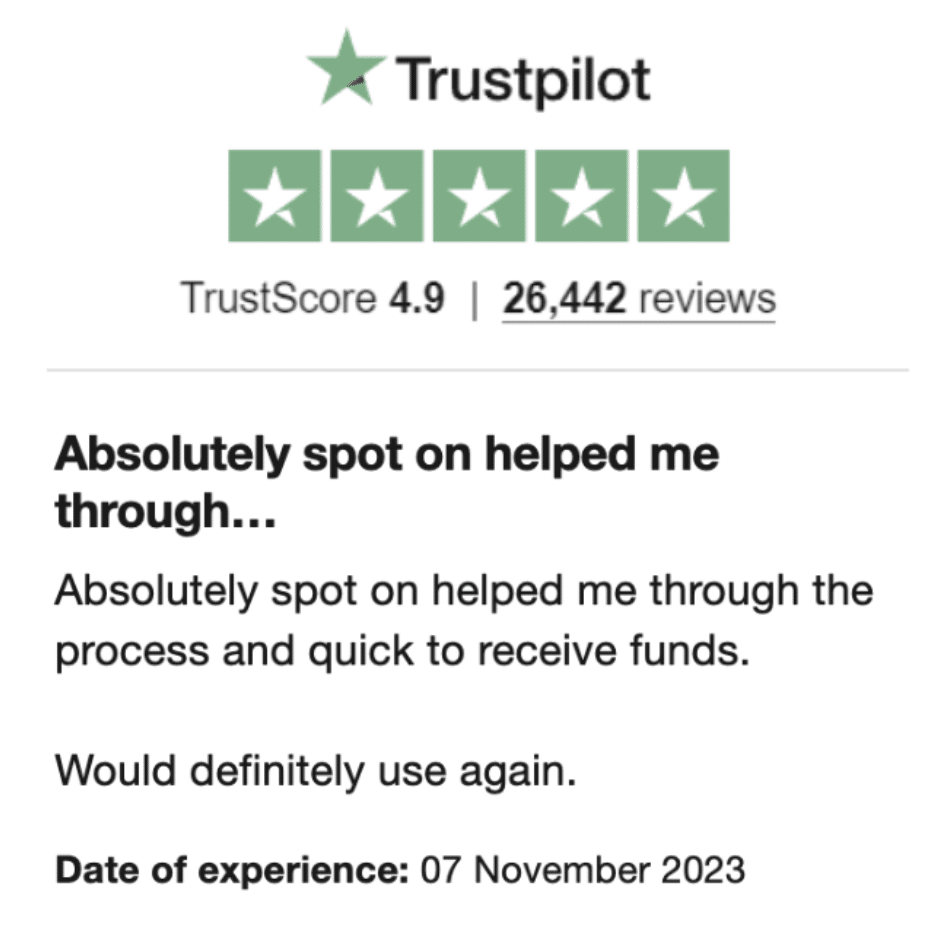
Reviews shown are for Loans Warehouse. Search powered by Loans Warehouse.
What is negative equity?
Negative equity is when you owe more on debts secured by a property than the current market value of the property.
This sort of situation usually materialises when the property value declines and/or when the homeowner misses repayments on their mortgage or other debts secured against their property.
If you have other questions relating to home equity loans like this one, keep reading further below.
What is the interest rate of a home equity loan?
UK homeowner and second-charge loans may have fixed or variable rates. A fixed rate may last for only part of the loan term; check what happens afterwards.
Rates and eligibility change and depend on the product and your circumstances. Obtain a current personalised quotation or mortgage illustration and compare the total cost, fees, rate type and repayment terms; figures in this article are not live offers.
Enquire about a secured loan through Loans Warehouse, a credit broker, not a lender. Approval and terms depend on checks. Compare the full cost before applying. MoneyNerd may receive a referral fee. Your home may be repossessed if you do not keep up repayments on a loan secured against it.
Are home equity loan rates higher than mortgage rates?
Compare current personalised illustrations for the options available to you. A second-charge rate is not guaranteed to match or beat a first mortgage or unsecured loan.
A first charge normally has priority over a second charge on the same property. That priority, along with the borrower and property risks, can affect pricing.
This is significant because the first lien of credit has first access to any money raised from the property sale proceeds should the property need to be forcibly sold to repay debts.
If a homeowner is forced to sell their home and has negative equity, it could be that the mortgage lender takes most of the sale proceeds, leaving the home equity loan lender with not enough money to collect and clear its own debt with the homeowner.
A second-charge lender may charge more to reflect its position, but pricing and maximum combined loan-to-value vary. A borrowing limit does not guarantee protection from a future fall in property value.
Possible uses and their risks
Permitted uses depend on the lender. Possible purposes include the following, but securing discretionary spending against your home creates a long-term commitment.
- Home improvements
- Private medical bills
- Education costs
- Making a big-ticket purchase, such as buying a new car or going on a once-in-a-lifetime holiday
Home improvements do not guarantee an increase in property value or a gain greater than their cost. Compare quotes, keep a contingency budget and assess affordability without relying on a future rise in value.
Pros and cons of home equity loans
We have already discussed the pros and cons of equity loans in detail here at MoneyNerd. But here is a recap of the most references advantages and drawbacks of using a home equity loan:
The pros
- Depending on equity, affordability and lender criteria, secured borrowing may offer a larger amount than some unsecured products. There is no universal £25,000 personal-loan ceiling.
- A secured rate may be lower, but fees and a longer term can make the total cost higher. Compare the full repayment cost and the additional risk to your home.
- A fixed rate can make payments predictable during the fixed period. Check any later variable rate and early-repayment charges.
- UK lenders may market this borrowing as a homeowner loan or second-charge mortgage. Availability and access through a broker vary.
The cons
- Your home can be repossessed if you fail to keep up with home equity loan repayments
- Some home equity loans have expensive setup and arrangement costs
- Broker, lender, valuation, legal, early-repayment or discharge fees may apply; check the illustration and agreement.
- Minimum and maximum loan sizes vary by provider and product.
If you’re worried about these drawbacks and fear this may leave you in lots of debt, or even bankrupt, you may want to read our guide on How to Avoid Home Equity Loan Pitfalls first.
Where can I get a home equity loan?
In the UK, look for current homeowner-loan or second-charge products from appropriately authorised lenders or brokers. Do not assume a high-street bank offers a US-style home equity loan.
It’s essential that you research the market before applying for a home equity loan. You may even want to use brokerage services to help you compare home equity loans.
How much does a home equity loan cost?
The cost includes interest and any applicable lender, broker, valuation, legal and other fees. Credit history can affect the terms, but it is not the only factor. See related guidance.
Check early-repayment and account-closing or discharge fees in the agreement. A standard US-style closing-cost charge at the end of every UK loan should not be assumed.
Thus, the total cost of home equity loans can differ significantly based on individual circumstances and the lender used.
How to apply for a home equity loan
You can apply for a home equity loan in a bank’s branch and you can even make applications online or through a broker.
You should be aware that no home equity loan application is ever guaranteed. We’ve discussed this further and how to improve your chances of approval in our Guaranteed Home Equity Loans post.
Is a home equity loan the same as a home equity line of credit?
A US-style home equity line of credit (HELOC) should not be assumed to be a standard UK product. Any UK revolving or drawdown secured facility has its own availability, fees and payment terms. Check whether interest or capital payments are required during the drawdown period and how the balance must be repaid.
Instead of receiving the loan as a lump sum, the HELOC provides the homeowner with a drawdown facility for a set period. During the drawdown period, the homeowner can take parts of their approved loan as they wish.
Repayment requirements during and after any drawdown period depend on the specific facility. Some require interest payments and others capital as well; do not assume a universal interest-only period.
Both fixed and variable arrangements exist. Read the actual terms rather than treating every home equity loan as fixed and every credit line as variable.
Where a facility charges interest only on amounts drawn, staged borrowing may reduce interest compared with taking the whole sum immediately. Fees and variable rates can change the overall comparison.
Can I remortgage to release equity?
Yes, it’s sometimes possible to remortgage and release equity by increasing the size of your new mortgage loan.
What’s the difference between a home equity loan and a remortgage?
Other options may include a further advance from your current mortgage lender or a remortgage with additional borrowing. A further advance is distinct from replacing the mortgage with a new lender.
Remortgaging to release equity is when you swap your current mortgage loan for another one, only the new mortgage is larger.
A separate secured loan normally creates a separate agreement and payment. A remortgage replaces the existing mortgage and can increase the total mortgage debt and repayment obligation.
There can be times when a remortgage is more beneficial than a home equity loan, which is discussed further in our Mortgage vs Home Equity Loan post.
Can I combine my mortgage and home equity loan?
If you have an outstanding mortgage and a home equity loan, there are times when it’s possible to combine the two debts. This would work by extending your mortgage (or remortgaging) and using some of the cash to pay off your home equity loan in full.
Compare the total amount repayable, interest, all fees, the term and early-repayment charges. A lower monthly payment can mean a longer term and a higher total cost. Securing previously unsecured debt against your home puts the property at risk if you cannot keep up repayments.
Is a reverse mortgage the same as a home equity loan?
The UK later-life product often compared with a reverse mortgage is a lifetime mortgage. It differs from an ordinary repayment homeowner loan. Age and income requirements vary, and specialist advice is needed for later-life borrowing.
Is it smart to use a home equity loan?
Whether a secured loan is suitable depends on your circumstances and alternatives. It increases borrowing secured on the home, so compare total costs and what would happen if payments became unaffordable.
Speak to a debt charity if you want clarification or help to understand what’s best for you.
Should I release equity or get a personal loan?
An unsecured loan does not normally put your home directly up as collateral, whereas a home equity loan does. Neither is always cheaper; compare the terms and total cost. See related guidance.
You need to weigh up the risks between personal loans and home equity loans to make an individual decision.
Can you get a home equity loan with no mortgage?
Yes, it’s possible to get a home equity loan with no mortgage if you’re a homeowner. if you’ve paid off your mortgage in full then you will likely have 100% home equity. You can borrow against some of this home equity through a home equity loan.
Can I sell my house with a home equity loan?
Yes, but when you sell your home with a home equity loan outstanding, some of the sale proceeds will need to be used to pay off the home equity loan and any early repayment costs.
Can I use a home equity loan to buy another house?
You could use some of the money from a home equity loan to help you purchase another property. Using home equity loans to buy property can be complicated because the new mortgage lender will have to consider this debt when considering your new debt-to-income ratio within the mortgage application.
Can I use a home equity loan to pay off a mortgage?
Refinancing a mortgage with other secured borrowing may be possible, but fees, early-repayment charges, the rate and term can remove any apparent saving. Compare the whole transaction.
Can I use the loan to consolidate debts?
Compare the total amount repayable, interest, all fees, the term and early-repayment charges. A lower monthly payment can mean a longer term and a higher total cost. Securing previously unsecured debt against your home puts the property at risk if you cannot keep up repayments.
Can you have two home equity loans?
It’s possible to get approved for two home equity loans on the same or different properties, but getting approval for the second loan may be more difficult depending on how much home equity you have.
Can I get a home equity loan on a mobile home?
The majority of lenders won’t approve a home equity loan against a mobile home. This is because the homeowner doesn’t own the land these properties are built on and are subject to depreciation which could result in negative equity.
What is a family home equity loan?
Some arrangements use a family member’s property or savings to support another borrower. The owner or guarantor can be exposed to serious financial and property risks; independent advice is important.
What is a government home equity loan?
England’s Help to Buy: Equity Loan scheme is closed to new applications. Existing borrowers still have repayment and interest obligations. Other home-buying schemes have separate eligibility rules and differ across the UK.