







How Much Do Debt Collectors Buy Debt for in the UK?








MoneyNerd introduces enquiries to The Debt Advice Service and may receive a referral fee. For free, independent guidance and help finding a debt adviser, visit MoneyHelper.
This information and enquiry service is not a full financial assessment or a guarantee of suitability or debt write-off. Debt solutions are not suitable for everyone. Fees may apply, and your credit record and assets may be affected. Get advice on your circumstances before choosing a solution.
MoneyNerd introduces enquiries to The Debt Advice Service and may receive a referral fee. For free, independent guidance and help finding a debt adviser, visit MoneyHelper.
This information and enquiry service is not a full financial assessment or a guarantee of suitability or debt write-off. Debt solutions are not suitable for everyone. Fees may apply, and your credit record and assets may be affected. Get advice on your circumstances before choosing a solution.
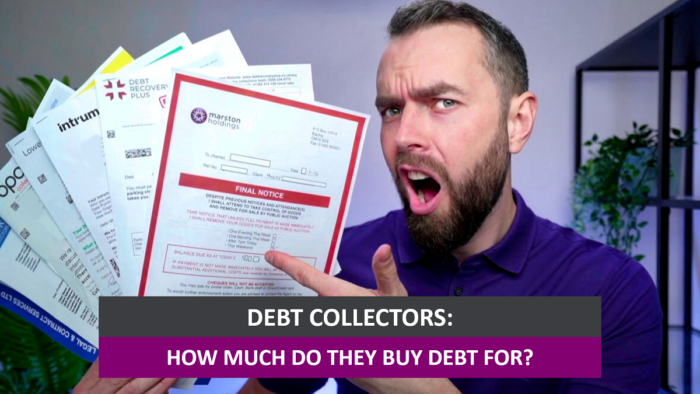
A debt can be sold for less than its face value, but the price varies and does not by itself reduce the amount you legally owe.
This guide explains debt sales, notices, settlement discussions and what to check if a new business contacts you.
In this easy-to-read article, we will explain:
- Why there is no single reliable purchase price for every debt.
- Why your creditor might have sold your debt.
- How to know if your debt has been sold.
- What happens if you don’t pay or can’t pay.
- How debt collectors might affect your credit score.
We know it’s not easy when a debt collector gets in touch; you may be questioning if you should pay or if it’s even real. Don’t worry; we’re here to share clear, simple facts to help you understand what’s happening.
Why Would My Creditor ‘Sell’ My Debt to an Agency? Do They Get More Money for it?
There is no universal 10p-in-the-pound price for UK debt. Prices depend on account quality, age, documentation and expected recovery, and a buyer also incurs servicing and legal costs.
A sale does not prove that the debt is invalid or that the buyer must accept a particular discount. Check liability and the account balance separately.
How Will I Know if My Debt has been Sold to a Debt Collection Agency?
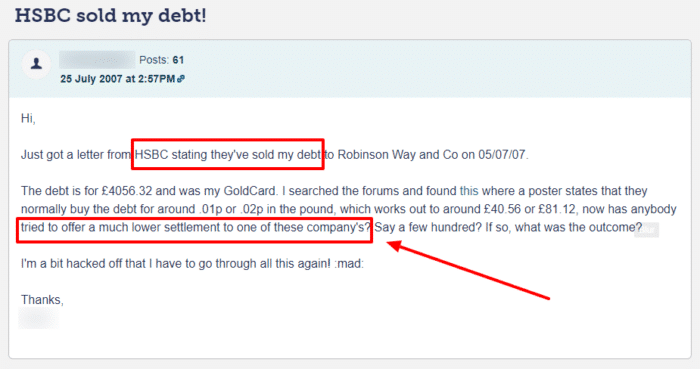
A creditor need not accept every reduced offer. Get written agreement that the accepted amount settles the specified balance and check how it will be reported before paying.
Understand your debt options
MoneyNerd can introduce you to The Debt Advice Service for free debt advice. MoneyNerd does not provide debt advice or recommend debt solutions.
The Debt Advice Service can explain your options, including their benefits, costs and risks. Options available depend on your circumstances. There’s no obligation to take a debt solution.
MoneyNerd does not provide debt advice or recommend debt solutions. The Debt Advice Service is a trading style of Pacific Financial Solutions Limited. If you request an introduction, we’ll share your details with their team so they can contact you.
Some debt solutions have fees and may negatively affect your credit rating. MoneyNerd is a commercial introducer and may receive a fee if you go ahead with a debt solution through The Debt Advice Service.
For free, impartial money guidance and help finding free debt advice, visit MoneyHelper.
Do the Same Rules and Payment Agreements Apply?
» TAKE ACTION NOW: Fill out the short debt form
You also need to be realistic about your finances. While it is tempting to agree to higher payments so the debt goes away quickly, missing some payments because you can’t afford them is going to make things worse.
You can use one of our free letter templates to write to the debt collection agency and request lower payments or similar.
If you have a home visit from a debt collector, we don’t recommend paying them. If you do, it is essential that you ask for a receipt. This is because it is much easier to keep a record of all of your payments and, therefore, more difficult for them to argue with you about your debt down the line.
Payment arrangements, defaults or partial settlements may be reported where the account is one reported to credit reference agencies. Not every collection interaction appears on a credit file.
There is no universal six-year deletion rule for every credit-file entry. Defaults normally remain six years from the default date; other records have different rules, and selling the debt must not restart its default date.
Your Rights With Debt Collectors
To help you better understand your rights when dealing with debt collectors, we’ve created this quick table. If you want to learn more about what they can and can’t do, make sure to check out our detailed guide.
| Debt collectors may | Limits and protections |
|---|---|
| Contact you to seek payment | For regulated consumer credit, contact must be at reasonable times and respect reasonable requests about when, where and how you are contacted. |
| Ask to discuss the debt at a home visit | A collector has no bailiff powers, cannot force entry or take goods, and should leave when asked. |
| Explain possible court action | They must not mislead you about their powers or threaten action they cannot lawfully take. |
| Discuss an affordable repayment or settlement | Get agreed terms in writing and obtain free advice if you dispute the debt or cannot afford payments. |
| A creditor may seek a separate court enforcement order | A CCJ alone does not give a collector access to your bank account. A third-party debt order requires a separate court process. |
| A creditor may assign a debt | Check who owns it and who is authorised to collect; do not disclose payment details to an unverified caller. |
| Make proportionate follow-up contact | Harassment is prohibited. Requests about contact must be considered; necessary legal notices may still be sent. |
An ordinary collector cannot force entry or take goods. Workplace visits without prior agreement and inappropriate third-party disclosures are restricted under FCA consumer-credit rules; necessary lawful communications and authorised representatives are different.
What if I Don’t Pay?
There are legal consequences of non-payment.
If you don’t pay the debt collection agency, even though they can prove you are liable for the debt, they may take legal action against you.
A creditor may issue a claim. Only a court can then enter a CCJ, including by default if papers are ignored. The judgment can require immediate payment or instalments; it is not a general power to reduce a valid debt simply because repayment is difficult.
Pre-action and notice requirements depend on the account. A court claim form then has its own response deadline. Two potentially relevant documents are:
- A Letter of Claim: under the Debt Claims Protocol, a business claiming a debt from an individual normally gives at least 30 days to reply with the relevant documents and information.
- A Consumer Credit Act default notice: required for certain enforcement steps on qualifying regulated agreements. It is not a universal final letter that always comes after the Letter of Claim.
Thousands have already tackled their debt
Every day, our partner, The Debt Advice Service, helps people understand their options for dealing with debt. Their debt advice is free, with no obligation to proceed.
MoneyNerd introduces you to The Debt Advice Service. We do not provide debt advice or recommend debt solutions.

Natasha
Very helpful and informative thank you
If you submit the enquiry form, MoneyNerd will share your details with The Debt Advice Service so they can contact you.
Some debt solutions have fees and may negatively affect your credit rating. MoneyNerd may receive a fee if you go ahead with a debt solution through The Debt Advice Service.
The Debt Advice Service is a trading style of Pacific Financial Solutions Limited.
For free, impartial help and access to not-for-profit debt advice, visit MoneyHelper.
What if I Can’t Pay?
If you are unable to pay your unsecured debts, you may benefit from a debt solution.
A suitable formal solution may restrict recovery of included debts, but does not stop every necessary communication. An informal arrangement gives different protection.
Before you begin a debt solution, we recommend speaking to a debt charity. Their advisers will be able to provide debt counselling services and make sure that you opt for the best debt relief option for you. We have linked some charities that offer these financial services for free at the bottom of this page.
Debt Management Plan (DMP)
A DMP is an informal debt solution that lets you pay off your debts via a single monthly payment.
A DMP generally aims to repay included unsecured debts in full. It does not automatically bind creditors to freeze interest or stop legal action.
Individual Voluntary Arrangement (IVA)
An IVA is a formal insolvency arrangement managed by an insolvency practitioner. Your proposal sets out payments, any assets involved and fees. Once approved, it binds the creditors and debts covered by it and restricts recovery action; it is not a blanket ban on necessary correspondence.
Many IVAs involve payments for five or six years, but the agreed term varies. Qualifying unpaid debt is normally released only on successful completion. An IVA affects your credit record, may involve assets or home equity, and can fail if its terms are not met.
IVA suitability depends on your debts, affordable contributions or available assets, fees and creditor approval. There is no universal rule that you must owe several thousand pounds to more than one creditor. Get independent debt advice and compare other options before agreeing to an IVA.
Trust Deed
IVAs are not available in Scotland. A Scottish money adviser can compare a protected trust deed, the Debt Arrangement Scheme, sequestration and informal arrangements; a trust deed is not compulsory.
A protected trust deed is a Scottish insolvency arrangement, usually lasting at least four years of contributions. It can discharge qualifying unpaid debt on successful completion, but fees apply and your home or other assets may be at risk. Covered creditors cannot pursue payment outside it, but can still send required documents.
Debt Relief Order (DRO)
In England and Wales, a DRO may suit an eligible non-homeowner with low surplus income, limited assets and qualifying debts within the £50,000 limit. Detailed income, asset, vehicle and residence rules apply. An approved debt adviser checks eligibility and submits the application to the Insolvency Service.
During a DRO, included qualifying debts are protected from most recovery action under the moratorium rules. This is not a ban on every necessary communication, and excluded debts and ongoing bills still need attention.
A DRO normally lasts 12 months. If it remains in force, the qualifying debts listed in it are normally discharged at the end. You must report relevant changes and continue paying ongoing bills and excluded debts, such as court fines and student loans.
Bankruptcy
If you have debts but no realistic possibility of ever paying them off, you may need to declare bankruptcy.
Bankruptcy has an unfair stigma attached to it as it may be your only way of getting a financial fresh start. That said, it is a serious financial situation that should not be taken lightly.
Sequestration
Sequestration is the Scottish version of bankruptcy.
An approved Scottish money adviser can assess eligibility for the Minimal Asset Process (MAP), a form of sequestration, and compare other suitable options. Eligibility and consequences must be checked; it is not automatically the best choice for everyone with a low income. See related guidance.
Will Debt Collectors Affect My Credit Score?
Yes, dealing with debt collectors can affect your credit score. But your credit score was probably affected by your missed payments before your creditor sold your debt to a collection agency. It’s your defaulted payments that have a big impact on your credit score rather than just your debt collector.
An agreed partial settlement may be recorded as partially settled or satisfied, as applicable. Its effect depends on the wider credit history; obtain written confirmation of the settlement and reporting terms.
Lenders use credit-reference information alongside affordability and their own criteria when deciding whether to offer credit.
If you have a history of not making your payments on time, you may find that companies assume that you will be in the same issue in the future. This means that you probably won’t be able to access all of their products.
Defaults and many closed-account records have six-year retention periods with different starting points. Open accounts and other information do not all vanish six years after first appearing; removal of a record is not cancellation of the debt.
References