Initial Parking – Should you Pay or Appeal?


Have you received an Initial Parking fine and are wondering whether to pay or appeal? Welcome to the right place.
Every month, over 130,000 people visit our website seeking advice on fines and parking tickets. So, you are not alone.
In this article, we’ll provide helpful information on:
- Understanding Initial Parking fines.
- Deciding if you should pay these fines.
- Learning how to appeal an Initial Parking fine.
- Tips on how to avoid such fines in the future.
Research from Which? revealed that although 78% of members consider private parking fines unfair, many don’t challenge them due to doubts about the success of their appeal.1
If that’s your case, don’t worry; we’re here to guide you through the process.
Let’s dive in!
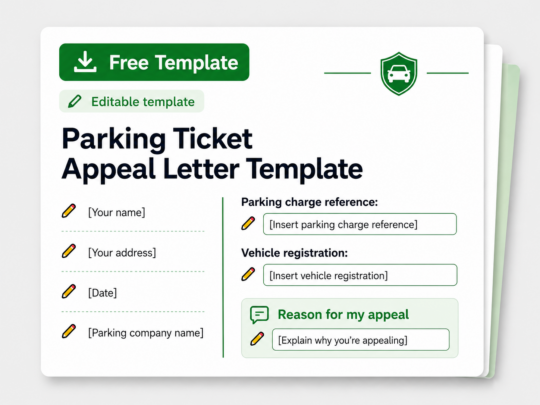
Not sure what to write in your parking appeal?
The form asks for contact details to deliver your free MoneyNerd template.
Add your notice details, reasons for disputing the charge and relevant evidence.
General information, not legal advice. Follow your notice’s instructions and deadlines; adapt the wording to your circumstances. No outcome is guaranteed.
Who is Initial Parking?
- Supermarkets
- Pubs
- Restaurants
- Retail parks
- Shopping centres
Paid legal information: Continue to JustAnswer
Advertisement. Paid general legal information from JustAnswer. Memberships renew automatically until cancelled. Check the initial price, renewal price, billing interval and cancellation terms. The standard service does not create a solicitor-client relationship. No successful outcome is guaranteed. MoneyNerd may receive a referral fee.
Why did you get a Parking Charge Notice?
There are many reasons for receiving a Parking Charge Notice in a private car park.
Are parking charges legally enforceable?
A private Parking Charge Notice is a claim under contract law, rather than a council penalty or criminal fine. A valid charge can be owed before court proceedings start. It is incorrect to assume that you only have to pay if a judge orders it.
Check the notice, the signs and what happened. Pay by the stated deadline if you accept the charge, or use the operator’s appeal process if you dispute it. Ignoring it can lead to a court claim and additional costs. A court decides a disputed claim; the operator does not automatically win.
Will a Parking Charge Notice affect your credit score?
The operator can seek payment, use a debt collection agency or bring a court claim. An ordinary debt collector is not a bailiff and cannot seize your belongings. Added fees are not automatically valid: ask for their basis and challenge amounts you dispute.
Do not ignore a formal Letter of Claim or court papers. In England and Wales, the Debt Claims Protocol normally gives an individual 30 days to reply to a business’s Letter of Claim. Use the reply form, ask for relevant documents and explain any dispute. Court papers have their own deadlines, which still need a response.
A County Court Judgment (CCJ) is made by a court; a parking ticket or debt collector’s letter is not itself a CCJ. If a judgment in England and Wales is paid in full within one calendar month, you can have it removed from the register. Otherwise it normally remains for six years; later payment can mark it satisfied. Bailiff action requires further enforcement steps and is not automatic. Court procedures differ elsewhere in the UK.
What to include in your parking appeal
The form asks for contact details to deliver your free MoneyNerd template.
Include the notice reference, your reasons, supporting evidence and the action you want the issuer to take.
The correct process depends on the notice and where it was issued.
General information, not legal advice. Follow your notice’s instructions and deadlines; adapt the wording to your circumstances. No outcome is guaranteed.
Can you appeal a Parking Charge Notice?
Appeal to the operator first using the instructions on the notice and its official website. Initial appeals are commonly required within 28 days, but follow the deadline on your notice. Include the charge reference, vehicle registration, reasons for disputing the charge and supporting evidence. Keep the submission confirmation.
If you have missed a deadline, explain why and ask whether a late appeal will be accepted; acceptance is not guaranteed. An appeal is intended to resolve a genuine dispute. It should not be used simply to delay payment.
A timely appeal should be handled under the applicable appeals process, with the charge put on hold as required by that process. Do not assume this removes a separate court deadline: respond promptly to any claim papers.
Base an appeal on what happened and support it with evidence. Relevant points can include:
- You complied with the displayed terms, paid or held a valid permit, or the vehicle details or recorded times are wrong.
- The parking terms were not adequately displayed, or the operator has not shown authority to issue the charge.
- A payment failure, breakdown, medical emergency or disability-related need affected the stay. Explain the circumstances and provide receipts, photographs or other evidence. These points do not guarantee cancellation.
- The operator did not allow an applicable consideration or grace period. A grace period does not apply to every kind of breach.
- The operator is pursuing the registered keeper but has not met the applicable legal conditions for keeper liability.
In England and Wales, where no notice was first left on the vehicle, a notice relying on Schedule 4 of the Protection of Freedoms Act 2012 generally needs to be delivered within 14 days. A notice following a windscreen ticket uses a different timetable, normally days 29–56. Other conditions also apply. A late notice or the fact that you were not driving does not automatically cancel the driver’s liability.
Check the charge against the signs and the applicable industry code. The government’s withdrawn 2022 parking code did not introduce a universal £50 or £80 legal cap. Do not rely on those figures as an automatic appeal ground.

Appeal Process Steps
I understand that the appeal process may seem confusing and challenging. But don’t worry! I’ve put together this quick table that explains each step you should take to appeal your Initial Parking fine.
If you require further advice or want to learn more, please check out our specialized guide.
| When | Action |
|---|---|
| On receiving a council PCN | Read the notice, keep it, gather evidence and note all payment and challenge deadlines. |
| Windscreen or handed-to-driver PCN | An informal challenge may be available before the Notice to Owner. Early challenge can preserve a discount under the authority’s policy; 14 days is not a universal final appeal deadline. |
| Postal PCN or Notice to Owner | Normally make formal representations within 28 days as stated on the notice. Do not assume there is an extra informal stage. |
| Representations rejected | The Notice of Rejection explains how to appeal to the appropriate independent tribunal, normally within 28 days. |
| Appeal unsuccessful | Pay by the deadline given in the decision or obtain advice on any available review. Further statutory charges can follow if you do neither. |
| Other ticket type | Private parking charges and FPNs use different procedures; follow the actual notice. |
Further guidance: Traffic Penalty Tribunal; Citizens Advice.
What evidence do you need?
Common mistakes when appealing parking charges
Decide on the evidence and the parking terms. If you accept the charge, paying within the discount period shown on the notice will usually cost less. If you dispute it, appeal by the stated deadline and keep a copy and proof of submission.
Check the operator’s policy on the discount during an initial appeal. Do not assume that making any appeal automatically loses it, or that it will always be re-offered. An independent appeal can mean giving up the reduced amount. Payment normally closes the appeal route, so check before paying if you intend to challenge the charge.
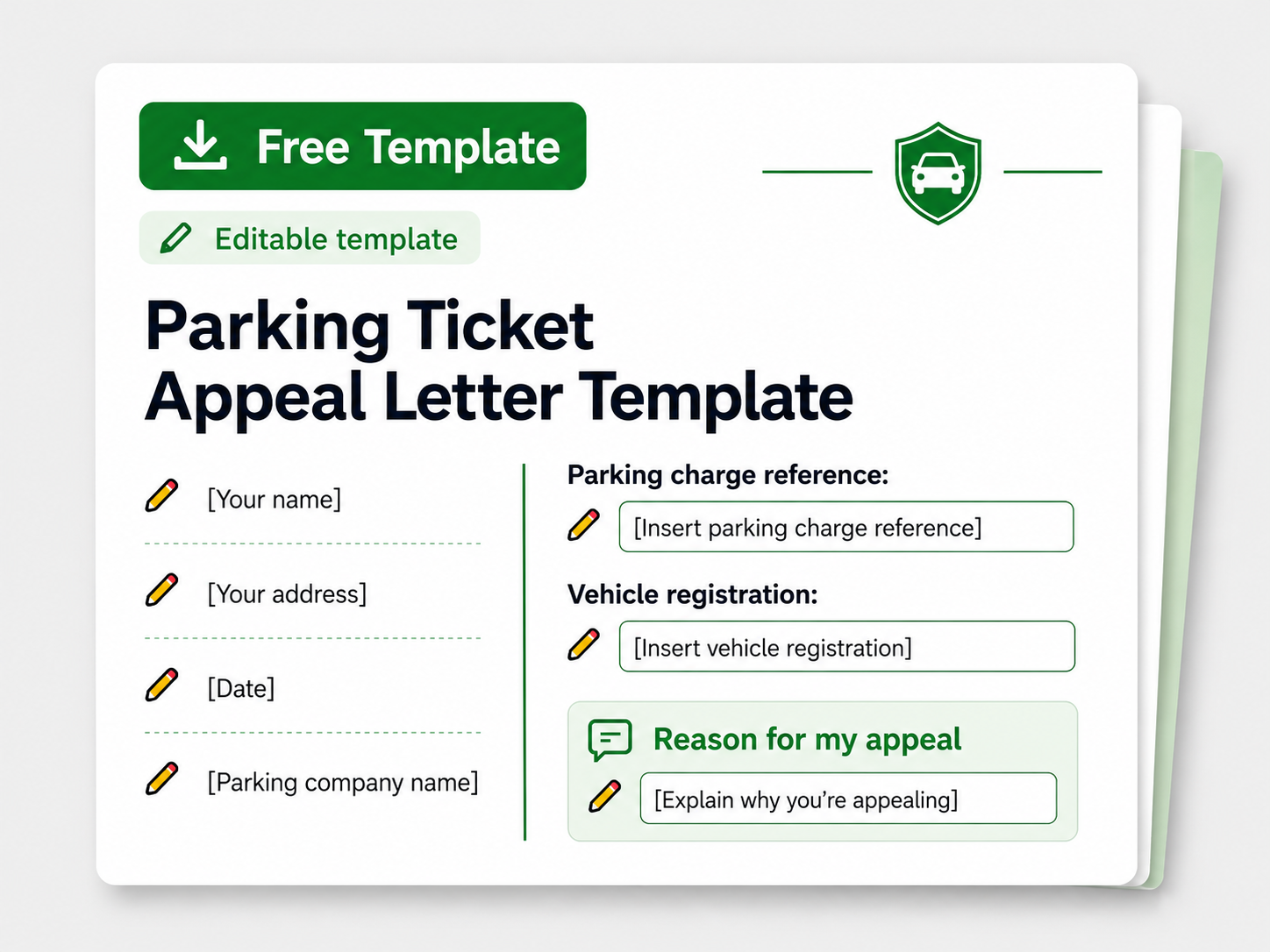
Free parking appeal letter template
The form asks for contact details to deliver your free MoneyNerd template.
Explain what happened, why you dispute the charge and include relevant evidence.
General information, not legal advice. Follow your notice’s instructions and deadlines; adapt the wording to your circumstances. No outcome is guaranteed.
Initial Parking Contact Details
I’ve included contact information for Initial Parking in the table below.
What is a 10-minute grace period?
A grace period gives a driver time to leave after an allowed parking period ends. Under the private parking industry code, a ten-minute period generally applies after permitted, time-limited parking. It is not a blanket ten minutes of free parking or permission to stop where parking is prohibited.
The time allowed to arrive, read signs and decide whether to stay is a separate consideration period. Check the code and conditions applicable to the site and date, and explain the actual timing in an appeal. Camera entry and exit times are not necessarily the same as the time parked.
Prepare your parking appeal
The form asks for contact details to deliver your free MoneyNerd template.
Replace the examples with your own facts and check the recipient before sending.
General information, not legal advice. Follow your notice’s instructions and deadlines; adapt the wording to your circumstances. No outcome is guaranteed.
References
For the underlying rules, see Schedule 4 of the Protection of Freedoms Act 2012, the current POPLA appeal guide and IAS appeal guidance. For court matters in England and Wales, see the Civil Procedure Rules pre-action protocols and GOV.UK guidance on CCJs.