





Council and Police Fines
Fixed Penalty Notice For Speeding

Lying About Who Was Driving: Penalties and Risks

Scott Nelson MoneyNerd Janine Marsh MoneyNerd
By
Scott
Scott Nelson MoneyNerd

Scott Nelson

Debt Expert

Scott founded MoneyNerd after his own experience with debt. He runs the website and oversees its general information about debt and other money matters. Scott does not provide personal debt advice or recommend debt solutions through MoneyNerd. If you make a debt enquiry, MoneyNerd may introduce you to The Debt Advice Service, which provides any personal debt advice.

Learn more about Scott
&
Janine
Janine Marsh MoneyNerd

Janine Marsh

Financial Expert

Janine contributed articles and videos to MoneyNerd about everyday money, household costs, debt topics and parking matters. She has a background in broadcasting, including work with BBC Radio 5 Live and Bauer radio stations.

Learn more about Janine
· Oct 4th, 2026
Paid legal information from JustAnswer

JustAnswer is a paid third-party service. Membership can renew automatically with recurring charges until cancelled. Check the initial price, renewal price and cancellation terms before signing up. Buying this service does not guarantee a successful challenge. Read membership and cancellation information.

lying about who was driving when speeding

Knowingly naming a false driver is not a way to transfer penalty points lawfully. It can lead to a serious criminal prosecution and imprisonment.

In this helpful guide, we’ll talk about:

  • What a Fixed Penalty Notice is
  • If you need to pay it right away
  • How you can question the notice
  • Times when you might not have to pay
  • What might happen if you choose not to pay

The standard speeding fixed penalty is generally £100 and three points. Public criticism of coronavirus fixed penalties does not establish the penalties for speeding or giving false driver details.

Don’t worry; we’re here to help you figure things out.

JustAnswer is a paid third-party question-and-answer service providing general information. Its standard service does not create a solicitor-client relationship. Membership can renew automatically with recurring charges until cancelled. Check the initial price, renewal price and cancellation terms before signing up. Buying this service does not guarantee a successful challenge. See JustAnswer’s membership and cancellation information.

You can use the official challenge process without buying a paid service. If you choose to use JustAnswer, visit JustAnswer to read its service and payment terms.

Commercial link to JustAnswer. MoneyNerd may receive a referral fee. No successful outcome is guaranteed.

What happens when you’re caught speeding?

You can either be caught by a speed camera or by the police.

If a speed camera catches you

A first Notice of Intended Prosecution normally must be served on the registered keeper within 14 days, but statutory exceptions apply, including where the police could not identify the keeper with reasonable diligence. A later notice to a nominated driver does not have the same 14-day deadline.

You have 28 days to return the Section 172 notice, informing the police who was driving when your car was caught speeding.

A section 172 response identifies the driver; it is not a guilty plea. Failure to provide information when required can be prosecuted separately, normally with six points and a fine up to £1,000.

After identifying the driver, police may offer a course or fixed penalty, or bring proceedings, depending on the case.

If the police catch you

The police can:

The police may give a warning where appropriate. Politeness does not create a legal entitlement to avoid a penalty or prosecution.

· send or give you a Fixed Penalty Notice

· order you to go to court – you’d get a letter that tells you what to do.

Check the right challenge process

A Fixed Penalty Notice does not normally use the council parking tribunal process. The notice explains how to dispute the allegation, which may require a court hearing. If convicted, the penalty and costs can be higher than the fixed penalty. Check the process and deadlines before deciding what to do.

Get started

General information. The procedure depends on the notice and jurisdiction. Check the issuer’s instructions.

What happens if you lie about who was driving when speeding?

Deliberately giving false driver details can amount to perverting the course of justice. It is a separate offence, not the same thing as pleading not guilty to speeding.

If you genuinely dispute the speeding allegation, use the lawful process and accurate evidence. Relevant issues may include:

· that you were not speeding.

· that you weren’t driving when the offence took place.

Whether the legally required signs and speed-limit order were valid and adequate; simply saying you did not see a sign is not automatically a defence.

· that the vehicle caught speeding wasn’t yours.

· that your car was stolen

The prosecution must prove the alleged offence to the criminal standard. False nominations can be investigated using documents and other evidence; a court does not simply accept a driver’s assertion.

If you have supplied false or incorrect information, seek advice from a criminal defence solicitor promptly. Do not repeat or build on a false account.

In England and Wales, perverting the course of justice has a maximum sentence of life imprisonment. The adult guideline range is a community order to seven years’ custody, with the sentence depending on culpability, harm and circumstances. The £1,000 or £2,500 speeding maximum does not cap this separate offence.

Check out this comment posted on a popular forum when another motorist wondered if it was okay to use another licence rather than their own.

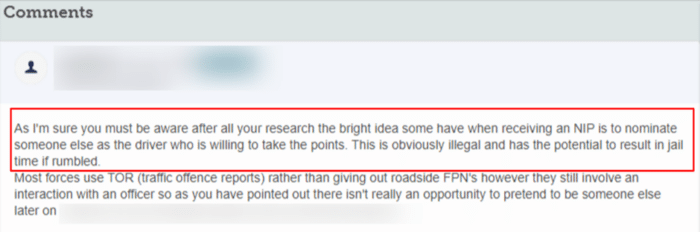
Source: Moneysavingexpert

Fixed Penalty Notice Appeal Reasons

A lawful challenge must rest on the actual facts and applicable law. The examples below are issues to investigate, not excuses that guarantee cancellation.

Issue to check Possible evidence Important limit
The alleged offence did not occur Contemporaneous photographs, video or reliable records. The relevant legal elements and evidence must be assessed.
Valid insurance or entitlement Policy documents or DVLA records covering the exact time and use. Holding a document now does not prove cover or entitlement at the time.
A recognised statutory exemption Evidence establishing the exact exemption, such as an applicable medical exemption. An emergency or misunderstanding does not automatically amount to a defence.
Identity or vehicle details Evidence of a mismatch, mistaken identity or cloned vehicle. Follow the notice’s response requirements; do not invent a driver or account.
Signage or equipment Photographs and reliable evidence relevant to the alleged offence. A malfunctioning speedometer is not a general defence to speeding. Seek legal advice before contesting.

FPNs do not use the same appeal procedure as council PCNs. Follow the notice; contesting the allegation may require a court hearing. Paper tax discs have not been required since 1 October 2014.

Can you check if you’ve been caught speeding?

There is no general public database that confirms every new speeding-camera activation. If a notice arrives, use the issuing force’s official contact or evidence service and meet the stated deadlines.

Getting a Fixed Penalty Notice

A fixed-penalty offer is an opportunity to dispose of an eligible allegation without prosecution if all conditions are met. A guilty or not-guilty plea belongs to the court process.

You may face the regular £100 fine plus 3 points or get an option to attend a speed awareness course.

Course fees depend on the provider and offer. If an eligible course is offered and completed as required, it normally replaces the fixed penalty and points for that offence.

If you reject a fixed penalty and the case is prosecuted, the court decides the allegation. A conviction can bring a higher fine, costs and points or disqualification, but the prosecution must prove its case.

The court can fine you up to a maximum of £1,000 (or £2,500 if you were driving on a motorway).

JustAnswer is a paid third-party question-and-answer service providing general information. Its standard service does not create a solicitor-client relationship. Membership can renew automatically with recurring charges until cancelled. Check the initial price, renewal price and cancellation terms before signing up. Buying this service does not guarantee a successful challenge. See JustAnswer’s membership and cancellation information.
Get started

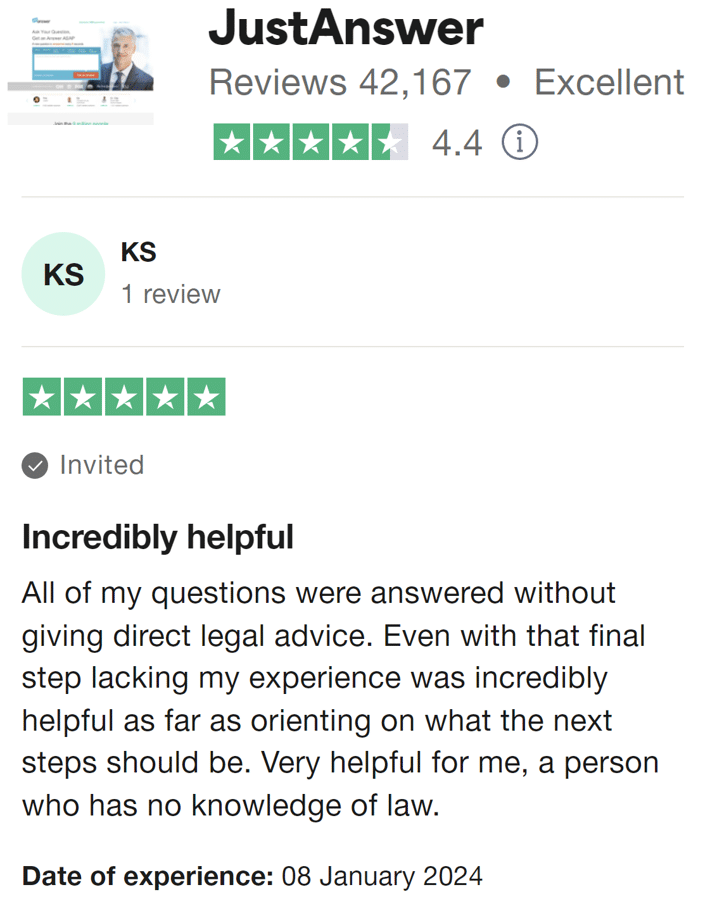
Historical JustAnswer review image. The displayed rating and review total are not live. Reviews do not predict your case outcome. Membership fees and renewal terms apply.

How many points will you get for speeding in the UK?                                  

The number of points you get when caught speeding depends on how fast you go above the limit.

The following table summarises the England and Wales adult court speeding guideline. Scotland and Northern Ireland use different sentencing arrangements.

Here’s a table showing the points for each group.

Speed limit (mph) Car Speed (Band A) Car Speed (Band B) Car Speed (Band C)
20 21-30 31-40 41 and above
30 31-40 41-50 51 and above
40 41-55 56-65 66 and above
50 51-65 66-75 76 and above
60 61-80 81-90 91 and above
70 71-90 91-100 101 and above
Points 3 points 4 to 6 points 6 points
Disqualification – 7 to 28 days 7 to 56 days

source

Explanation

· If you were driving on roads with a 20 mph speed limit, and your car speed falls between 21-30 mph, you belong to band A.

· If you were driving on roads with a 40 mph speed limit, and your car speed falls between 56-65 mph, you belong to band B.

How much is a speeding fine?

The financial penalty for speeding in the UK depends on how fast you drove beyond the speed limit when you were caught.

In England and Wales, court fines take relevant weekly income and the offence circumstances into account. The standard fixed penalty is generally £100 and three points; it is not an income-based court fine.

Reaching 12 or more penalty points within three years normally leads to a totting-up disqualification of at least six months, subject to the relevant exceptions and any longer minimum that applies.

Below is a table showing the speeding fine for each band.

Band Fine
A 25-75% of weekly income
B 75-125% of weekly income
C 125-175% of weekly income

Can you go to jail for overspeeding in the UK?

The maximum penalty you can get for a speeding offence alone is a fine and penalty points or a driving ban.

The courts can’t send you to prison for speeding alone unless there are other offences included, such as when speeding causes a fatal accident.

» TAKE ACTION NOW: Get legal support from JustAnswer

What is a speed awareness course?

If the authorities believe you are eligible, you could be offered a speed awareness course as an alternative to being fined and getting penalty points.

A course is offered at the police’s discretion subject to eligibility, including the rule about having completed the same relevant course for an offence within the preceding three years. Follow the offer’s fee and completion terms.

JustAnswer is a paid third-party question-and-answer service providing general information. Its standard service does not create a solicitor-client relationship. Membership can renew automatically with recurring charges until cancelled. Check the initial price, renewal price and cancellation terms before signing up. Buying this service does not guarantee a successful challenge. See JustAnswer’s membership and cancellation information.

A paid service is optional. Gather your notice and evidence, check the deadline and decide whether you need professional advice about your circumstances.

Get started

Commercial link to JustAnswer. MoneyNerd may receive a referral fee. Check all charges and cancellation terms before signing up.

References

  1. UK Parliament — FPN
Did you like this article?
Show your support ❤️
We're glad you liked the article! As a small team, your support means everything to us. If you could rate us on Google, it would be amazing. Thank you!
We are so sorry...

Is there something missing? We’re all ears and eager to improve. Send us a message and let us know how we can make our article more useful for you.

You can email us directly at [email protected] to share your feedback.

The authors
Scott Nelson MoneyNerd
Author
Scott founded MoneyNerd after his own experience with debt. He runs the website and oversees its general information about debt and other money matters. Scott does not provide personal debt advice or recommend debt solutions through MoneyNerd. If you make a debt enquiry, MoneyNerd may introduce you to The Debt Advice Service, which provides any personal debt advice.
Janine Marsh MoneyNerd
Appeals Expert
Janine contributed articles and videos to MoneyNerd about everyday money, household costs, debt topics and parking matters. She has a background in broadcasting, including work with BBC Radio 5 Live and Bauer radio stations.