





How Much is a Speeding Fine for Doing 40 in a 30? – Worst Case








Have you received a speeding fine? Are you worried about what to do next? You’ve come to the right place. Every month, over 130,000 people visit our website for guidance on fines and parking tickets.
In this guide, we’ll cover:
- What a Band A offence is and how much it might cost you
- When you have to pay your speeding fine
- How speeding fines are given out
- If you can challenge a speeding fine
- What happens if you choose not to pay your fine
It’s common to feel confused about Fixed Penalty Notices. In fact, a group of MPs and Peers say FPNs, which can cost up to £10,000, are hard to understand and might be unfair.1
Don’t worry, this article will explain all you need to know about speeding fines for driving at 40mph in a 30mph zone.
Paid legal information from JustAnswer
JustAnswer is a paid third-party question-and-answer service providing general information. Its standard service does not create a solicitor-client relationship. Membership can renew automatically with recurring charges until cancelled. Check the initial price, renewal price and cancellation terms before signing up. Buying this service does not guarantee a successful challenge. See JustAnswer’s membership and cancellation information.
You can use the official challenge process without buying a paid service. If you choose to use JustAnswer, visit JustAnswer to read its service and payment terms.
Commercial link to JustAnswer. MoneyNerd may receive a referral fee. No successful outcome is guaranteed.
How Much Is a Speeding Fine for Doing 10 Miles per Hour Over the Limit?
The level of speeding fine you have to pay is entirely driven (excuse the pun) by how badly you were speeding.
Speeding offences are combined into different bands. If you are caught doing 40mph in a 30mph zone, this would be a band-A offence.
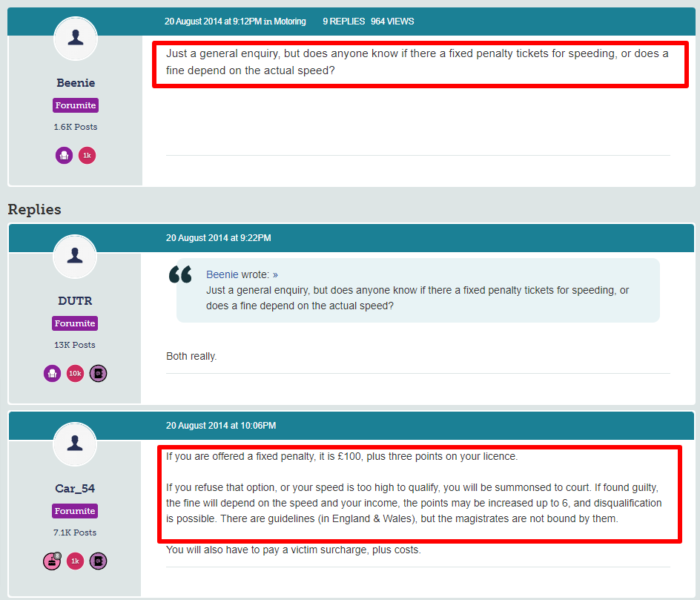
The fine for a band A speeding offence is typically 50% of the value of your weekly income.
It should be noted that this is the starting point, and the fine can range from 25% to 75% of your weekly income based on the court’s discretion.
In addition, you would receive three penalty points on your licence.
So obviously, such a speeding fine should be avoided. And if you do receive such a fine, you might want to try challenging it.
Whilst Band A fines are for exceeding the limit by a smaller margin – like in this case of getting caught doing 40mph in a 30mph zone, Bands B and C apply to those going even further over the speed limit.
This means that going even 1mph more over the speed limit could see you with a heavier fine and more points on your licence or a temporary disqualification from driving.
On top of that, other factors may be considered when deciding your punishment, such as if you were driving near a school or if you were driving a heavy goods vehicle.
Is it the Same if You Are a New Driver?
If you are a new driver, you can expect the same fine and points on your licence.
However, if you get 6 or more points within 2 years of passing your test then your licence will be revoked.
At that point, you will have to apply and pay for a new provisional licence and pass both the theory and practical parts of your driving test again.
If a new driver commits a single offence that carries 6 or more points (such as dangerous driving), the licence will also be revoked.
If You Receive a Speeding Fine by Post
If you are sent a speeding fine by post, it generally means that a speed camera caught you speeding.
Being picked up on a traffic camera in this way will trigger a standard process, which we have outlined below.
- You will be sent a Notice of Intended Prosecution (NIP) and a Section 172 notice.
- You have 28 days to return the Section 172 notice to the police with details of the person driving the vehicle. Do not overlook doing this or ignore it; you could be prosecuted if you don’t take this action.
- Once the Section 172 notice has been received and processed, you will either receive a fixed penalty notice or a letter informing you that court proceedings will be taking place.
It is important to note that this process must commence within 14 days of you being caught speeding by a camera.
Check the right challenge process
A Fixed Penalty Notice does not normally use the council parking tribunal process. The notice explains how to dispute the allegation, which may require a court hearing. If convicted, the penalty and costs can be higher than the fixed penalty. Check the process and deadlines before deciding what to do.
General information. The procedure depends on the notice and jurisdiction. Check the issuer’s instructions.
What Happens if I Don’t Pay?
You should never ignore the notification of a speeding fine.
A speeding offence is a criminal offence and carries very strict penalties if you do not deal with it responsibly.
If you do not address the problem within the timescale set out by law, you could be exposing yourself to further serious legal problems and speeding fine penalties.
How serious? Ultimately, you could be summoned to your local Magistrates’ Court and receive a fine of up to £1,000, or £2,500 for motorway offences, with the addition of six penalty points added to your licence.
Indeed, for serious speeding offences, you may lose your licence altogether at this stage.
» TAKE ACTION NOW: Get legal support from JustAnswer
Can a Speeding Fine Be Challenged?
In some cases, you can have a speeding fine overturned.
One of the more common reasons for this to happen is that you were not sent details of the speeding fine within 14 days of a speed camera catching the offence.
However, how long a speeding ticket takes to arrive after you are stopped by the police, does not have to comply with this 14-day rule.
You can also plead not guilty to the offence.
In this case, you will be facing full legal proceedings. And if you are found guilty in court, the punishment for speeding will likely be worse than you would have faced if you had simply paid the fine.
So it is worth considering whether any speeding ticket defenses are likely to get your speeding fine overturned or whether it is just going to cost you more in time, stress and money.
Fixed Penalty Notice Appeal Reasons
I’ve put together this quick table that outlines common appeal reasons for different traffic violations. Hopefully, it will help you navigate the appeals process with clarity and confidence.
| Issue to check | Possible evidence | Important limit |
|---|---|---|
| The alleged offence did not occur | Contemporaneous photographs, video or reliable records. | The relevant legal elements and evidence must be assessed. |
| Valid insurance or entitlement | Policy documents or DVLA records covering the exact time and use. | Holding a document now does not prove cover or entitlement at the time. |
| A recognised statutory exemption | Evidence establishing the exact exemption, such as an applicable medical exemption. | An emergency or misunderstanding does not automatically amount to a defence. |
| Identity or vehicle details | Evidence of a mismatch, mistaken identity or cloned vehicle. | Follow the notice’s response requirements; do not invent a driver or account. |
| Signage or equipment | Photographs and reliable evidence relevant to the alleged offence. | A malfunctioning speedometer is not a general defence to speeding. Seek legal advice before contesting. |
FPNs do not use the same appeal procedure as council PCNs. Follow the notice; contesting the allegation may require a court hearing. Paper tax discs have not been required since 1 October 2014.
I Am the Vehicle Owner, but I Was Not Driving at the Time, Do I Still Need To Pay?
It might be possible to get out of a fixed penalty notice for speeding if you were not the driver of the vehicle but are the registered owner and were sent details of the fine.
But you need to prove you were not driving.
For example, showing that you had recently sold the vehicle. Please note it is both illegal to take responsibility for somebody else’s crime and also illegal to withhold details of the driver from the police.
Put simply; you need to let the police know when you fill in the Section 172 notice that you were not the driver and tell them who was. You have no other choices.
Legal information through JustAnswer
JustAnswer is a paid third-party question-and-answer service providing general information. Its standard service does not create a solicitor-client relationship. Membership can renew automatically with recurring charges until cancelled. Check the initial price, renewal price and cancellation terms before signing up. Buying this service does not guarantee a successful challenge. See JustAnswer’s membership and cancellation information.
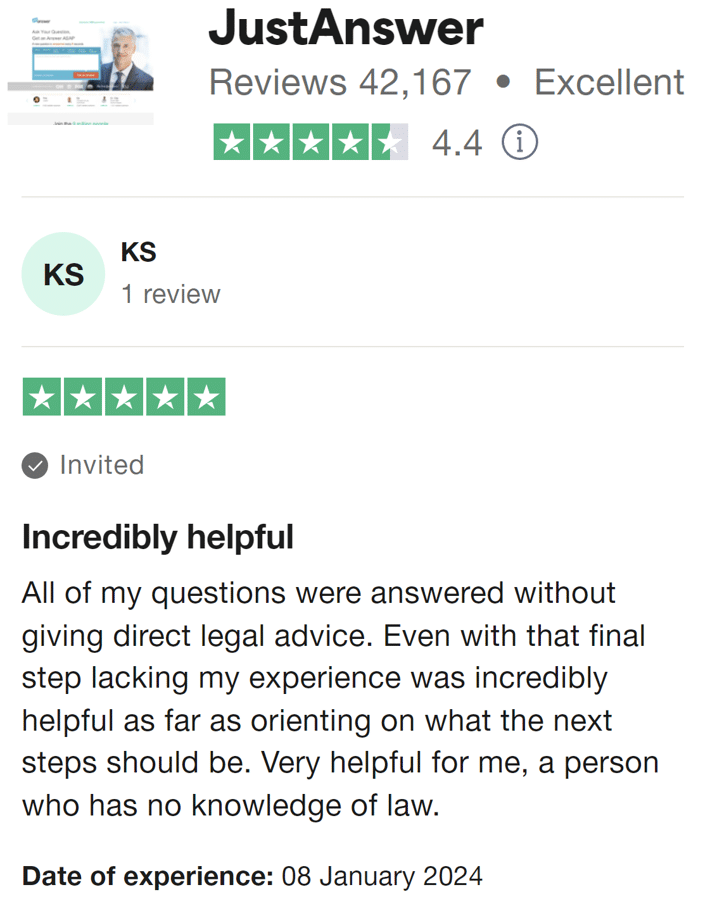
Historical JustAnswer review image. The displayed rating and review total are not live. Reviews do not predict your case outcome. Membership fees and renewal terms apply.
How Do I Avoid Getting a Ticket in the Future?
The best way to avoid getting a speeding ticket again in the future is, of course, to make sure you drive safely, always pay regular attention to your speedometer and follow road signs carefully.
You can also make use of speed limiters, cruise control or SATNAVs with speed notifications to help make you more aware.
What’s the Next Step?
Much will depend on your specific situation.
If you were caught bang to rights doing 40mph in a 30mph by a patrol car, you likely will have to suck it up and pay the fine. As well as the penalty points on your licence.
If you believe you are not guilty, or were given the speeding ticket by mistake, or it was served improperly, you are going to need professional legal advice.
Meaning getting in touch with a solicitor and preparing to face a court case.
Obviously, you should not consider taking this route unless you believe that you have a very good chance of being found not guilty of doing 40mph in a 30mph zone when you attend court.
Is there a ‘grace’ speed above the limit that’s allowed?
Let’s be realistic; if you even go 1mph over the limit, then you are breaking the law. Speed limits are there to keep us safe, so you shouldn’t ignore them.
However, most police forces have a tolerance of 10% plus 2mph above the speed limit before a speed camera will flash.
So, in a 30mph zone, a camera wouldn’t usually flash unless you drove at 35mph or more. It’s worth noting that this is a guideline, not a legal entitlement, and the actual enforcement threshold can vary between different police forces.
This allowance exists to improve safety whilst driving so that you don’t have to have your eyes fixed on the speedometer constantly.
What if I was speeding due to an emergency?
Speeding, even during an emergency is still illegal, and you can still expect to receive a fine. There is never a time when you can legally ignore any road safety measures.
Can I do a speed awareness course instead of receiving a fine and penalty points?
Sometimes you may be offered or can request to do a speed awareness course instead of a fine and penalty points.
It does depend on the circumstances and how much over the speed limit you were going, as well as whether the police officer chooses to give you that option.
Additionally, you can only attend one course every three years. You do also have to pay for the course.
Before using a paid legal information service
JustAnswer is a paid third-party question-and-answer service providing general information. Its standard service does not create a solicitor-client relationship. Membership can renew automatically with recurring charges until cancelled. Check the initial price, renewal price and cancellation terms before signing up. Buying this service does not guarantee a successful challenge. See JustAnswer’s membership and cancellation information.
A paid service is optional. Gather your notice and evidence, check the deadline and decide whether you need professional advice about your circumstances.
Commercial link to JustAnswer. MoneyNerd may receive a referral fee. Check all charges and cancellation terms before signing up.
References