





Speeding Fine Scotland – Should I Pay or Appeal?








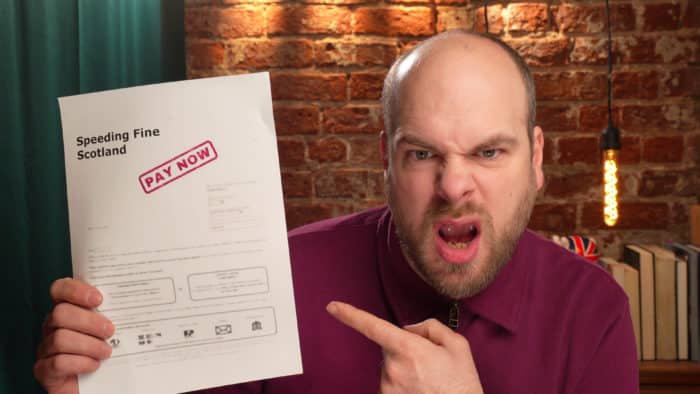
Have you received a speeding fine in Scotland and feel unsure about your next steps? You’ve come to the right place. Each month, over 130,000 people visit our website for guidance on fines and parking tickets.
In this article, we’ll look at:
- What it means when you get a speeding fine
- Whether you must pay it right away
- How to question the fine in court
- Times when you might not have to pay
- What could happen if you choose not to pay
It’s common to feel confused and concerned about receiving a Fixed Penalty Notice. In fact, a group of MPs and Peers say FPNs, which can cost up to £10,000, are hard to understand and might be unfair.1
Don’t worry! We’re here to help you understand the laws around speeding fines in Scotland for 2023.
Paid legal information from JustAnswer
JustAnswer is a paid third-party question-and-answer service providing general information. Its standard service does not create a solicitor-client relationship. Membership can renew automatically with recurring charges until cancelled. Check the initial price, renewal price and cancellation terms before signing up. Buying this service does not guarantee a successful challenge. See JustAnswer’s membership and cancellation information.
You can use the official challenge process without buying a paid service. If you choose to use JustAnswer, visit JustAnswer to read its service and payment terms.
Commercial link to JustAnswer. MoneyNerd may receive a referral fee. No successful outcome is guaranteed.
What happens if a speed camera in Scotland catches you?
If you get caught speeding by a speed camera in Scotland, you will be fined and receive three or more penalty points on your licence.
Speed awareness courses are unavailable to people who have committed a minor speeding offence in Scotland.
After the incident, the police will send you a Notice of Intended Prosecutions (NIP) and a document called a Section 172 Notice. The Section 172 Notice must be completed and returned within 28 days.
It gives the vehicle owner an opportunity to claim they were not the person driving at the time and allows them to give the contact information of the real driver who was committing the driving offences in Scotland.
Once the 172 Notice has been returned, the police will send the offending driver a Fixed Penalty Notice (FPN), a conditional offer to pay a fine and possibly accept penalty points on their licence.
You might not be given a speeding fine if you have previous speeding fines. Instead, you can be summoned to a district court, and the consequences can be more severe.
How much is a speeding fine in Scotland?
Speeding fines increase incrementally based on how many miles per hour you exceeded the speed limit and sometimes the location where you were speeding.
The minimum you can be fined is £100, and the maximum you can be fined is £2,500 on a motorway and £1,000 on other roads.
Each speeding offence is categorised into different Scotland speeding penalty bands, ranging from Band A as the least serious to Band F as the most serious.
The amount you are fined is calculated as a percentage of your weekly income but cannot be less than or more than the minimum and maximum speeding fines mentioned above.
You can use my free speeding fine calculator to get an estimate of how much your speeding fine will be.
This is a guidance tool only and not an assessment. For accurate speeding fine figures, contact the issuing authority credit. Do not rely solely on this calculator’s results.
Unlike England and Wales, there is no option for speed awareness courses in Scotland.
Speeding fine calculator (Scotland)
You can find speeding fine calculators online to help you estimate speeding penalties.
Which.co.uk also has an informative guide explaining the average fine cost for each band based on how much you were speeding.
This guide can be read here.
What happens if you ignore it?
If you don’t pay the speeding fine in Scotland, you will be summoned to a district court.
You will be subject to an even greater fine and legal repercussions at court due to ignoring the original process.
Can you appeal?
An informal appeal might or might not be possible after receiving the Fixed Penalty Notice.
However, if you disagree with the speeding fine and want to challenge it, you can request a court summons to challenge the fine in a Scottish District Court.
Hiring legal professionals to help you with your legal defence against speeding tickets is a good idea.
You can state why you believe the speeding fine was wrongfully issued in court. There are limited reasons why your appeal in court would be successful, such as:
- There was an admin error, and the vehicle isn’t yours.
- The car was stolen, and it was the criminal who stole the vehicle speeding.
- Speed limit signs were removed, damaged, or hidden
- You were not speeding, which can be difficult to prove against existing evidence that you were
You will need to explore the evidence requirements for a speeding appeal.
Fixed Penalty Notice Appeal Reasons
I’ve put together this table to help you better understand the different reasons that can help you appeal your fine.
If you want to learn more about the appeal process, be sure to check out our specialized guide.
| Issue to check | Possible evidence | Important limit |
|---|---|---|
| The alleged offence did not occur | Contemporaneous photographs, video or reliable records. | The relevant legal elements and evidence must be assessed. |
| Valid insurance or entitlement | Policy documents or DVLA records covering the exact time and use. | Holding a document now does not prove cover or entitlement at the time. |
| A recognised statutory exemption | Evidence establishing the exact exemption, such as an applicable medical exemption. | An emergency or misunderstanding does not automatically amount to a defence. |
| Identity or vehicle details | Evidence of a mismatch, mistaken identity or cloned vehicle. | Follow the notice’s response requirements; do not invent a driver or account. |
| Signage or equipment | Photographs and reliable evidence relevant to the alleged offence. | A malfunctioning speedometer is not a general defence to speeding. Seek legal advice before contesting. |
FPNs do not use the same appeal procedure as council PCNs. Follow the notice; contesting the allegation may require a court hearing. Paper tax discs have not been required since 1 October 2014.
Check the right challenge process
A Fixed Penalty Notice does not normally use the council parking tribunal process. The notice explains how to dispute the allegation, which may require a court hearing. If convicted, the penalty and costs can be higher than the fixed penalty. Check the process and deadlines before deciding what to do.
General information. The procedure depends on the notice and jurisdiction. Check the issuer’s instructions.
Is there a 10 mph leeway in Scotland?
A study was completed to understand speed camera tolerance in the UK. The findings suggested that many police forces operate a 10% + 2mph tolerance before issuing a speeding ticket.
The research was conducted by Autom Express, contacting 45 police forces and was published by Confused.com.
For example, in a 30-mile-per-hour area, the tolerance would suggest that you could travel 35 miles per hour (3mph + 2mph) and not get a speeding fine.
However, this very much depends on speed camera calibration.
But, the Scotland police force contacted within the study refused to disclose if there was a tolerance at all. It’s important to assume there is no certain speed camera tolerance across the UK.
» TAKE ACTION NOW: Get legal support from JustAnswer
How much over the speed limit are you allowed in Scotland?
Road laws have speeding restrictions for the safety of all motorists and pedestrians.
You should not drive above the safe driving limits in any situation, whether or not a “speed camera tolerance” of 10% + 2mp exists.
It remains unconfirmed whether a small margin exists before a speeding ticket will be issued in Scotland.
Consequences of accumulated points
Any penalty points you receive for a driving offence will remain on your licence for three years; however, they cannot be removed until four years after the offence was committed.
If you commit more than one driving offence within three years, the penalty points received from each offence are accumulated If you accrue 12 penalty points on your licence within this time frame, you will be disqualified from driving by the Court for a minimum period of six months.
However, this may be longer if you have been disqualified before under the DVLA points system Scotland. This accumulation of 12 penalty points or more is known as totting Up’.
Unfortunately, a speeding conviction can cause greatly increased insurance rates.
Data shows that drivers with speeding offences are more likely to make a claim, and as a result, many insurers will raise their premiums. Research shows speeding fines can increase your insurance premium by 34% on average.
Legal information through JustAnswer
JustAnswer is a paid third-party question-and-answer service providing general information. Its standard service does not create a solicitor-client relationship. Membership can renew automatically with recurring charges until cancelled. Check the initial price, renewal price and cancellation terms before signing up. Buying this service does not guarantee a successful challenge. See JustAnswer’s membership and cancellation information.
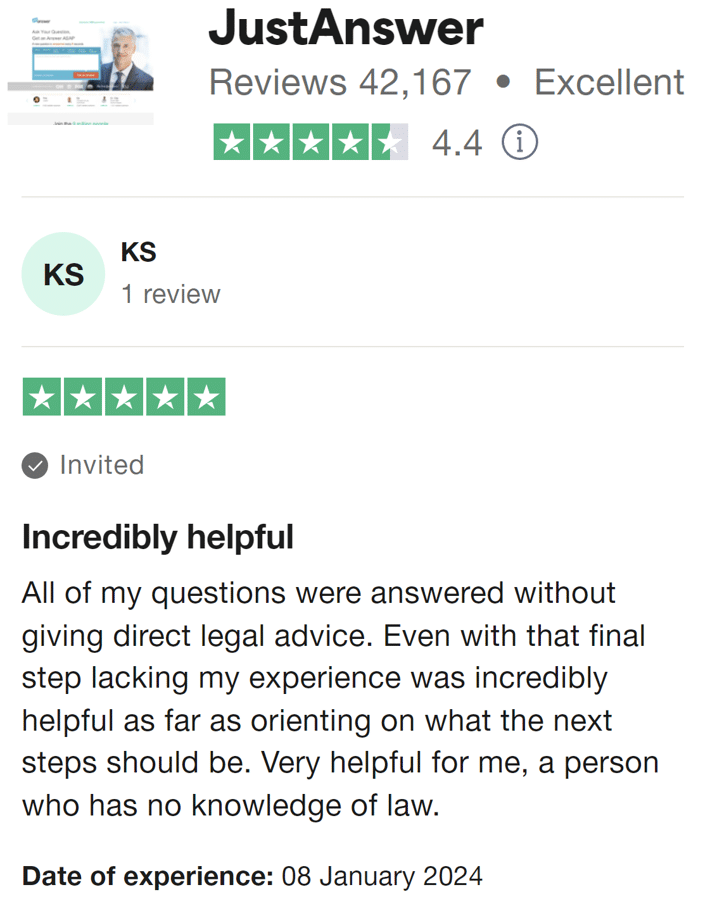
Historical JustAnswer review image. The displayed rating and review total are not live. Reviews do not predict your case outcome. Membership fees and renewal terms apply.
How long does it take for a speeding ticket to come through?
The Notice of Intended Prosecution and Section 172 Notice must be received within 14 days.
If 14 days pass before you receive the NIP, the driver is not obligated to pay a fine and cannot be prosecuted if they don’t. The driver also cannot receive penalty points on their license.
However, a NIP does not have to be sent out if you were caught speeding by a police officer rather than a camera, as long as the police officer gave you a verbal Notice of Intended Prosecution instead as part of the speeding notification process.
Although the NIP must be received within 14 days, the FPN does not have to be received as quickly.
The police must send the FPN within six months of the alleged speeding incident when the 172 Notice was returned by the deadline.
The Final Word
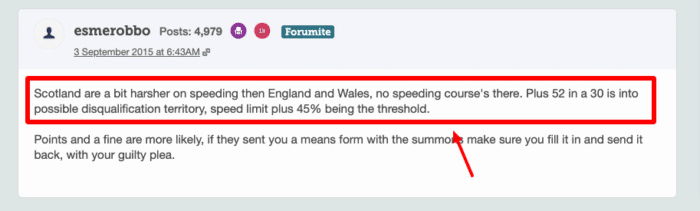
Appealing a Scotland speeding fine is much more difficult than appealing other fines, such as Penalty Charge Notices. It can be daunting to let the matter go to court; for that reason alone, you might choose to pay instead.
Only make an appeal with a truthful reason why you shouldn’t have to pay, which is most likely to be accepted when your car was stolen, or there was a serious admin error.
At other times, it may be best to simply pay and avoid court and the chance of getting an even bigger fine.
Before using a paid legal information service
JustAnswer is a paid third-party question-and-answer service providing general information. Its standard service does not create a solicitor-client relationship. Membership can renew automatically with recurring charges until cancelled. Check the initial price, renewal price and cancellation terms before signing up. Buying this service does not guarantee a successful challenge. See JustAnswer’s membership and cancellation information.
A paid service is optional. Gather your notice and evidence, check the deadline and decide whether you need professional advice about your circumstances.
Commercial link to JustAnswer. MoneyNerd may receive a referral fee. Check all charges and cancellation terms before signing up.
References