







BPO Collections Debt Letters: Verify, Dispute or Arrange Payment








MoneyNerd introduces enquiries to The Debt Advice Service and may receive a referral fee. For free, independent guidance and help finding a debt adviser, visit MoneyHelper.
This information and enquiry service is not a full financial assessment or a guarantee of suitability or debt write-off. Debt solutions are not suitable for everyone. Fees may apply, and your credit record and assets may be affected. Get advice on your circumstances before choosing a solution.
MoneyNerd introduces enquiries to The Debt Advice Service and may receive a referral fee. For free, independent guidance and help finding a debt adviser, visit MoneyHelper.
This information and enquiry service is not a full financial assessment or a guarantee of suitability or debt write-off. Debt solutions are not suitable for everyone. Fees may apply, and your credit record and assets may be affected. Get advice on your circumstances before choosing a solution.
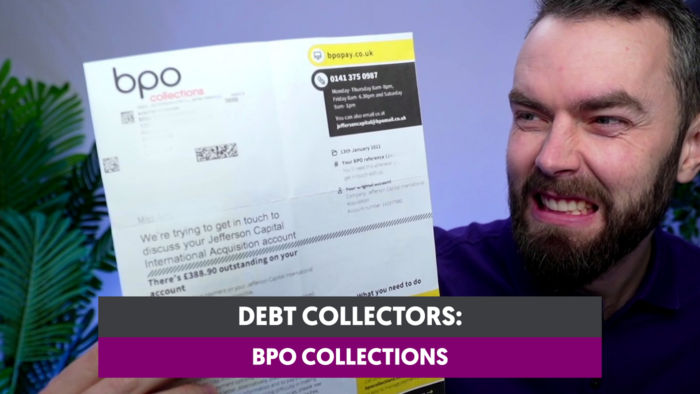
Ever received a surprise letter from BPO Collections and wondered where it came from? Or if it’s real? Or if you need to pay it?
Check the original creditor, account reference and balance before deciding what to do.
In this guide, we’ll cover:
- Understanding what BPO Collections Debt is.
- Who BPO Debt Collections are and who they collect for.
- If you can write off some BPO Collections debt.
- How to handle a BPO Collections Ltd Debt Letter.
- What other debt solutions exist.
A collection letter can be worrying. You can ask for information and obtain independent debt advice.
But, with the right help, you can work out your options. Our aim is to give you clear and easy-to-understand information.
Let’s get started!
Have You Received a BPO Collections Debt Letter?
Start by Requesting Proof of the Debt
Old accounts may require advice about limitation or prescription as well as the underlying balance and liability.
For many unsecured debts in England and Wales, the usual limitation period is six years from the relevant cause of action, not simply the last phone call. A payment, qualifying written acknowledgement or court proceedings can affect the position. Scotland usually has a five-year prescription period for many ordinary debts, with different rules and exceptions. Court judgments, secured debts and some tax debts require separate advice. Get free debt advice before paying or acknowledging an old debt; do not ignore court papers.
Tax debts and judgments have separate rules. It is inaccurate to say every CCJ can always be enforced without further requirements or restrictions.
Understand your debt options
MoneyNerd can introduce you to The Debt Advice Service for free debt advice. MoneyNerd does not provide debt advice or recommend debt solutions.
The Debt Advice Service can explain your options, including their benefits, costs and risks. Options available depend on your circumstances. There’s no obligation to take a debt solution.
MoneyNerd does not provide debt advice or recommend debt solutions. The Debt Advice Service is a trading style of Pacific Financial Solutions Limited. If you request an introduction, we’ll share your details with their team so they can contact you.
Some debt solutions have fees and may negatively affect your credit rating. MoneyNerd is a commercial introducer and may receive a fee if you go ahead with a debt solution through The Debt Advice Service.
For free, impartial money guidance and help finding free debt advice, visit MoneyHelper.
What Alternatives Debt Solutions Exist?
There are lots of different types of debt solutions available so we recommend that you speak to one of the above organisations. Their advisers can help you choose the best solution for your finances.
Here is a quick snapshot of some solutions that might help you:
Debt Management Plan (DMP)
A DMP is an informal arrangement for affordable payments to suitable creditors. It does not automatically bind every creditor or stop legal action. For regulated credit, if the firm has put a repayment arrangement in place as forbearance and you meet its terms, it must reduce, waive or cancel further interest and charges enough to prevent the debt increasing during that arrangement.
Individual Voluntary Arrangement (IVA)
An IVA is a formal arrangement administered by an insolvency practitioner. Its approved terms govern contributions, assets and fees; only covered debts remaining on successful completion are released. It does not ban every required creditor communication.
Many contribution IVAs last five or six years, but approved terms control. Release of covered unpaid debt depends on successful completion, and required correspondence may continue.
There is no universal statutory minimum debt or requirement for two creditors. Suitability depends on your debts, assets, affordable contribution or lump sum and creditor approval. Compare alternatives through independent debt advice.
Trust Deed
IVAs are unavailable in Scotland. A protected trust deed is one possible option, not a compulsory equivalent.
A protected trust deed is one possible Scottish insolvency option, normally involving four years of contributions and consideration of assets. It has different rules from an IVA. A Scottish money adviser can also consider the Debt Arrangement Scheme, bankruptcy and informal arrangements.
Debt Relief Order (DRO)
During the usual 12-month DRO period, recovery of listed qualifying debts is restricted and you generally do not pay those debts. Continue paying essential ongoing bills and excluded debts. A DRO does not prohibit every required creditor notice.
A DRO normally lasts 12 months. Continue paying ongoing bills and excluded debts, and report relevant changes throughout the period.
Qualifying listed debts are normally discharged at the end if the order remains in force; it is not just a reassessment on the final day.
Bankruptcy
Bankruptcy is one possible formal option. Compare alternatives and consequences for assets, income, credit and some jobs with an adviser.
Keep in mind that it is a serious financial situation that should not be taken lightly, but you may be able to write off some of your debts.
Sequestration
Sequestration is the Scottish bankruptcy process, with different rules from England and Wales.
Scotland’s Minimal Asset Process is a route into bankruptcy for people who meet its conditions. Its application fee has been removed. Ask an approved Scottish money adviser to compare it with the alternatives and explain the effects on assets, credit and income.
» TAKE ACTION NOW: Fill out the short debt form
Can You Get BPO Collections to Wipe the Debt?
You can use a debt solution which could write off your remaining debts at the end of their term. These are:
- IVA
- Trust Deed
- DRO
- Bankruptcy.
Thousands have already tackled their debt
Every day, our partner, The Debt Advice Service, helps people understand their options for dealing with debt. Their debt advice is free, with no obligation to proceed.
MoneyNerd introduces you to The Debt Advice Service. We do not provide debt advice or recommend debt solutions.

Natasha
Very helpful and informative thank you

If you submit the enquiry form, MoneyNerd will share your details with The Debt Advice Service so they can contact you.
Some debt solutions have fees and may negatively affect your credit rating. MoneyNerd may receive a fee if you go ahead with a debt solution through The Debt Advice Service.
The Debt Advice Service is a trading style of Pacific Financial Solutions Limited.
For free, impartial help and access to not-for-profit debt advice, visit MoneyHelper.
How Can You Make A Complaint Against Them?
An ordinary debt collector has no right to force entry or seize goods. A visit must comply with applicable contact and privacy rules; there is no blanket ban on every doorstep visit. FCA rules prohibit workplace visits without prior consent for regulated consumer-credit collection. A collector must protect your privacy and must not disclose a debt to an unrelated person without a lawful basis. Contact with someone you have authorised, such as a debt adviser, is different. Keep evidence of any improper disclosure and complain. HMRC says its collection agencies never visit homes or workplaces.
You will first need to make your complaint to BPO to give them time to sort out your issues.
Complain to the firm first and keep copies and call logs. For an eligible regulated financial complaint, you can normally approach the Financial Ombudsman Service after a final response or after eight weeks without one, usually within six months of the final response. The Ombudsman can require a remedy or compensation; it does not impose regulatory fines. Tax, council and other non-credit debts may have different complaint routes.
For eligible complaints, the Ombudsman can require a remedy or compensation, not impose regulatory fines. Public-sector debts may have different complaint routes.
Your Rights With Debt Collectors
Dealing with BPO Debt Collections can be scary and challenging. That’s why understanding your rights is vital when managing debts.
The table below offers a breakdown of what debt collectors are permitted and not permitted to do. If you’d like to learn more about your rights, be sure to read our detailed guide.
| Debt collectors may | Limits and protections |
|---|---|
| Contact you to seek payment | For regulated consumer credit, contact must be at reasonable times and respect reasonable requests about when, where and how you are contacted. |
| Ask to discuss the debt at a home visit | A collector has no bailiff powers, cannot force entry or take goods, and should leave when asked. |
| Explain possible court action | They must not mislead you about their powers or threaten action they cannot lawfully take. |
| Discuss an affordable repayment or settlement | Get agreed terms in writing and obtain free advice if you dispute the debt or cannot afford payments. |
| A creditor may seek a separate court enforcement order | A CCJ alone does not give a collector access to your bank account. A third-party debt order requires a separate court process. |
| A creditor may assign a debt | Check who owns it and who is authorised to collect; do not disclose payment details to an unverified caller. |
| Make proportionate follow-up contact | Harassment is prohibited. Requests about contact must be considered; necessary legal notices may still be sent. |
Contact Info for BPO Debt Collections
| Company | BPO Collections Limited, company number SC295285 |
| General account telephone | 0141 846 2076 |
| DWP, DFC, NHS and HMRC accounts | 0141 846 2125 |
| Postal address | Marina Quay Dock Road Ardrossan Ayrshire KA22 8DA |
| Online contact | Official BPO contact page |
References






