







Cobra Financial Debt Collection: Your Rights and Options








MoneyNerd introduces enquiries to The Debt Advice Service and may receive a referral fee. For free, independent guidance and help finding a debt adviser, visit MoneyHelper.
This information and enquiry service is not a full financial assessment or a guarantee of suitability or debt write-off. Debt solutions are not suitable for everyone. Fees may apply, and your credit record and assets may be affected. Get advice on your circumstances before choosing a solution.
MoneyNerd introduces enquiries to The Debt Advice Service and may receive a referral fee. For free, independent guidance and help finding a debt adviser, visit MoneyHelper.
This information and enquiry service is not a full financial assessment or a guarantee of suitability or debt write-off. Debt solutions are not suitable for everyone. Fees may apply, and your credit record and assets may be affected. Get advice on your circumstances before choosing a solution.
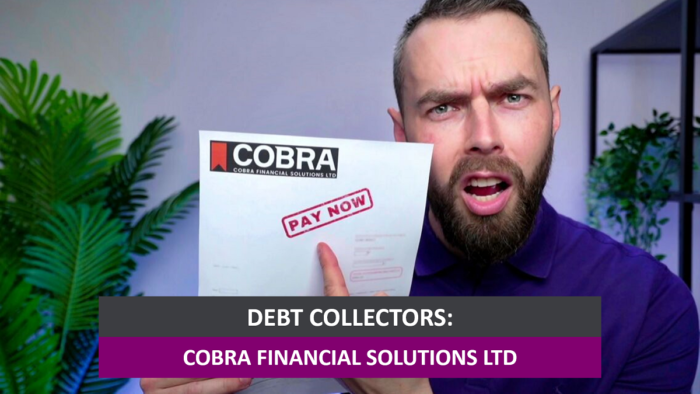
Have you received a letter from Cobra Financial Debt Collectors? You might be feeling worried or confused. But don’t worry; you’re in the right place to get answers.
Every month, over 170,000 people come to our website for help with debt issues, just like yours, so you’re not on your own.
In this helpful guide, we will explain:
- Who Cobra Financial Debt Collectors are and if they’re fair
- How to find out if the debt they say you owe is really yours
- Steps to take if you can’t pay or want to challenge the debt
- Ways to stop them from bothering you too much
- Different plans to help manage your debt or maybe even reduce it.
Our team knows what it’s like to get letters from debt collectors as many of us have been there too. We understand how you feel.
Let’s learn more about how to handle Cobra Financial Debt Collectors together.
What to do next
So that’s the basics about Cobra debt recovery. Now we’ll give you a guide on how to deal with them. If you plan carefully, you may even be able to beat them at their own game.
Gather information
Check the creditor, account and itemised balance against your records. A discrepancy should be queried; it does not automatically cancel the whole debt.
Know your rights
Cobra advertises face-to-face collection. This does not give an ordinary agent the power to force entry or seize goods; check the person’s identity and authority.
Regulation depends on the legal entity and activity. Do not assume every commercial debt falls within FCA consumer-credit rules or the Financial Ombudsman’s remit. General restrictions on harassment, misrepresentation and unlawful use of personal information can still apply.
Prove the debt
If you dispute the account, explain why and ask for the documents and itemised balance supporting it. The evidence required depends on the debt. A generic proof request does not cancel liability or extend a court deadline.
Statute-barred debts
Many ordinary unsecured debts may become statute-barred after six years in England and Wales, or prescribed after five years in Scotland. The start date, debt type, payments, legally relevant acknowledgments and any court claim all matter. A creditor’s letter alone does not restart the period. Ask a debt adviser to check the facts before paying or admitting liability, and respond to any court papers on time.
In England and Wales, limitation does not normally extinguish the debt; Scottish prescription can. Do not ignore court papers on the assumption that an old account cannot be pursued.
Different rules apply to debts such as tax, council tax, mortgage shortfalls and debts already covered by a judgment or decree. A CCJ does not expire or cancel the debt when its six-year credit-file entry ends; some later enforcement needs court permission. Get advice on the particular debt and enforcement method.
» TAKE ACTION NOW: Fill out the short debt form
What is the Process?
The process depends on the country, debt and stage of enforcement. The following describes ordinary civil money claims in England and Wales; other debts have different rules.
In the most basic terms, debt collection follows the following process:
- Your creditor sells your debt to a debt collection company. Your creditor may employ a second company to chase you rather than sell the debt.
- The debt collection company will begin to chase you for the debt.
- You can pay the debt in one go if you can afford to, or you can opt for one of their offered payment schedules.
- You stick to the repayment schedule until the debt is paid.
But if you ignore the debt collectors altogether or don’t pay or stick to your repayment schedule, the process gets more serious:
- Where the Debt Claims Protocol applies, a business normally gives an individual at least 30 days to reply to a letter of claim.
- A Consumer Credit Act default notice is a separate document. Where required, it gives at least 14 days after service to remedy a breach before specified action; it is not a universal second step after a letter of claim.
- A court claim is not a CCJ. Normally respond within 14 days after service of the particulars of claim, or file a defence within 28 days if you acknowledge service in time.
- Judgment may follow an admission, a court decision or failure to respond. It is not automatic merely because a collector demanded payment.
- If a judgment remains unpaid, a creditor may apply for a warrant or other lawful enforcement. For an ordinary civil debt, agents generally cannot force initial entry to a home and can take control only of eligible goods.
- A Charging Order can be issued against your home if you own it, or an Attachment of Earnings Order can be issued, which will take money from your paycheck.
What kind of reviews do they have?
Most debt collection agencies don’t have glowing reviews. No-one likes a strongly-worded letter claiming that they owe an amount of money they may not even realise they owed, after all. Cobra debt recovery, on the other hand, has quite good reviews.
Review scores and success claims change and are not evidence about your own liability. This guide does not establish the accuracy of historical allegations about responses to reviewers; assess current evidence relating to your case.
You also need to be aware that these reviews include their clients and very few reviews appear to be from people they have chased for debts.
Understand your debt options
MoneyNerd can introduce you to The Debt Advice Service for free debt advice. MoneyNerd does not provide debt advice or recommend debt solutions.
The Debt Advice Service can explain your options, including their benefits, costs and risks. Options available depend on your circumstances. There’s no obligation to take a debt solution.
MoneyNerd does not provide debt advice or recommend debt solutions. The Debt Advice Service is a trading style of Pacific Financial Solutions Limited. If you request an introduction, we’ll share your details with their team so they can contact you.
Some debt solutions have fees and may negatively affect your credit rating. MoneyNerd is a commercial introducer and may receive a fee if you go ahead with a debt solution through The Debt Advice Service.
For free, impartial money guidance and help finding free debt advice, visit MoneyHelper.
Will a CCJ Affect My Credit Score?
Unless you pay within one month of the CCJ being issued, it will be recorded in the Register of Judgements, Orders and Fines for 6 years. If you pay off your debt within these 6 years, you can request that your judgement is marked as ‘satisfied’ on the register.
To do this, write to the court with proof that you have paid off the debt in full.
Full payment within one calendar month of a CCJ allows you to apply for its removal from the register. Keep evidence and contact the court; later payment normally marks it satisfied rather than removing it.
A CCJ normally appears on your credit file for six years from the judgment date unless it is removed earlier under the applicable rules. It can make borrowing harder or more expensive, but it does not make all credit impossible.
This is because companies use your credit file to see if you are a ‘high-risk’ customer – someone who might have difficulty paying their bills on time. If you have a CCJ, you have had such trouble paying back your debt that someone had to go to court about it.
Understandably, companies are going to be reluctant to give you credit!
After 6 years, it is no longer visible on your credit report and you should find it easier to get credit again.
Can I Get A Debt Solution?
If you have several unsecured debts, you may benefit from a debt solution.
There are several different debt solutions available in the UK, so I recommend speaking to a debt charity fro some free advice. Their advisors will be able to walk you through your options in detail and find the best solution for you.
I have linked some charities that offer these services for free.
Debt Management Plan (DMP)
A DMP is an informal debt solution that lets you pay off your debts via a single monthly payment.
Because it is informal, it is not legally binding so you are not tied into a DMP for a minimum number of payments.
Individual Voluntary Arrangement (IVA)
An IVA is a formal insolvency arrangement managed by an insolvency practitioner. Your proposal sets out payments, any assets involved and fees. Once approved, it binds the creditors and debts covered by it and restricts recovery action; it is not a blanket ban on necessary correspondence.
Many IVAs involve payments for five or six years, but the agreed term varies. Qualifying unpaid debt is normally released only on successful completion. An IVA affects your credit record, may involve assets or home equity, and can fail if its terms are not met.
IVA suitability depends on your debts, affordable contributions or available assets, fees and creditor approval. There is no universal rule that you must owe several thousand pounds to more than one creditor. Get independent debt advice and compare other options before agreeing to an IVA.
Trust Deed
IVAs are not available in Scotland. A Scottish money adviser can compare a protected trust deed, the Debt Arrangement Scheme, sequestration and informal arrangements; a trust deed is not compulsory.
A protected trust deed is a Scottish insolvency arrangement, usually lasting at least four years of contributions. It can discharge qualifying unpaid debt on successful completion, but fees apply and your home or other assets may be at risk. Covered creditors cannot pursue payment outside it, but can still send required documents.
Debt Relief Order (DRO)
In England and Wales, a DRO may suit an eligible non-homeowner with low surplus income, limited assets and qualifying debts within the £50,000 limit. Detailed income, asset, vehicle and residence rules apply. An approved debt adviser checks eligibility and submits the application to the Insolvency Service.
While a DRO remains in force, listed qualifying debts are protected from most recovery action. This is not a ban on every necessary letter, and you must continue paying ongoing bills and excluded debts.
A DRO normally lasts 12 months. If it remains in force, the qualifying debts listed in it are normally discharged at the end. You must report relevant changes and continue paying ongoing bills and excluded debts, such as court fines and student loans.
Bankruptcy
If you have debts but no realistic possibility of ever paying them off, you may need to declare bankruptcy.
Bankruptcy has an unfair stigma attached to it as it may be your only way of getting a financial fresh start. That said, it is a serious financial situation that should not be taken lightly.
Sequestration
Sequestration is the Scottish version of bankruptcy.If you have little income and no valuable assets, you may be able to apply for a minimal asset process bankruptcy (MAP). A MAP is a quicker, cheaper, and more straightforward version of sequestration, so worth considering.
Take the first step towards tackling your debt
Every day, our partner, The Debt Advice Service, helps people understand their options for dealing with debt. Their debt advice is free, with no obligation to proceed.
MoneyNerd introduces you to The Debt Advice Service. We do not provide debt advice or recommend debt solutions.

Natasha
Very helpful and informative thank you

If you submit the enquiry form, MoneyNerd will share your details with The Debt Advice Service so they can contact you.
Some debt solutions have fees and may negatively affect your credit rating. MoneyNerd may receive a fee if you go ahead with a debt solution through The Debt Advice Service.
The Debt Advice Service is a trading style of Pacific Financial Solutions Limited.
For free, impartial help and access to not-for-profit debt advice, visit MoneyHelper.
How Do I Make A Complaint?
Raise any concern about conduct or the account with Cobra first, supported by dates and documents. Ask which external complaint route applies to the particular service.
Cobra’s published complaint procedure gives [email protected] as its complaint email. Use independently verified details and keep a copy; a complaint does not automatically halt court proceedings.
The Financial Ombudsman can consider only eligible activities and complainants; it is not the general ombudsman for every commercial collection dispute. Obtain advice about the relevant regulator, data-protection complaint or legal remedy if its remit does not apply.
Cobra Financial Contact Information
| Phone: | 0151 526 4222 |
| Fax: | 0151 526 0395 |
| Address: |
Head Office Aintree Building, Aintree Racecourse Business Park, Aintree L9 5AQ Tel: 01515264222 Midlands 17 High Street, Henley-in-Arden, Warwickshire, B95 5AA Tel: 01564628638 Wales Capital Tower, Grey Friars Road, Cardiff, CF10 3AG Tel: 02920 109 504 London The Mille, 1000 Great West Road, Brentford, Middlesex, TW8 9DW Tel: 02030115210 Devon & Cornwall 3rd Floor, 11-15 Dix’s Field, Exeter, Devon, EX1 1QA Tel: 01394 798 251 Peterborough Peterborough United Football Club, London Road, Peterborough, PE2 8AN Tel: 01733 612 261 |
| Email: | [email protected] |
| Website: | https://cfs-legal.co.uk/ |
Below, we answer some of the more commonly-asked questions about Cobra debt recovery and debt collection agencies in general.