







Debit Finance: membership payments, arrears and your options








MoneyNerd introduces enquiries to The Debt Advice Service and may receive a referral fee. For free, independent guidance and help finding a debt adviser, visit MoneyHelper.
This information and enquiry service is not a full financial assessment or a guarantee of suitability or debt write-off. Debt solutions are not suitable for everyone. Fees may apply, and your credit record and assets may be affected. Get advice on your circumstances before choosing a solution.
MoneyNerd introduces enquiries to The Debt Advice Service and may receive a referral fee. For free, independent guidance and help finding a debt adviser, visit MoneyHelper.
This information and enquiry service is not a full financial assessment or a guarantee of suitability or debt write-off. Debt solutions are not suitable for everyone. Fees may apply, and your credit record and assets may be affected. Get advice on your circumstances before choosing a solution.
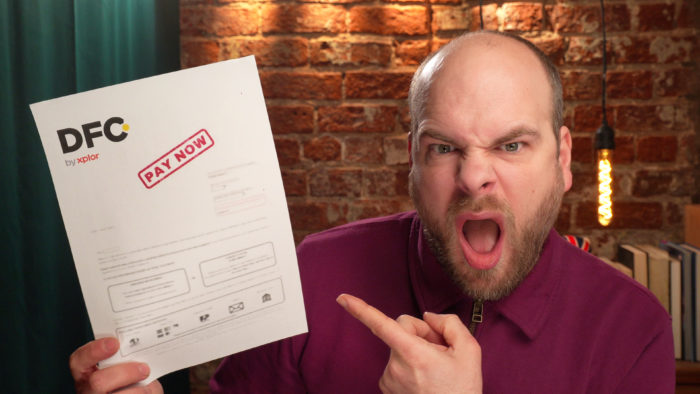
Debit Finance Collections (DFC) processes membership payments for gyms, leisure centres and entertainment providers. An unfamiliar payment or arrears letter should be checked against the membership agreement.
In this article, we’ll help you understand:
- If the debt belongs to you and if you should pay it.
- What happens if you don’t pay Debit Finance.
- How to deal with Debit Finance and set up a payment schedule.
- If you can write off some of your Debit Finance debt.
- How to handle Debit Finance appearing on your bank statement.
Check the membership, cancellation history and payment record before deciding whether an amount is owed.
The following steps can help you query a payment and work out what to do next.
How Do I Deal with Them?
Start by asking which membership and period the payment or arrears relate to. DFC’s payment-processing role should not be confused with a bank’s lending or enforcement powers.
1. First, check that you actually have a debt
Ask DFC and the membership provider for the agreement, payment history and itemised arrears. Dispute any error in writing and keep evidence; an evidence request does not automatically cancel a valid contractual balance.
You can use my free ‘prove it’ letter template to write to them.
2. Discuss an affordable arrangement if money is owed
If a valid balance remains and you cannot afford it, explain your circumstances and propose an affordable payment. There is no general rule requiring DFC to offer a fixed selection of repayment schedules.
If you still can’t afford to pay with one of these schedules, you may need to consider a debt solution. I go through these below.
3. Check for statute-barred debts
If the debt that Debit Finance are chasing is quite old, you may want to check its statute-barred status before paying.
For some unsecured contractual debts in England and Wales, the usual period for starting a court claim is six years from when the creditor could sue. A payment or qualifying signed written acknowledgment before expiry can restart the period, and court proceedings started in time can affect the position. Do not count only from the last payment or assume every debt follows this rule.
Where the legal conditions are met, limitation in England and Wales can provide a defence to a court claim without extinguishing the debt. Scotland has different prescription rules under which certain obligations are extinguished after five years without a relevant claim or acknowledgment. Get advice on the debt type, dates and any existing court order before relying on either rule.
Keep in mind that not all debts become statute-barred!
A court judgment changes the enforcement rules and does not expire simply because six years have passed. Tax debts and other specialist liabilities also have different rules; get advice on the actual debt.
If your debt is statute-barred, you can use my free letter template to write to Debit Finance and explain the situation.
If you are unsure about the status of your debt, you can contact a debt charity for some advice. Their advisors will be able to look at the debt in question, determine its status, and advise you on your next steps.
A qualifying written acknowledgement or payment can affect limitation before the relevant period expires, but not every letter does so. Ask a debt adviser how to raise a dispute without accidentally acknowledging liability.
» TAKE ACTION NOW: Fill out the short debt form
What Happens if You Don’t Pay?
For a membership balance, the contract, the provider’s rights and the applicable court procedure determine what can happen. See related guidance.
Unpaid valid membership fees may lead to reminders, a collection referral or a court claim. No automatic sequence gives DFC access to your home or bank account.
- Correspondence must respect applicable privacy and debt-collection rules; contact with another person at an old address should not disclose your debt improperly.
- If calls are difficult, request an appropriate contact method and explain any vulnerability or accessibility needs.
- An ordinary collection visit gives no right to force entry or seize belongings.
- Any added fee must have a lawful basis and be fair and properly explained; wording in a contract does not make every charge enforceable.
- DFC does not gain a bank’s right of set-off over your account merely by processing a Direct Debit. Court enforcement is a separate process requiring the relevant order.
- Do not assume that every missed gym payment is reported as a credit-account default. Check what information is actually reported and challenge errors.
- A CCJ normally stays on the register and credit file for six years from judgment. Paying the full judgment within one calendar month can allow the entry to be removed; paying later normally marks it satisfied rather than removing it. The debt does not automatically expire when the entry disappears.
- A statutory demand is a serious formal document with short response deadlines. In England and Wales a creditor’s bankruptcy petition generally requires at least £5,000 of qualifying debt, but a demand is not itself a bankruptcy order. Seek urgent independent advice if one arrives.
Understand your debt options
MoneyNerd can introduce you to The Debt Advice Service for free debt advice. MoneyNerd does not provide debt advice or recommend debt solutions.
The Debt Advice Service can explain your options, including their benefits, costs and risks. Options available depend on your circumstances. There’s no obligation to take a debt solution.
MoneyNerd does not provide debt advice or recommend debt solutions. The Debt Advice Service is a trading style of Pacific Financial Solutions Limited. If you request an introduction, we’ll share your details with their team so they can contact you.
Some debt solutions have fees and may negatively affect your credit rating. MoneyNerd is a commercial introducer and may receive a fee if you go ahead with a debt solution through The Debt Advice Service.
For free, impartial money guidance and help finding free debt advice, visit MoneyHelper.
What powers would a visiting collector have?
An ordinary collector can ask to speak to you but cannot force you to engage or let them into your home.
They cannot take goods or threaten powers they do not have. Authorised bailiff enforcement is a different process.
Ask an unwanted ordinary visitor to leave and raise a complaint about harassment. Seek urgent help if someone threatens violence or claims enforcement powers they cannot substantiate.
Can I Get a Debt Solution?
If you have Debit Finance debts or other unsecured debts that you are struggling to pay, you may benefit from a debt solution.
There are different available debt solutions in the UK available in the UK, so I recommend speaking to a debt charity for some advice before you begin. They will be able to take a detailed look at your finances and help you work out which debt solution will work best for you.
They will also be able to walk you through the processes for each debt solution, as well as their consequences and the impact that they may have on the rest of your life.
I have linked some charities at the bottom of this page that offer these types of services for free.
Debt Management Plan (DMP)
A DMP is an informal debt solution that lets you pay off your debts via a single monthly payment.
Because it is informal, it is not legally binding so you are not tied into a DMP for a minimum number of payments.
Individual Voluntary Arrangement (IVA)
An IVA is a formal insolvency arrangement managed by an insolvency practitioner. Your proposal sets out payments, any assets involved and fees. Once approved, it binds the creditors and debts covered by it and restricts recovery action; it is not a blanket ban on necessary correspondence.
Many IVAs involve payments for five or six years, but the agreed term varies. Qualifying unpaid debt is normally released only on successful completion. An IVA affects your credit record, may involve assets or home equity, and can fail if its terms are not met.
IVA suitability depends on your debts, affordable contributions or available assets, fees and creditor approval. There is no universal rule that you must owe several thousand pounds to more than one creditor. Get independent debt advice and compare other options before agreeing to an IVA.
Trust Deed
IVAs are not available in Scotland. A Scottish money adviser can compare a protected trust deed, the Debt Arrangement Scheme, sequestration and informal arrangements; a trust deed is not compulsory.
A protected trust deed is a Scottish insolvency arrangement, usually lasting at least four years of contributions. It can discharge qualifying unpaid debt on successful completion, but fees apply and your home or other assets may be at risk. Covered creditors cannot pursue payment outside it, but can still send required documents.
Debt Relief Order (DRO)
In England and Wales, a DRO may suit an eligible non-homeowner with low surplus income, limited assets and qualifying debts within the £50,000 limit. Detailed income, asset, vehicle and residence rules apply. An approved debt adviser checks eligibility and submits the application to the Insolvency Service.
For 12 months, you make no payments, but your creditors freeze your interest and don’t contact you.
A DRO normally lasts 12 months. If it remains in force, the qualifying debts listed in it are normally discharged at the end. You must report relevant changes and continue paying ongoing bills and excluded debts, such as court fines and student loans.
Bankruptcy
If you have debts but no realistic possibility of ever paying them off, you may need to declare bankruptcy.
Bankruptcy has an unfair stigma attached to it as it may be your only way of getting a financial fresh start. That said, it is a serious financial situation that should not be taken lightly.
Sequestration
Sequestration is the Scottish version of bankruptcy.If you have little income and no valuable assets, you may be able to apply for a minimal asset process bankruptcy (MAP). A MAP is a quicker, cheaper, and more straightforward version of sequestration, so worth considering.
Take the first step towards tackling your debt
Every day, our partner, The Debt Advice Service, helps people understand their options for dealing with debt. Their debt advice is free, with no obligation to proceed.
MoneyNerd introduces you to The Debt Advice Service. We do not provide debt advice or recommend debt solutions.

Natasha
Very helpful and informative thank you

If you submit the enquiry form, MoneyNerd will share your details with The Debt Advice Service so they can contact you.
Some debt solutions have fees and may negatively affect your credit rating. MoneyNerd may receive a fee if you go ahead with a debt solution through The Debt Advice Service.
The Debt Advice Service is a trading style of Pacific Financial Solutions Limited.
For free, impartial help and access to not-for-profit debt advice, visit MoneyHelper.
Can I Complain?
Raise a complaint with DFC and, where relevant, the membership provider. A regulator or ombudsman’s involvement depends on the activity complained about and its jurisdiction. See related guidance.
Make your first complaint to Debit Finance so that they have the chance to sort out the issue themselves. If you feel that they have not taken your complaint seriously enough or have not addressed your issue properly, you can escalate matters.
The Financial Ombudsman Service can consider eligible complaints within its jurisdiction after the business has had the required opportunity to respond. It can direct redress where appropriate, but it does not fine firms and not every membership-contract dispute falls within its remit. See related guidance.