







Loans secured on property: options, costs and risks








Loans Warehouse is a credit broker, not a lender. Approval and terms depend on checks. Compare fees, interest and the total amount repayable. A longer term may increase the overall cost. MoneyNerd introduces enquiries and may receive a referral fee.
Your home may be repossessed if you do not keep up repayments on a loan secured against it.

Loans Warehouse is a credit broker, not a lender. Approval and terms depend on checks. Compare fees, interest and the total amount repayable. A longer term may increase the overall cost. MoneyNerd introduces enquiries and may receive a referral fee.
Your home may be repossessed if you do not keep up repayments on a loan secured against it.
Do you want to know about loans secured by property? Are you unsure about how they work or what might happen if things don't go as planned? You're in the right place.
In this easy guide, we’ll talk about:
- What a loan secured by property is.
- The real cost of a bad secured loan.
- How a secured loan works.
- The benefits of secured loans.
- How to get a loan secured by your property.
We know that dealing with money can be hard, and you might be worried about making mistakes. But don’t fret – many others are in your shoes, and we are here to help. We’ll share facts and tips in a way that’s easy to understand. Let’s find out more about loans secured on property together.
Can I use my home as collateral?
A property-secured loan uses the property as security; equity helps determine the lending limit. Your home may be repossessed if payments are not maintained. Permitted uses depend on the lender. See related guidance, related guidance.
Enquire about a secured loan through Loans Warehouse, a credit broker, not a lender. Approval and terms depend on checks. Compare the full cost before applying. MoneyNerd may receive a referral fee. Your home may be repossessed if you do not keep up repayments on a loan secured against it.
What does it mean?
Both first and later charges are secured on the property. “Borrowing against equity” does not create a separate kind of collateral detached from the home.
A first charge generally has priority over later charges on enforcement, subject to the legal arrangements. It is not necessarily the mortgage originally used to buy the property. See related guidance.
Explore secured loan options
Loans Warehouse is a credit broker, not a lender. You can enquire about options based on your circumstances. Approval and terms depend on lender checks; an enquiry is not a guaranteed offer.
Compare the interest rate, fees, monthly payments and total amount repayable. A longer repayment term can increase the overall cost. Consolidating unsecured debts into a secured loan puts your home at risk.
MoneyNerd introduces enquiries to Loans Warehouse and may receive a referral fee. Broker and lender fees may apply and should be explained before you proceed.
Your home may be repossessed if you do not keep up repayments on a loan secured against it.
Securing against home equity
Equity is the current property value less all debts secured on it. A further loan is still secured on the property itself.
Subtract every outstanding secured debt from the current market value, not only the first mortgage.
Most people who use home equity to get a secured loan do so with an existing mortgage. If the home does need to be repossessed to recover a home equity loan debt, things get a little more complicated.
After sale costs, secured lenders are paid according to priority. Fees, arrears and interest can leave a shortfall even if the headline property value has not fallen; any remaining surplus goes to the entitled owner.
What if we are in negative equity?
If the property had decreased in value and the homeowner was in negative equity, they may not be able to pay off both the remaining mortgage debt and the home equity secured loan debt. The shortfall can be so great that they end up with significant debts and may even need to file for bankruptcy.
Consent and liability depend on ownership and the agreement. Joint borrowers are commonly jointly and severally liable, meaning each may be pursued for the whole debt, not just half. Obtain legal advice about occupiers and co-owners.
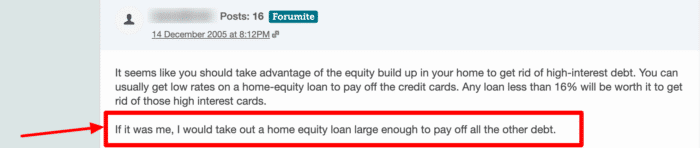
Over on the MoneySavingExpert forum, this user is advising another user who is struggling to pay their debts, and they are suggesting a home equity loan.
What is the interest rate?
Each lender will offer its own interest rates on secured loans, and the rate you are offered will be based on the loan amount, how long you want to pay it back, personal finances and your credit score.
Rates and eligibility change and depend on the product and your circumstances. Obtain a current personalised quotation or mortgage illustration and compare the total cost, fees, rate type and repayment terms; figures in this article are not live offers. A fixed rate may last only for an initial period; a variable rate changes according to its contractual basis. See related guidance.
Additional fees
When looking into getting a secured loan, it is important that you consider other fees as part of the loan, such as asset valuation fees, handling fees, broker fees and other administrative costs. In my experience, people often forget about these additional fees, so you must make sure these are accounted for when you compare loans.
A Loans Warehouse customer’s experience
Individual experiences vary. Compare the total cost, fees, repayment term and risks before applying. Securing borrowing against your home puts it at risk if you cannot keep up repayments.

Polly
“This was by far possibly one of the nicest experiences I’ve had getting a secured loan.”
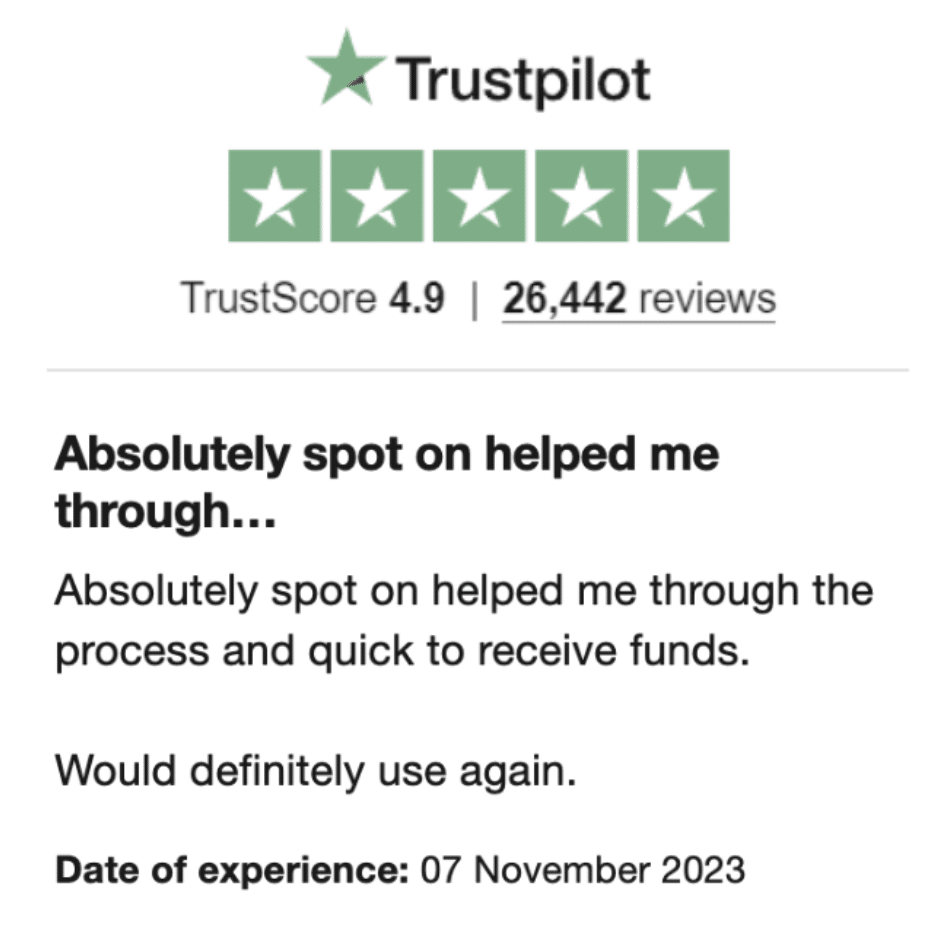
Reviews shown are for Loans Warehouse. Search powered by Loans Warehouse.
How do you do it against a property?
To get a loan secured on property, you must choose a secured loan that allows you to do so. There are generic secured loans that enable you to use property or property equity as security, and there are specific secured loans that allow this for certain purposes.
Which loan types?
Lots of loans are secured with property, such as mortgages, second-charge mortgages, homeowner loans and much more. There are seven types of loan that can be secured with property:
- First charge mortgage
A first-charge mortgage is borrowing with first-priority security on the property, subject to the legal arrangements. It may fund a purchase, refinance existing borrowing or raise money on a mortgage-free home.
A second-charge mortgage adds a separate secured loan behind the first charge. Repossession requires the applicable legal process, and sale proceeds may be insufficient to clear both debts. See related guidance.
- Homeowner loan
“Homeowner loan” and “home equity loan” are marketing terms. Check whether the actual arrangement is a first or second charge, what property secures it and how repayments work.
- Home equity line of credit (HELOC)
A US-style home equity line of credit (HELOC) should not be assumed to be a standard UK product. Any UK revolving or drawdown secured facility has its own availability, fees and payment terms. Check whether interest or capital payments are required during the drawdown period and how the balance must be repaid.
- Home improvement loan
Home-improvement loans may be secured or unsecured. Improvements do not guarantee an increase in value or a return greater than the borrowing cost. See related guidance.
A consolidation loan is used to replace selected debts. Check permitted uses and whether creditors are paid directly; compare total cost and the risk of turning unsecured debt into property-secured debt.
- Generic secured personal loan
A general secured loan can allow different purposes, but restrictions can apply. Disclose the intended use and check the agreement.
Am I eligible?
Getting approved for a secured loan that uses a property as collateral will involve all of the usual checks, including an affordability assessment and a credit score check. Each lender applies their own tests and comes to an independent determination, meaning it is not possible to say if someone definitely will or definitely won’t be approved.
Age, residency, property and minimum-loan criteria vary. There is no universal six-month occupation or tax-residence rule for secured loans; UK tax residence is a separate legal test.
Loan-to-value compares secured borrowing with the property’s value, not with the equity alone. A second-charge lender normally considers the existing mortgage and proposed loan together, alongside affordability and credit criteria. There is no universal percentage of equity you can borrow. See related guidance.
What is Loan to Value (LTV)?
LTV is a measurement within a risk assessment completed by lenders before agreeing to award mortgages. The calculation is used to determine the element of risk when lending a certain amount to you. A lower LTV ratio generally means you can get a lower interest rate because it poses less risk to the lender.
What credit score do I need?
Poor credit may reduce the range of offers or increase costs, but the result depends on the whole application and lender criteria.
To get approved with the best rates on offer, you need to have a good or excellent credit score, which is a different number depending on what credit reference agency you refer to. But, due to each lender applying independent tests, there is no exact credit score that works as the benchmark to be approved.
The Financial Conduct Authority allows each lender to do their own assessments but must follow guidelines as part of responsible lending.
Your whole application and finances are taken into account together.