Have you received a UKPC parking fine and you’re not sure what to do? You’re in the right spot. Every month, our website is visited by over 130,000 people seeking advice on fines and parking tickets.
Which? found that unclear rules and various payment methods in private car parks are partly to blame for an increased number of fines.1
So, if you’re feeling overwhelmed by the process, don’t worry; this article will provide you with simple and clear knowledge about:
- The role of UKPC.
- What a UKPC parking fine is.
- The cost of a UKPC Parking Charge Notice.
- How to challenge a UKPC parking ticket.
- Steps to take if your UKPC parking fine appeal is rejected.
We know it can be stressful when you get a private parking fine, especially if you believe it’s unfair. Rest assured that we’re here to help with lots of handy tips and examples to guide you through the process.
Let’s get started!
Not sure what to write in your parking appeal?
The form asks for contact details to deliver your free MoneyNerd template.
Add your notice details, reasons for disputing the charge and relevant evidence.
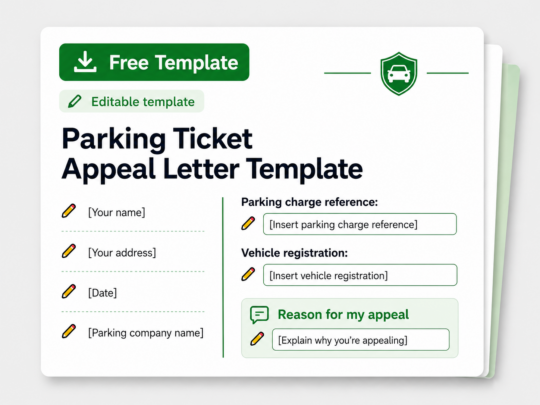
General information, not legal advice. Follow your notice’s instructions and deadlines; adapt the wording to your circumstances. No outcome is guaranteed.
Do you have to pay the parking charge?
A private Parking Charge Notice is a claim under contract law, rather than a council penalty or criminal fine. A valid charge can be owed before court proceedings start. It is incorrect to assume that you only have to pay if a judge orders it.
Check the notice, the signs and what happened. Pay by the stated deadline if you accept the charge, or use the operator’s appeal process if you dispute it. Ignoring it can lead to a court claim and additional costs. A court decides a disputed claim; the operator does not automatically win.
UKPC – appeal or pay?
The decision to appeal for free or pay the fine is made more difficult by the 40% discount offered when paying within 14 days.
Instead of going through the appeals process, which could be fruitless, it’s tempting to take advantage of a cheaper fine.
The decision usually hinges on how strong you think your appeal is.
Paid legal information: Continue to JustAnswer
Advertisement. Paid general legal information from JustAnswer. Memberships renew automatically until cancelled. Check the initial price, renewal price, billing interval and cancellation terms. The standard service does not create a solicitor-client relationship. No successful outcome is guaranteed. MoneyNerd may receive a referral fee.
How do you dispute the ticket?
You can dispute a UKPC parking ticket within the first 28 days since the parking ticket was issued.
You must do this by completing a dedicated form either on the UKPC website or by printing the form and sending it completed in the post.
You can’t make a UKPC appeal over the phone.
You must provide the following details:
- Your vehicle registration number – VRN
- The reference number on the Parking Charge Notice
Use MoneyNerd’s free parking appeal letter template as a starting point. The form asks for contact details to deliver your template. Check your notice’s instructions and deadlines, and adapt the wording to your circumstances. This is general information, not legal advice; no outcome is guaranteed.
Appeal Process Steps
We’ve put together this table to help you better understand the appeal process. If you want to learn more about the steps you should take, please read our detailed guide.
| When | Action |
|---|---|
| On receiving a council PCN | Read the notice, keep it, gather evidence and note all payment and challenge deadlines. |
| Windscreen or handed-to-driver PCN | An informal challenge may be available before the Notice to Owner. Early challenge can preserve a discount under the authority’s policy; 14 days is not a universal final appeal deadline. |
| Postal PCN or Notice to Owner | Normally make formal representations within 28 days as stated on the notice. Do not assume there is an extra informal stage. |
| Representations rejected | The Notice of Rejection explains how to appeal to the appropriate independent tribunal, normally within 28 days. |
| Appeal unsuccessful | Pay by the deadline given in the decision or obtain advice on any available review. Further statutory charges can follow if you do neither. |
| Other ticket type | Private parking charges and FPNs use different procedures; follow the actual notice. |
Further guidance: Traffic Penalty Tribunal; Citizens Advice.
Parking fine appeal rejected – your next step!
As a British Parking Association (BPA) member, UKPC must allow motorists to escalate an appeal they have rejected. They must inform you after rejecting an appeal about the Parking on Private Land Appeals (POPLA) service.
POPLA is an independent body that will assess each UKPC appeal impartially. They can agree with UKPC or overturn their decision and request that the parking fine is cancelled.
This service is free for you to use.
What to include in your parking appeal
The form asks for contact details to deliver your free MoneyNerd template.
Include the notice reference, your reasons, supporting evidence and the action you want the issuer to take.
The correct process depends on the notice and where it was issued.
General information, not legal advice. Follow your notice’s instructions and deadlines; adapt the wording to your circumstances. No outcome is guaranteed.
Can you ignore a parking charge from them?
Do not ignore a UKPC charge. Check the evidence and use the appeal process if you dispute it. The operator may continue to seek payment and could bring a court claim; there is no reliable way to predict whether it will pursue your particular case.
Free parking appeal letter template
The form asks for contact details to deliver your free MoneyNerd template.
Explain what happened, why you dispute the charge and include relevant evidence.
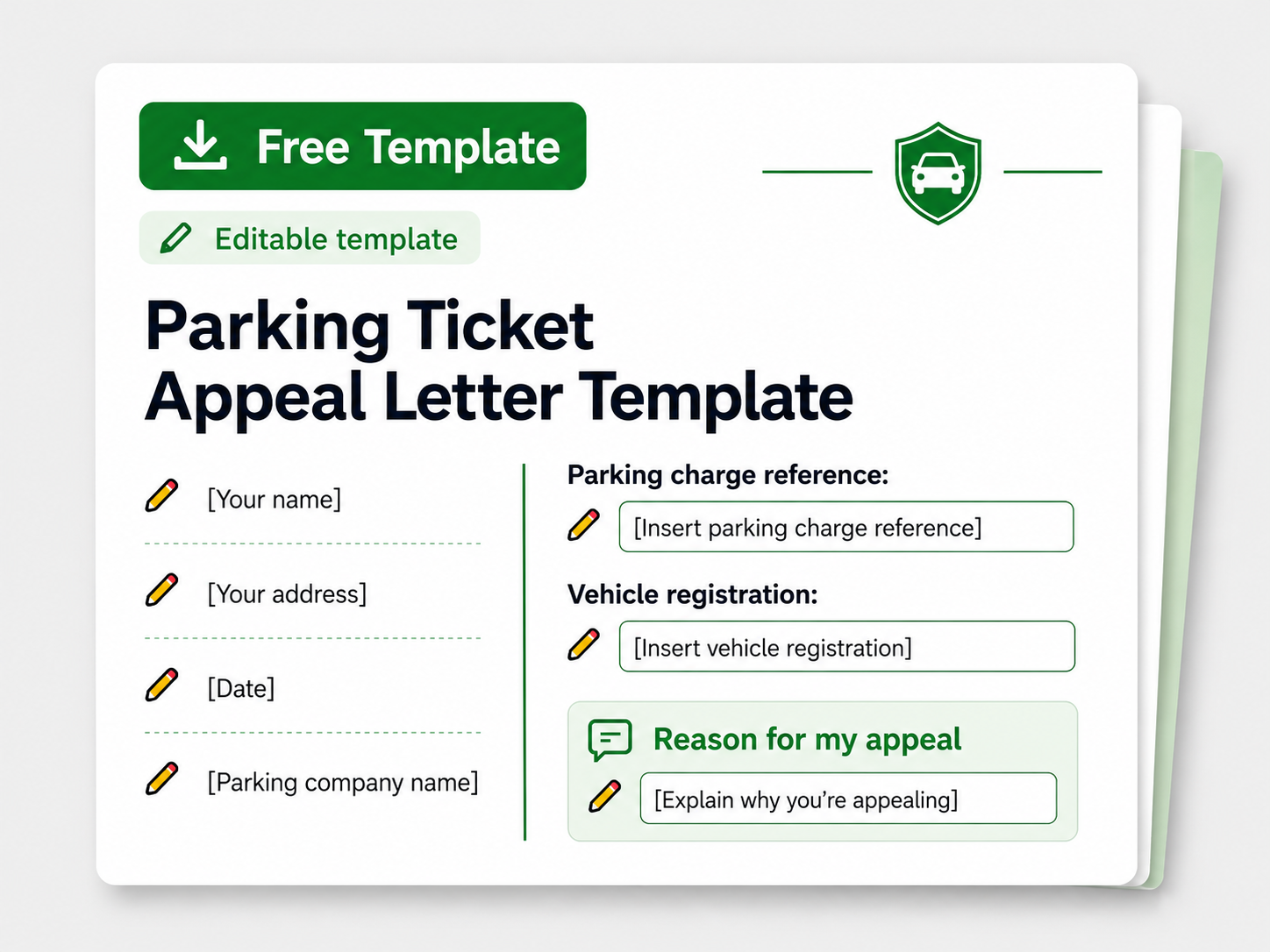
General information, not legal advice. Follow your notice’s instructions and deadlines; adapt the wording to your circumstances. No outcome is guaranteed.
What happens if you ignore it?
The operator can seek payment, use a debt collection agency or bring a court claim. An ordinary debt collector is not a bailiff and cannot seize your belongings. Added fees are not automatically valid: ask for their basis and challenge amounts you dispute.
Do not ignore a formal Letter of Claim or court papers. In England and Wales, the Debt Claims Protocol normally gives an individual 30 days to reply to a business’s Letter of Claim. Use the reply form, ask for relevant documents and explain any dispute. Court papers have their own deadlines, which still need a response.
A County Court Judgment (CCJ) is made by a court; a parking ticket or debt collector’s letter is not itself a CCJ. If a judgment in England and Wales is paid in full within one calendar month, you can have it removed from the register. Otherwise it normally remains for six years; later payment can mark it satisfied. Bailiff action requires further enforcement steps and is not automatic. Court procedures differ elsewhere in the UK.
Paid legal information: Continue to JustAnswer
Advertisement. Paid general legal information from JustAnswer. Memberships renew automatically until cancelled. Check the initial price, renewal price, billing interval and cancellation terms. The standard service does not create a solicitor-client relationship. No successful outcome is guaranteed. MoneyNerd may receive a referral fee.
UKPC Contact Details
| Post: | UK Parking Control Ltd, PO Box 1608, High Wycombe, HP12 9FN |
| Phone: | +(44) 333 220 1070 |
| Email: | [email protected] |
| Website: | https://www.ukparkingcontrol.com/ |
Prepare your parking appeal
The form asks for contact details to deliver your free MoneyNerd template.
Replace the examples with your own facts and check the recipient before sending.
General information, not legal advice. Follow your notice’s instructions and deadlines; adapt the wording to your circumstances. No outcome is guaranteed.
References
For the underlying rules, see Schedule 4 of the Protection of Freedoms Act 2012, the current POPLA appeal guide and IAS appeal guidance. For court matters in England and Wales, see the Civil Procedure Rules pre-action protocols and GOV.UK guidance on CCJs.