







Complaining about a debt collector: evidence and escalation routes








MoneyNerd introduces enquiries to The Debt Advice Service and may receive a referral fee. For free, independent guidance and help finding a debt adviser, visit MoneyHelper.
This information and enquiry service is not a full financial assessment or a guarantee of suitability or debt write-off. Debt solutions are not suitable for everyone. Fees may apply, and your credit record and assets may be affected. Get advice on your circumstances before choosing a solution.
MoneyNerd introduces enquiries to The Debt Advice Service and may receive a referral fee. For free, independent guidance and help finding a debt adviser, visit MoneyHelper.
This information and enquiry service is not a full financial assessment or a guarantee of suitability or debt write-off. Debt solutions are not suitable for everyone. Fees may apply, and your credit record and assets may be affected. Get advice on your circumstances before choosing a solution.
You can complain about unfair collection conduct. The correct route depends on the firm, the activity and the type of debt.
This guide explains how to gather evidence, complain to a collector and check whether an ombudsman or regulator can help. A complaint does not automatically write off a valid balance.
Here’s what we’ll cover:
- How to find out if the debt is really yours.
- Ways a debt collector might treat you unfairly.
- Steps to make a complaint about a debt collector.
- How to ask for some debt to be written off.
Our team knows what it feels like to be chased by debt collectors. We understand how scary it can be. But we’re here to help you learn how to handle this situation. So, let’s get started!
What is the process?
If a debt collector or creditor treats you unfairly, then you have the right to make a complaint about them.
However, before you make any type of complaint, it’s important that you gather all the evidence you can to support your claim.
Evidence could be in the form of:
- Records of the dates and times during which the debt collector visited your home or called you on the phone. You can also write down or record what was said each time and who exactly you spoke to.
- Any documents or letters you may have received from the debt collection agency.
- Any witness testimonies from neighbours, roommates or any other people that live in your household.
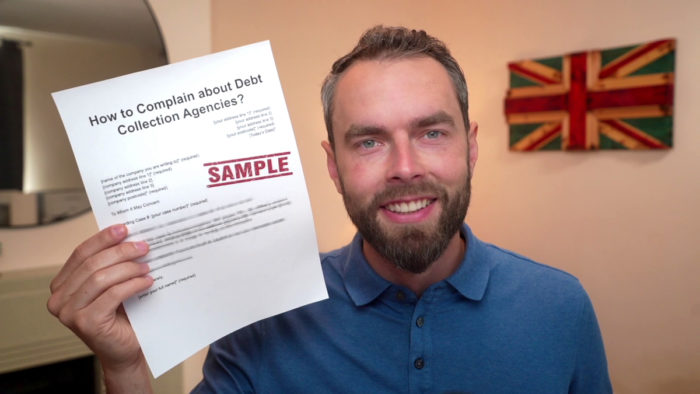
Making a Complaint to the Agency
Before making a complaint to a higher authoritative body, it’s a good idea to complain about the agent to the agency that they represent.
In the case of a creditor harassing you, you can write directly to them as well.
You can present your evidence by sending copies of it to the agency via mail.
Be sure to send all of your letters via recorded delivery so that you have proof that your mail did indeed reach them.
You should also always send copies of documents to them and keep the originals to yourselves.
Explain the conduct, its impact and the outcome you want. Refer to the rules that apply to the activity rather than assuming every collector is governed by the same FCA provisions.
You should ask them to confirm and acknowledge this in writing so that you have proof in case you need it later.
There is no universal rule requiring every collection complaint to be answered within three days. For many eligible financial complaints, the business has up to eight weeks to send its final response.
The FCA’s three-business-day rule concerns complaints resolved promptly to the complainant’s satisfaction and the required summary-resolution communication. It is not a general three-day deadline for every final decision.
Regulated firms have complaint-recording and reporting duties, including periodic data reporting where applicable. That is different from a rule requiring an immediate individual referral of your complaint to the FCA.
Complaining to a Professional Authoritative Body
If the firm’s process does not resolve the issue, identify the appropriate escalation route. An ombudsman, regulator, trade body and court have different functions.
Which authoritative body you complain to will depend on what type of debt you have and what type of creditor you’ve taken on that debt from.
Understand your debt options
MoneyNerd can introduce you to The Debt Advice Service for free debt advice. MoneyNerd does not provide debt advice or recommend debt solutions.
The Debt Advice Service can explain your options, including their benefits, costs and risks. Options available depend on your circumstances. There’s no obligation to take a debt solution.
MoneyNerd does not provide debt advice or recommend debt solutions. The Debt Advice Service is a trading style of Pacific Financial Solutions Limited. If you request an introduction, we’ll share your details with their team so they can contact you.
Some debt solutions have fees and may negatively affect your credit rating. MoneyNerd is a commercial introducer and may receive a fee if you go ahead with a debt solution through The Debt Advice Service.
For free, impartial money guidance and help finding free debt advice, visit MoneyHelper.
Unsecured Credit
For regulated consumer-credit collection, applicable FCA rules and Financial Ombudsman eligibility are the starting points. The former personal Standards of Lending Practice were retired in March 2025; the Lending Standards Board subsequently closed.
You can normally refer an eligible complaint to the Financial Ombudsman after a final response or once the applicable response period has passed. Referral is usually required within six months of the final response, subject to exceptions and other time limits. See related guidance.
The retired personal Standards should not be presented as a current compulsory code for every creditor. Check the FCA rules and other law governing your specific account.
Relevant protections can include:
- Never harass or put uncalled for pressure on debtors.
- Inform debtors about avenues through which they can get good debt advice.
- Provide support and understanding to debtors who are vulnerable such as people with physical or mental disabilities.
- A debt sale does not remove applicable consumer-credit protections. The buyer or collector’s legal obligations depend on the activity, not automatic membership of a retired code.
You can learn more about complaining to the Financial Ombudsman Service by going to their website.
Solicitor
Serious intimidation, dishonesty or other misconduct by a solicitor may be reportable. A lawful demand or communication you find unwelcome is not automatically professional misconduct.
In order to complain about the solicitor, you would first have to check where the solicitor is registered.
For an England-and-Wales solicitor, report serious conduct concerns to the SRA; service complaints by eligible clients usually follow the firm’s process and Legal Ombudsman route. Scotland and Northern Ireland have their own legal-complaints systems, so check the solicitor’s regulator and the issue. See related guidance, related guidance, related guidance.
Local Firms
You can complain about local firms to the Citizens Advice Consumer Service. They could help you get in touch with your local Trading Standards Office.
Trading Standards can consider information about breaches within its remit, but an investigation or individual recovery outcome is not guaranteed.
Complain to the FCA
Not every creditor or collection activity requires FCA authorisation. Check the activity and permissions instead of assuming that all local, utility, parking or trade debts fall within financial regulation.
Every debt collection agency as well as creditors that are authorised and regulated by the Financial Conduct Authority (FCA) are answerable to them.
The FCA can consider regulatory intelligence and take action within its powers, but it does not resolve your individual compensation dispute.
Regulatory sanctions depend on evidence and the FCA’s process. A complaint does not automatically cause a fine or loss of permission.
You can read more about FCA guidelines on their website.
» TAKE ACTION NOW: Fill out the short debt form
What are Some Ways in Which I could be Treated Unfairly?
There are a number of different ways through which you could be treated wrongly or unfairly by a debt collection agent or a debt collection agency.
Here are some examples:
- You were sent a debt collector letter that was purposefully made to look like an official court form.
- You’re being contacted via your phone several times a day or at irregular hours.
- You’re being threatened by your debts collector either verbally or physically.
- Your debt collector is implying that you may be committing a criminal offence if you can’t pay back your debts.
- The collector improperly discloses your debt to another person. Authorised representatives, joint liabilities and other lawful disclosures require separate consideration.
Take the first step towards tackling your debt
Every day, our partner, The Debt Advice Service, helps people understand their options for dealing with debt. Their debt advice is free, with no obligation to proceed.
MoneyNerd introduces you to The Debt Advice Service. We do not provide debt advice or recommend debt solutions.

Natasha
Very helpful and informative thank you

If you submit the enquiry form, MoneyNerd will share your details with The Debt Advice Service so they can contact you.
Some debt solutions have fees and may negatively affect your credit rating. MoneyNerd may receive a fee if you go ahead with a debt solution through The Debt Advice Service.
The Debt Advice Service is a trading style of Pacific Financial Solutions Limited.
For free, impartial help and access to not-for-profit debt advice, visit MoneyHelper.
Other Debt Collectors to look for on your Credit Report
There are hundreds of debt collectors in the UK and they each collect for different companies.
It’s surprisingly easy to not notice that you’re in a debt collector’s crosshairs.
I’d suggest you spend time checking your credit report. A sold debt may appear under a new creditor name on your credit report, but not every debt or collector is reported to every credit reference agency.
Some of the biggest to look out for include Cabot, PRA Group, and Lowell.
So if you see anything relating to their names, then you’ll need to investigate further.
References