







Debt collection letters: how to respond and challenge contact








MoneyNerd introduces enquiries to The Debt Advice Service and may receive a referral fee. For free, independent guidance and help finding a debt adviser, visit MoneyHelper.
This information and enquiry service is not a full financial assessment or a guarantee of suitability or debt write-off. Debt solutions are not suitable for everyone. Fees may apply, and your credit record and assets may be affected. Get advice on your circumstances before choosing a solution.
MoneyNerd introduces enquiries to The Debt Advice Service and may receive a referral fee. For free, independent guidance and help finding a debt adviser, visit MoneyHelper.
This information and enquiry service is not a full financial assessment or a guarantee of suitability or debt write-off. Debt solutions are not suitable for everyone. Fees may apply, and your credit record and assets may be affected. Get advice on your circumstances before choosing a solution.
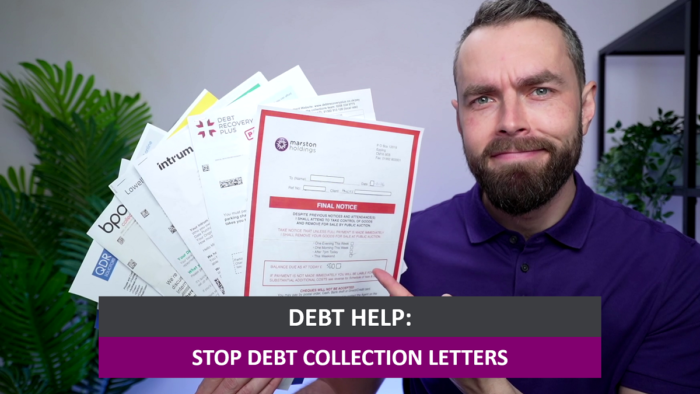
Does the sight of a debt collection letter make your heart race? Are you tired of getting letters and not knowing what to do?
This guide explains how to query a debt, request suitable contact and complain about inappropriate collection letters.
In this article, we will talk about:
- How to stop getting those debt collection letters
- What to do if you think the debt isn’t yours
- Why ignoring a letter might not be the best idea
- What to do if you can’t afford to pay the debt
- How you might be able to write off some of your debt
There is no special 11-word phrase that automatically stops a UK creditor’s lawful contact or cancels a debt.
We get it; dealing with debt is hard. Some of our team have also had to deal with debt collectors. So, let’s get started and find out how you can deal with those debt collection letters.
Can I Get them to Stop?
It really depends on whether or not you have the power to get a debt collector to stop sending you letters. What does it depend on?
A creditor may have a legitimate reason or legal duty to send information about an account. That does not permit harassment or unnecessary disclosure, and contact restrictions may apply to a valid dispute or particular debt solution.
Tell the firm your reasonable contact preferences and any accessibility or vulnerability needs. A representative or debt adviser may be able to communicate for you.
Ask for a suitable method, such as writing or an agreed channel. The firm should consider applicable rules and your circumstances.
A request to stop all contact does not automatically override required notices or a lawful claim. Equally, a valid debt does not make every volume or form of contact acceptable. See related guidance.
If the demand concerns the wrong person or an incorrect balance, explain the error and request an investigation using verified contact details.
It is then up to them to find proof of whether or not you owe the debt or not. If they are able to find proof that you do indeed owe the debt, then you’re going to have to address that.
Explain a dispute and request an itemised balance and evidence of liability. A valid or potentially valid dispute within FCA consumer-credit rules must be investigated with recovery paused, but a generic evidence request does not cancel a debt, override a court order or extend a court deadline.
FCA consumer-credit rules apply to relevant regulated activities, not to every collection firm or type of debt merely because the business is registered in England. See related guidance.
Complain to the firm about continued inappropriate contact or a failure to investigate a valid dispute. The Financial Ombudsman may consider an eligible complaint; the FCA does not decide individual compensation cases.
Payment of a valid balance can resolve collection, but do not pay an incorrect or unaffordable demand simply to stop letters. Get advice about your options.
If you can afford to pay it using a lump sum of money, then you can opt for a ‘full and final’ settlement offer that would get rid of it in one fell swoop.
A ‘full and final’ settlement offer involves you paying a lump sum of money to your creditors which may or may not be the full amount you owe. In the case of the lump sum not being the full amount that you owe, your creditors agree to ‘write off’ the rest of the amount.
Obtain written confirmation of any full-and-final settlement before paying. Later statements, confirmation letters or legally required communications may still arrive.
If you feel that you are unable to pay off the debt that is being demanded from you, then you need to get debt advice. They are several independent debt charities registered in England that help debtors understand their situation and make a plan for them to get them out of their debts.
You can seek advice from charities such as StepChange which will look at your financial information and help you determine what the best course of action for you would be.
The suitable response might be an affordable plan, dispute, temporary support or formal debt solution. A long-term payment plan is not inevitable.
In this case, you would still be receiving mail from either your creditor or debt collectors regarding information about the status of your debt.
After settlement, keep confirmation and query any further demand for the same settled balance. Not every later administrative letter means collection has restarted.
» TAKE ACTION NOW: Fill out the short debt form
Is Ignoring a Letter a Good Idea?
It’s never a good idea to ignore attempts from a debt collector to get in touch. It’s certainly tempting but I can tell you that if you ignore a letter from a debt collector, you may regret it heavily in the future. Here’s why:
Ignoring letters does not resolve the debt
You cannot predict whether a collector will stop contacting you. Ignoring letters can mean missing evidence, an offer or a court deadline.
This article has no evidence that every collector receives a recovery bonus. Staff incentives do not change the legal limits on collection.
Responding appropriately helps establish the facts and an affordable way forward. It does not guarantee that contact or proceedings will stop.
A collector may use permitted contact methods, but cannot claim powers it lacks or ignore applicable privacy and harassment rules.
Understand your debt options
MoneyNerd can introduce you to The Debt Advice Service for free debt advice. MoneyNerd does not provide debt advice or recommend debt solutions.
The Debt Advice Service can explain your options, including their benefits, costs and risks. Options available depend on your circumstances. There’s no obligation to take a debt solution.
MoneyNerd does not provide debt advice or recommend debt solutions. The Debt Advice Service is a trading style of Pacific Financial Solutions Limited. If you request an introduction, we’ll share your details with their team so they can contact you.
Some debt solutions have fees and may negatively affect your credit rating. MoneyNerd is a commercial introducer and may receive a fee if you go ahead with a debt solution through The Debt Advice Service.
For free, impartial money guidance and help finding free debt advice, visit MoneyHelper.
It could be a Missed Opportunity
Not only that but ignoring a letter from a debt collector can also be a missed opportunity to settle it right then and there.
For example, there’s a chance that the debt that the collector is calling you in regards to is not even yours. If you just open the letter and read it, you would know this and thus, you would be able to reply to the debt collector and tell him to cease sending you letters regarding the debt since it isn’t yours.
Reporting mistaken identity can help correct the records. Keep evidence and escalate a complaint if the error is not investigated; an immediate end to all contact is not guaranteed.
It May Cause Your Debt to Grow
Furthermore, ignoring letters from people trying to collect debt from you can also make your debt grow. You’re depriving yourself of important information by not reading the mail that your creditors send you. You may be able to take care of your debt if you just read the letter that you’ve received.
Interest or fees may continue where lawfully due, and court action can add costs. They do not automatically increase simply because a letter is ignored, and bankruptcy is not an inevitable outcome.
What Does It Normally Contain?
It’s very understandable why a lot of debtors are tempted to ignore letters sent to them by debt collectors. The language used in them can definitely be quite intimidating. While most of them usually have information in regards to your debt, a lot of them can also contain threats of court action. Many debt collectors like to threaten debtors with bailiffs, courts and bankruptcy.
If your creditor is seriously considering court action against you, then your debt collectors are definitely required to provide you with this information.
A legal warning may be genuine. Do not assume it is a bluff; check what action is proposed and whether the sender has a lawful basis.
Get advice if information is missing or conduct appears unfair, while still meeting any court or statutory deadline. A complaint or evidence request does not automatically suspend those deadlines.
Seeking advice is definitely the best thing you can do as being in debt is already a stressful situation and you can’t expect yourself to have all the information you need in order to tackle your debt effectively.
Correspondence must not improperly disclose your debt to unrelated household members. A joint liability or an authorised representative can justify different communication arrangements.
Applicable privacy and collection rules depend on the facts. If a letter appears to disclose your debt wrongly, keep it and raise a complaint rather than assuming every jointly addressed letter is unlawful. See related guidance.
Free help is available from StepChange and other debt charities, and from PayPlan, which is a commercial free-to-client service rather than a charity.
Take the first step towards tackling your debt
Every day, our partner, The Debt Advice Service, helps people understand their options for dealing with debt. Their debt advice is free, with no obligation to proceed.
MoneyNerd introduces you to The Debt Advice Service. We do not provide debt advice or recommend debt solutions.

Natasha
Very helpful and informative thank you

If you submit the enquiry form, MoneyNerd will share your details with The Debt Advice Service so they can contact you.
Some debt solutions have fees and may negatively affect your credit rating. MoneyNerd may receive a fee if you go ahead with a debt solution through The Debt Advice Service.
The Debt Advice Service is a trading style of Pacific Financial Solutions Limited.
For free, impartial help and access to not-for-profit debt advice, visit MoneyHelper.
Other Debt Collectors
You should check for more outstanding debts that you may have with other companies or debt collectors. Here are four steps you could take:
- Check your credit report for other defaults
- Check your email and post for reminders or overdue notices
- Check the court records for CCJs against you
- Check your bank statements for the names of other debt collectors
There are hundreds of debt collectors in the UK and each works with different companies to collect debts.
Some debt collection businesses act for creditors; others purchase debts. Check the letter and ask who owns the debt and how the balance was calculated.
If you see a name on your bank statement that you don’t recognise then you can search MoneyNerd to see if they’re a debt collector.
Conclusion
A letter from a debt collector is definitely a very unpleasant thing to receive but you have to understand that it’s something you can’t just ignore.
Read the notice and seek support if it is distressing. An ordinary collector cannot force entry or seize belongings, but a creditor can use valid court procedures.
Distinguish a payment request, a letter of claim and court or enforcement papers. Their consequences differ, and genuine legal deadlines must be taken seriously.