







Wilson & Roe High Court Enforcement: Rights, Fees and Payment








MoneyNerd introduces enquiries to The Debt Advice Service and may receive a referral fee. For free, independent guidance and help finding a debt adviser, visit MoneyHelper.
This information and enquiry service is not a full financial assessment or a guarantee of suitability or debt write-off. Debt solutions are not suitable for everyone. Fees may apply, and your credit record and assets may be affected. Get advice on your circumstances before choosing a solution.
MoneyNerd introduces enquiries to The Debt Advice Service and may receive a referral fee. For free, independent guidance and help finding a debt adviser, visit MoneyHelper.
This information and enquiry service is not a full financial assessment or a guarantee of suitability or debt write-off. Debt solutions are not suitable for everyone. Fees may apply, and your credit record and assets may be affected. Get advice on your circumstances before choosing a solution.
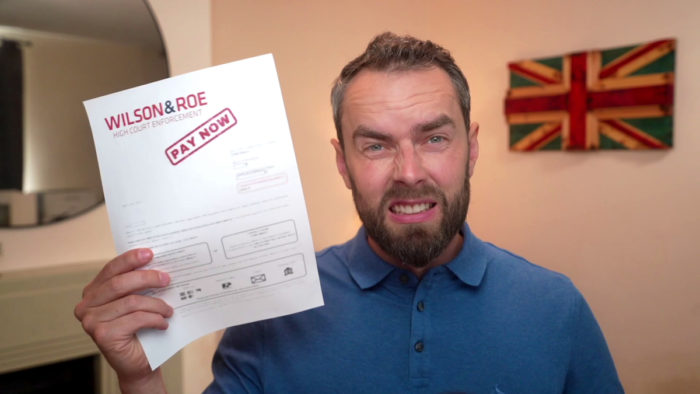
Have you received a surprise letter from Wilson & Roe High Court Enforcement saying you owe them money? You might be feeling confused, worried, or unsure of what to do.
This guide explains the taking-control-of-goods rules in England and Wales. Scotland and Northern Ireland have different enforcement procedures. Seek free independent debt advice if a visit, removal or sale is imminent.
In this article, we’ll help you:
- Understand who Wilson & Roe High Court Enforcement are.
- Learn how to check if the debt they claim you owe is really yours.
- Find out what happens if you don’t pay.
- Explore ways to handle the debt if you can’t afford to pay.
- Discover how to stay on top of your debts in the future.
A letter about enforcement can be worrying. Check the actual authority and deadlines rather than assuming that every collection letter has the same legal effect.
The sections below explain how to check the notice, understand the enforcement process and seek help with affordable payments.
Have you received a Wilson & Roe High Court Enforcement letter?
Wilson & Roe is an enforcement business acting for creditors. Where it is enforcing a High Court writ of control, it must follow the notice and taking-control-of-goods rules; it is not collecting money as the High Court itself.
For enforcement action under the rules in force from 1 May 2026, the usual minimum notice before taking control of goods is 14 clear days. A qualifying debt advice provider can request an extension to at least 28 clear days before the original deadline, except for excluded business debt. A court can shorten notice in specified circumstances; earlier enforcement action is protected by transitional rules. The High Court compliance-stage fee is £79 under the rules effective from 1 May 2026. It is a stage fee, not a charge for each letter received.
The underlying order may be a High Court judgment or an eligible County Court judgment transferred for enforcement. A judgment may have been made without your attendance, for example in default. If the name, debt or address is wrong, notify Wilson & Roe and the creditor promptly and seek advice.
Should you pay?
» TAKE ACTION NOW: Fill out the short debt form
Do not ignore the notice, but verify the creditor, court reference, writ and itemised balance before deciding what to pay or challenge. A genuine enforceable debt and lawful costs need to be addressed. Ask an adviser urgently if the judgment is disputed or payment is unaffordable.
Not remembering a High Court hearing does not prove the letter is a scam: a County Court judgment can be transferred and a judgment can be entered in default. Verify unfamiliar contact details independently and ask the court or creditor to confirm the order.
Understand your debt options
MoneyNerd can introduce you to The Debt Advice Service for free debt advice. MoneyNerd does not provide debt advice or recommend debt solutions.
The Debt Advice Service can explain your options, including their benefits, costs and risks. Options available depend on your circumstances. There’s no obligation to take a debt solution.
MoneyNerd does not provide debt advice or recommend debt solutions. The Debt Advice Service is a trading style of Pacific Financial Solutions Limited. If you request an introduction, we’ll share your details with their team so they can contact you.
Some debt solutions have fees and may negatively affect your credit rating. MoneyNerd is a commercial introducer and may receive a fee if you go ahead with a debt solution through The Debt Advice Service.
For free, impartial money guidance and help finding free debt advice, visit MoneyHelper.
What happens if you don’t pay them?
If the debt is not resolved and enforcement is not stayed, agents may attend after the required notice. Contact the company early and ask for written confirmation of any hold or payment agreement.
Agents may request payment or lawfully take control of eligible goods belonging to the debtor. Goods can sometimes remain under a controlled goods agreement rather than being removed immediately. Entry restrictions, exemptions and third-party ownership still apply. See related guidance.
If controlled goods are lawfully removed and the matter is not resolved, they may be sold after the required notice. Proceeds are allocated under the statutory rules to costs and the debt; a surplus is returned as required. A shortfall can remain payable.
For High Court enforcement under the rules effective from 1 May 2026, the fixed fees are £79 compliance, £200 first enforcement, £520 second enforcement and £550 sale or disposal. First enforcement and sale each add 7.5% of the portion of the debt above £1,200. Fees depend on the lawful stage reached, not simply the number of visits. Earlier enforcement action has transitional protection. The second enforcement stage is not an automatic second-visit charge. If no contact is made at the first attendance, the debtor must have another opportunity to pay or enter a repayment arrangement or controlled goods agreement. Full payment or an arrangement kept to can prevent escalation; failure to engage, agree or maintain payments can allow the next stage under the regulations.
Differences Between Debt Collectors and Bailiffs
It’s important to note that debt collectors are not allowed to do the same as high court enforcement officers or bailiffs. I recently spoke to the Mirror about them. While a bailiff may be permitted to take your possessions, a debt collector never can. All they are allowed to do is ask for a payment.
Here’s a table that explains the main differences between bailiffs and debt collectors. If you want more information about your rights, please read our complete guide.
| Issue | Debt collector | Bailiff or enforcement agent |
|---|---|---|
| Role | Requests payment for a creditor or debt purchaser. | Acts under a legally valid enforcement power and must follow its limits. |
| Entry | No power to force entry; you can refuse entry and ask them to leave. | Usually cannot force first entry to a home for council tax or an ordinary civil debt. Limited exceptions and re-entry rules apply. |
| Goods | Cannot seize your goods. | May take non-exempt goods belonging to the debtor where the legal conditions are met; essential items and some work equipment are protected. |
| Bank accounts | A judgment alone gives no access. | Taking money from an account normally requires a separate third-party debt order obtained by the creditor, not a doorstep bailiff power. |
| Contact | Must avoid harassment; regulated firms must contact at reasonable times. | Visits are normally between 6 am and 9 pm, subject to legal exceptions. |
| Vulnerability | Tell the firm what support or communication adjustments you need. | Tell the agent and creditor about vulnerability and seek advice about additional safeguards. |
| Disputes | Ask for evidence of the debt and complain about improper conduct. | Check identification, the enforcement authority and fees; get urgent advice about an invalid notice or proposed entry. |
What if you can’t afford to pay?
If you cannot afford payment in full, provide an income-and-expenditure budget and propose affordable instalments. The company does not have to accept every offer. Ask for written confirmation of any agreement and whether enforcement is paused; merely making an offer does not stop action or fees.
Wilson & Roe High Court Enforcement may accept a payment plan when they visit your property, but they are not obligated to do so.
Staying On Top Of Your Debts
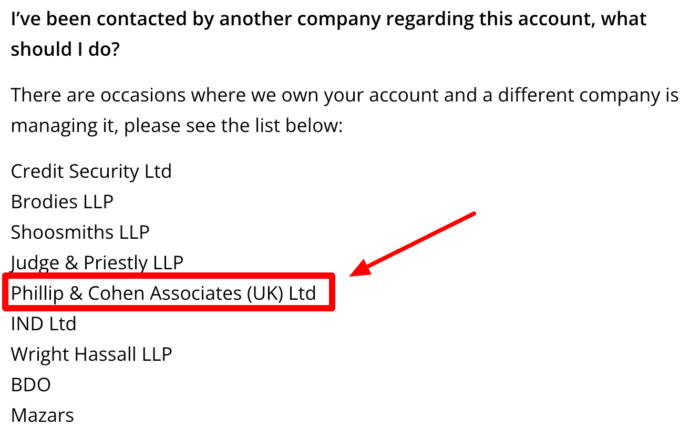
A letter may come from the original creditor, a debt purchaser or a separate collection agency. Check the business name and contact details against reliable records, and ask it to explain who owns the debt and its authority to collect. Keep earlier correspondence so you can trace any change of owner or representative.
- Robinson Way will sometimes contact you under the name Hoist Finance.
- Cabot Financial Group recently bought Wescot Credit Services
- Credit Style communicate as both Credit Style and CST Law.
- Lowell Financial also owns Overdales and collects debts under both names.
Take the first step towards tackling your debt
Every day, our partner, The Debt Advice Service, helps people understand their options for dealing with debt. Their debt advice is free, with no obligation to proceed.
MoneyNerd introduces you to The Debt Advice Service. We do not provide debt advice or recommend debt solutions.

Natasha
Very helpful and informative thank you

If you submit the enquiry form, MoneyNerd will share your details with The Debt Advice Service so they can contact you.
Some debt solutions have fees and may negatively affect your credit rating. MoneyNerd may receive a fee if you go ahead with a debt solution through The Debt Advice Service.
The Debt Advice Service is a trading style of Pacific Financial Solutions Limited.
For free, impartial help and access to not-for-profit debt advice, visit MoneyHelper.
Wilson & Roe High Court Enforcement Contact Details
| Website: | https://www.wilsonandroe.com/ |
| Address and contacts | Salford Head Office: 26 Missouri Avenue, Salford, Manchester, M50 2NP. Telephone: 0161 925 1800. General enquiries: [email protected]. These are the current central details on the official contact page. Previously listed specialist contacts [email protected] and [email protected] should be checked with the central office before use. |
References