






Debt Info
Bailiffs

Civil National Business Centre: the former CCBC and your court papers

Scott Nelson MoneyNerd Janine Marsh MoneyNerd
By
Scott
Scott Nelson MoneyNerd

Scott Nelson

Debt Expert

Scott founded MoneyNerd after his own experience with debt. He runs the website and oversees its general information about debt and other money matters. Scott does not provide personal debt advice or recommend debt solutions through MoneyNerd. If you make a debt enquiry, MoneyNerd may introduce you to The Debt Advice Service, which provides any personal debt advice.

Learn more about Scott
&
Janine
Janine Marsh MoneyNerd

Janine Marsh

Financial Expert

Janine contributed articles and videos to MoneyNerd about everyday money, household costs, debt topics and parking matters. She has a background in broadcasting, including work with BBC Radio 5 Live and Bauer radio stations.

Learn more about Janine
· Oct 4th, 2026
Get debt advice from The Debt Advice Service

Total amount of debt?

MoneyNerd does not provide debt advice or recommend debt solutions. We can introduce you to The Debt Advice Service, a trading style of Pacific Financial Solutions Limited. Their debt advice is free, and there is no obligation to proceed.

If you request an introduction, we’ll share your details with The Debt Advice Service so they can contact you.

Some debt solutions have fees and may negatively affect your credit rating. MoneyNerd is a commercial introducer and may receive a fee if you go ahead with a debt solution through The Debt Advice Service.

For free, impartial money guidance and help finding free debt advice, visit MoneyHelper.

MoneyNerd introduces enquiries to The Debt Advice Service and may receive a referral fee. For free, independent guidance and help finding a debt adviser, visit MoneyHelper.

This information and enquiry service is not a full financial assessment or a guarantee of suitability or debt write-off. Debt solutions are not suitable for everyone. Fees may apply, and your credit record and assets may be affected. Get advice on your circumstances before choosing a solution.
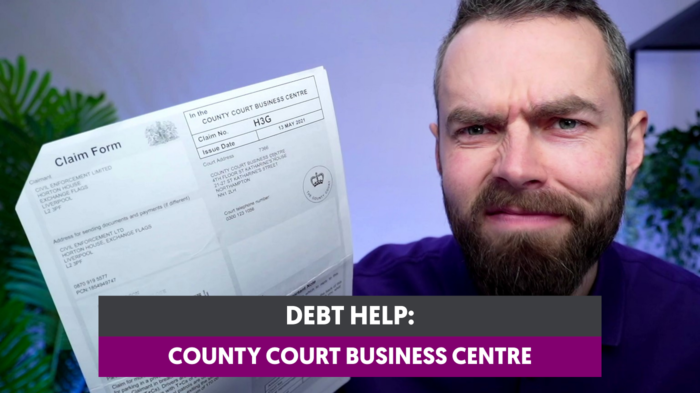
County Court Business Centre Letter

MoneyNerd introduces enquiries to The Debt Advice Service and may receive a referral fee. For free, independent guidance and help finding a debt adviser, visit MoneyHelper.

This information and enquiry service is not a full financial assessment or a guarantee of suitability or debt write-off. Debt solutions are not suitable for everyone. Fees may apply, and your credit record and assets may be affected. Get advice on your circumstances before choosing a solution.

The former County Court Business Centre is now part of the Civil National Business Centre (CNBC), which handles money-claim administration for England and Wales. This guide explains its role and how to respond to court papers.

In this article, we’ll talk about:

  • What the Civil National Business Centre does
  • How you can tell if a County Court Judgement (CCJ) is real.
  • Steps you can take to clear a CCJ.
  • What happens if you ignore a CCJ.
  • How to avoid getting a CCJ in the first place.

Citizens Advice estimate households have around £18.9 billion in unpaid bills like council tax and utilities1. Some of our team members have even been there, so you’re not alone.

If you’re feeling stressed about dealing with bailiffs, take a deep breath. We’re here to help guide you through it.

Could you legally write off some debt?

MoneyNerd can introduce you to The Debt Advice Service for free debt advice. MoneyNerd does not provide debt advice or recommend debt solutions.

Answer a few questions to start your enquiry. Options available depend on your circumstances.

How much debt do you have?

MoneyNerd does not provide debt advice or recommend debt solutions. We can introduce you to The Debt Advice Service, a trading style of Pacific Financial Solutions Limited. Their debt advice is free, and there is no obligation to proceed.

If you request an introduction, we’ll share your details with The Debt Advice Service so they can contact you.

Some debt solutions have fees and may negatively affect your credit rating. MoneyNerd is a commercial introducer and may receive a fee if you go ahead with a debt solution through The Debt Advice Service.

For free, impartial money guidance and help finding free debt advice, visit MoneyHelper.

What is the Civil National Business Centre?

The Civil National Business Centre handles money-claim administration for England and Wales. Older documents and articles may refer to the County Court Business Centre (CCBC). See related guidance.

It handles administration and online claims but no physical hearings take place at the centre. They send out letters to give notice of cases and claims. 

You can find out more from the GOV website here. 

Follow the judgment’s payment instructions, normally paying the person or business named as creditor. Do not confuse paying a court fee with paying the judgment debt.

What does the CNBC do?

The CNBC processes money-claim administration. It does not provide an in-person service, and cases needing hearings may be dealt with at a hearing centre.

Its work includes claims through relevant online and bulk-claim services, subject to the rules for each route.

Related centralised court services include:

  1. Bulk money claims – these bulk claims are made by creditors against large volumes of customers and borrowers who are in arrears. Processing them in bulk can save the company and the CCBC time.
  2. Traffic Enforcement Centre administration for specified civil traffic debts, which is separate from deciding parking appeals or criminal driving fines See related guidance.
  3. Services regarding employer deductions from debtors’ wages. 

Use the payment destination stated in your judgment or independently verified creditor instructions. There is no universal CNBC portal for settling every CCJ.

Understand your debt options

MoneyNerd can introduce you to The Debt Advice Service for free debt advice. MoneyNerd does not provide debt advice or recommend debt solutions.

The Debt Advice Service can explain your options, including their benefits, costs and risks. Options available depend on your circumstances. There’s no obligation to take a debt solution.

Get Started

MoneyNerd does not provide debt advice or recommend debt solutions. The Debt Advice Service is a trading style of Pacific Financial Solutions Limited. If you request an introduction, we’ll share your details with their team so they can contact you.

Some debt solutions have fees and may negatively affect your credit rating. MoneyNerd is a commercial introducer and may receive a fee if you go ahead with a debt solution through The Debt Advice Service.

For free, impartial money guidance and help finding free debt advice, visit MoneyHelper.

What is a County Court Judgment (CCJ)?

A CCJ is a court judgment requiring payment. It may follow admission, a court decision or default where the required response was not made; it does not necessarily mean a judge has heard both sides.

Your judgement will include the following:

  • How much you owe
  • How you should pay
  • Who you should pay
  • Your deadline to pay.

A CCJ normally stays on the register and credit file for six years from judgment. Paying the full judgment within one calendar month can allow the entry to be removed; paying later normally marks it satisfied rather than removing it. The debt does not automatically expire when the entry disappears.

If you pay off your debt within these 6 years, you can request that your judgement is marked as ‘satisfied’ on the register.

To do this, write to the court with proof that you have paid off the debt in full.

If you pay the full judgment within one calendar month, provide proof to the court and ask about removal of the registered entry. Do not substitute a fixed 30-day period for a calendar month.

A CCJ can make borrowing harder or more expensive, but it does not make all credit impossible.

This is because companies use your credit file to see if you are a ‘high-risk’ customer – someone who might have difficulty paying their bills on time.

A judgment may have been entered by default, including where papers were not answered. Verify the details and seek advice if liability or service is disputed.

» TAKE ACTION NOW: Fill out the short debt form

Lenders apply their own criteria and consider the wider credit record and circumstances.

A CCJ can affect other areas of your life. Renting, for example, will probably be a bit harder with a CCJ for the same reasons as above.

The entry normally disappears after six years, but that does not guarantee future credit or cancel the debt.

What happens if you ignore a CCJ?

If you ignore a CCJ, your debt can be enforced by the creditor.

They can request to use enforcement action, such as:

  1. Bailiffs
  2. Charging orders
  3. Attachment of earnings
  4. Insolvency proceedings where the separate legal requirements and debt threshold are met

I strongly advise against hiding away from a judgment you have received.

There are still opportunities to put things right; avoidance and delaying tactics can result in more debt being added to the money owed due to solicitors’ and bailiff fees. 

Here’s a quick table showing the most common bailiff fees and their amounts.

Take the first step towards tackling your debt

Every day, our partner, The Debt Advice Service, helps people understand their options for dealing with debt. Their debt advice is free, with no obligation to proceed.

MoneyNerd introduces you to The Debt Advice Service. We do not provide debt advice or recommend debt solutions.

Natasha

Very helpful and informative thank you

Get started

If you submit the enquiry form, MoneyNerd will share your details with The Debt Advice Service so they can contact you.

Some debt solutions have fees and may negatively affect your credit rating. MoneyNerd may receive a fee if you go ahead with a debt solution through The Debt Advice Service.

The Debt Advice Service is a trading style of Pacific Financial Solutions Limited.

For free, impartial help and access to not-for-profit debt advice, visit MoneyHelper.

Will your court hearing take place at the CCBC?

The CNBC does not provide an in-person service. Follow any hearing or transfer instructions from the court.

If your case cannot be resolved remotely and without a hearing, you may have to attend a hearing at your local county court.

Check every court notice and its deadline; do not assume a particular period or that all communication will arrive by post.

How can you tell if a CCJ is real?

Verify the court reference through independently obtained official court contact details. Use the current CNBC listing where that centre is handling the case. See related guidance.

You could also check your credit history. By checking your report, you can find out the unique court reference number and use this to find where the CCJ was issued. 

You need to start verifying a CCJ as soon as possible before you make payment.

How do you clear a CCJ?

Payment in full normally satisfies the judgment. Whether the registered entry can be removed depends on when it was paid and the applicable rules.

Payment in full within one calendar month can allow removal of the CCJ entry. It does not erase other adverse credit information or guarantee future borrowing.

Paying off a CCJ isn’t necessarily as scary as it sounds – many will include a payment schedule for you to follow, as mentioned above.

Our financial expert, Janine Marsh, advises: ‘If a bailiff has proven you owe money and you don’t have cash to hand, you’re within your rights to suggest a payment plan. It’s not a guarantee, but many will accept this as it’s easier than repossession.

How do you set aside a CCJ?

For a default judgment, CPR 13.2 requires a set-aside where judgment was wrongly entered. Under CPR 13.3 the court may set it aside where there is a real prospect of successfully defending the claim or another good reason; promptness matters. A set-aside normally reopens the claim rather than cancelling the underlying debt.

To do this, you will need to complete an N244 form and return it to the court.

An application may require a fee, and Help with Fees may be available. If judgment is set aside, the underlying claim usually continues unless separately resolved.

If you need support filling in form N244, you can get it from free debt charities or legal professionals. 

Will a CCJ appear on your credit file?

A CCJ normally stays on the register and credit file for six years from judgment. Paying the full judgment within one calendar month can allow the entry to be removed; paying later normally marks it satisfied rather than removing it. The debt does not automatically expire when the entry disappears.

The removal rule concerns payment of the full judgment within one calendar month, with the court informed as required.

However, the missed payments that created the debt will still appear in your history and reduce your credit score. 

A later full payment normally allows the judgment to be marked satisfied until the usual six-year registration period ends.

How can you avoid a CCJ?

Preventing a CCJ isn’t always possible if you are at the later stages of debt collection.

That said, you might be able to avoid a CCJ by negotiating a repayment plan with your creditor or debt collector.

But if you can’t afford to pay, even after negotiating, you may need to consider a debt solution.

There are several different debt solutions available in the UK, so I recommend speaking to a debt charity as soon as possible.

Their advisors will be able to look at your finances in detail and help you work out which debt solution will work best for you.

I have linked a few charities that offer these advisory services for free below.

Debt Management Plan (DMP)

A DMP is an informal debt solution that lets you pay off your debts via a single monthly payment.

Because it is informal, it is not legally binding so you are not tied into a DMP for a minimum number of payments.

Individual Voluntary Arrangement (IVA)

An IVA is a formal insolvency arrangement managed by an insolvency practitioner. Your proposal sets out payments, any assets involved and fees. Once approved, it binds the creditors and debts covered by it and restricts recovery action; it is not a blanket ban on necessary correspondence.

Many IVAs involve payments for five or six years, but the agreed term varies. Qualifying unpaid debt is normally released only on successful completion. An IVA affects your credit record, may involve assets or home equity, and can fail if its terms are not met.

IVA suitability depends on your debts, affordable contributions or available assets, fees and creditor approval. There is no universal rule that you must owe several thousand pounds to more than one creditor. Get independent debt advice and compare other options before agreeing to an IVA.

Trust Deed

IVAs are not available in Scotland. A Scottish money adviser can compare a protected trust deed, the Debt Arrangement Scheme, sequestration and informal arrangements; a trust deed is not compulsory.

A protected trust deed is a Scottish insolvency arrangement, usually lasting at least four years of contributions. It can discharge qualifying unpaid debt on successful completion, but fees apply and your home or other assets may be at risk. Covered creditors cannot pursue payment outside it, but can still send required documents.

Debt Relief Order (DRO)

In England and Wales, a DRO may suit an eligible non-homeowner with low surplus income, limited assets and qualifying debts within the £50,000 limit. Detailed income, asset, vehicle and residence rules apply. An approved debt adviser checks eligibility and submits the application to the Insolvency Service.

For 12 months, you make no payments, but your creditors freeze your interest and don’t contact you.

A DRO normally lasts 12 months. If it remains in force, the qualifying debts listed in it are normally discharged at the end. You must report relevant changes and continue paying ongoing bills and excluded debts, such as court fines and student loans.

Bankruptcy

If you have debts but no realistic possibility of ever paying them off, you may need to declare bankruptcy.

Bankruptcy has an unfair stigma attached to it as it may be your only way of getting a financial fresh start. That said, it is a serious financial situation that should not be taken lightly.

Sequestration

Sequestration is the Scottish version of bankruptcy.

If you have little income and no valuable assets, you may be able to apply for a minimal asset process bankruptcy (MAP). A MAP is a quicker, cheaper, and more straightforward version of sequestration, so worth considering.

How do you contact the Civil National Business Centre?

Use the current official CNBC court listing for the appropriate contact route. It lists separate addresses for acknowledgements, claim responses and other applications, so choose the route relevant to your document. See related guidance.

Keep copies and evidence of sending documents, and follow court filing instructions. A call or complaint does not itself extend a deadline.

The official listing gives the following general details; check it before sending time-sensitive documents:

Address: St. Katharine’s House
21-27 St. Katharine’s Street, Northampton, NN1 2LH
General enquiries 0300 123 1056 (Civil National Business Centre)
 03003035174
(for Welsh-speakers)
Email Routes vary by document. Use the appropriate address on the current official CNBC listing instead of relying on the former [email protected] address.
Judgment payments Follow the creditor and payment instructions in the judgment; a court-fee service is not a universal CCJ payment portal. See related guidance.
Could you legally write off some debt?

MoneyNerd can introduce you to The Debt Advice Service for free debt advice. MoneyNerd does not provide debt advice or recommend debt solutions.

Answer a few questions to start your enquiry. Options available depend on your circumstances.

How much debt do you have?

MoneyNerd does not provide debt advice or recommend debt solutions. We can introduce you to The Debt Advice Service, a trading style of Pacific Financial Solutions Limited. Their debt advice is free, and there is no obligation to proceed.

If you request an introduction, we’ll share your details with The Debt Advice Service so they can contact you.

Some debt solutions have fees and may negatively affect your credit rating. MoneyNerd is a commercial introducer and may receive a fee if you go ahead with a debt solution through The Debt Advice Service.

For free, impartial money guidance and help finding free debt advice, visit MoneyHelper.

References

  1. Citizens Advice – Debt Statistics and Bailiff Issues
Did you like this article?
Show your support ❤️
We're glad you liked the article! As a small team, your support means everything to us. If you could rate us on Google, it would be amazing. Thank you!
We are so sorry...

Is there something missing? We’re all ears and eager to improve. Send us a message and let us know how we can make our article more useful for you.

You can email us directly at [email protected] to share your feedback.

The authors
Scott Nelson MoneyNerd
Author
Scott founded MoneyNerd after his own experience with debt. He runs the website and oversees its general information about debt and other money matters. Scott does not provide personal debt advice or recommend debt solutions through MoneyNerd. If you make a debt enquiry, MoneyNerd may introduce you to The Debt Advice Service, which provides any personal debt advice.
Janine Marsh MoneyNerd
Debt Expert
Janine contributed articles and videos to MoneyNerd about everyday money, household costs, debt topics and parking matters. She has a background in broadcasting, including work with BBC Radio 5 Live and Bauer radio stations.










