






MoneyNerd introduces enquiries to The Debt Advice Service and may receive a referral fee. For free, independent guidance and help finding a debt adviser, visit MoneyHelper.
This information and enquiry service is not a full financial assessment or a guarantee of suitability or debt write-off. Debt solutions are not suitable for everyone. Fees may apply, and your credit record and assets may be affected. Get advice on your circumstances before choosing a solution.



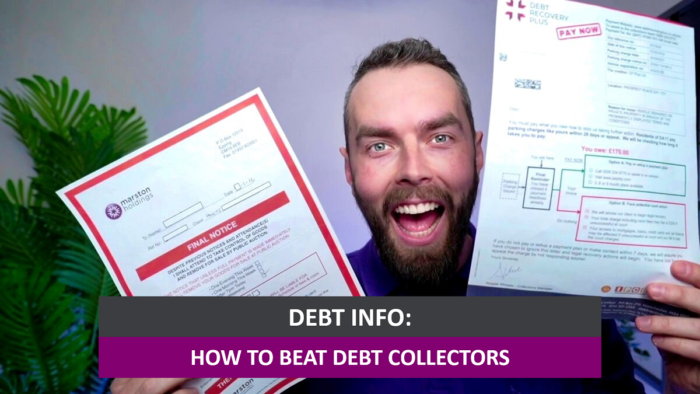
If your account has been passed to a debt collector, first check who is contacting you, what is owed and whether you dispute it. This guide explains your rights and the difference between a collector and a bailiff.
Here’s what you’ll learn:
- What a debt collection agency is, and how it works
- The difference between debt collectors and enforcement officers (bailiffs)
- How to handle a debt that’s been passed to a collection agency
- What to do if a collection agency is contacting you about a debt that isn’t yours
- Where to get help if you’re struggling with unaffordable debt
Free debt advice can help you choose a response based on your circumstances.
We know how stressful dealing with debt collectors can be. That’s why we’re here to help you find out more about your rights and how to deal with debt collectors in the UK.
What is debt collection?
Debt collection is the process of recovering unpaid debts owed to an individual or company. Some of the most common types of debts that people are chased to pay are:
- Personal loan arrears
- Credit card arrears
- Utility bill arrears
- Mobile phone arrears
- Council tax debt
- HMRC debts and tax credit overpayments
- Rent and mortgage arrears or mortgage shortfall
The process and safeguards depend on the debt and which UK jurisdiction applies. A credit card, council tax bill and mortgage arrears do not all follow the same rules.
What is a debt collection agency?
A debt collection agency is a commercial business that offers services to help other people and businesses recover money owed to them. Debt collection agencies usually provide services to track down debtors and then communicate with them to ask them to pay, usually in writing or over the phone.
Alternatively, some debt collection agencies might offer to purchase the debt from the company that is owed the money. However, they will buy the debt well below its value and hope to recover as much of the debt as possible to make a profit.
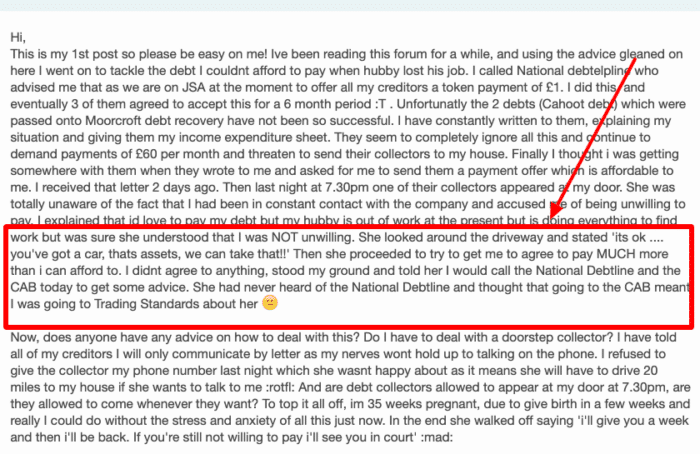
Collectors must follow the rules that apply to their activities and must not misrepresent their powers. The forum entry below is one person’s account, rather than a finding about the industry as a whole.
Debt collection agency vs enforcement officers (bailiffs!)
An ordinary debt collector asks for payment and has no enforcement-agent powers. Some businesses carry out both collection and enforcement work, so check the capacity in which the person is acting and the authority they hold.
As will be explained further down this guide, debt collection agencies don’t have the same rights and legal powers as bailiffs have.
How much do debt collectors charge?
A collection firm may charge its client a fixed fee, commission or another agreed price. Those commercial charges are not automatically payable by the debtor; any amount added to a debt needs a valid legal or contractual basis.
Both price structures have pros and cons.
Are debt collection agencies legal?
Debt collection agencies are legitimate businesses legally allowed to offer services to help creditors track debtors and request payment. However, debt collection agencies must follow strict rules when attempting to recover the debt. They cannot threaten or harass debtors to make them pay.
How do I know the debt collection agency is real?
If you’re contacted by a debt collection agency about a supposed debt you owe, it’s important to verify that the debt collection agency is legitimate first.
There have been several instances of scam debt collection agencies contacting people for payment in a threatening manner. Some people panic when they receive these communications from scam debt collectors and end up paying out of stress and fear.
To verify the debt collection agency is real and legitimate, you can make sure:
- Check the firm’s full legal name and use independently located contact details. A website alone does not prove legitimacy.
- For regulated consumer credit collection, check the FCA Register and the firm’s relevant permissions. Not every type of debt collection requires the same authorisation.
- Check that the business contact information corresponds with the contact information on that debt collection agency’s website. Some scams may pretend to be real businesses!
- Ask for the creditor, account reference and a written balance breakdown. A verified firm may need reasonable identity checks before disclosing personal account details.
If you suspect fraud, stop sharing information and use the official fraud-reporting service for your part of the UK. Contact the police urgently if there is an immediate threat.
What happens when a debt is sold to a collection agency?
When a debt is sold to a debt collection agency, the money you owe is now owed to the debt collection agency instead of the original creditor.
You should be told about an assignment and who to pay. Selling an account does not remove a genuine dispute or give the buyer additional enforcement powers.
How much do debt collectors buy debt for?
Debt portfolios can sell at a discount, but there is no universal purchase price or percentage.
The buyer takes a recovery risk. That price does not decide the amount legally owed by the customer.
For example, selling a valid £1,000 balance at a discount does not itself reduce the debtor’s balance to the purchase price.
Do not assume that refusing payment will make the creditor abandon an enforceable debt.
Will a collection agency add more interest and charges?
Interest or charges must have a valid contractual or legal basis and comply with applicable rules. Buying a debt does not create a new right to add arbitrary collection fees.
Ask for a breakdown and challenge charges that are unsupported or unfair. In regulated consumer credit cases, the firm must consider appropriate forbearance when a customer is in financial difficulty.
Understand your debt options
MoneyNerd can introduce you to The Debt Advice Service for free debt advice. MoneyNerd does not provide debt advice or recommend debt solutions.
The Debt Advice Service can explain your options, including their benefits, costs and risks. Options available depend on your circumstances. There’s no obligation to take a debt solution.
MoneyNerd does not provide debt advice or recommend debt solutions. The Debt Advice Service is a trading style of Pacific Financial Solutions Limited. If you request an introduction, we’ll share your details with their team so they can contact you.
Some debt solutions have fees and may negatively affect your credit rating. MoneyNerd is a commercial introducer and may receive a fee if you go ahead with a debt solution through The Debt Advice Service.
For free, impartial money guidance and help finding free debt advice, visit MoneyHelper.
What to do if your debt has been passed to a debt collection agency
If you’ve been informed that a debt has been passed to a debt collection agency or purchased by a debt collection business, you should expect them to make contact soon. The first communication usually comes as a letter asking you to pay.
It’s wise to start thinking about how you will deal with the debt rather than only thinking about how you will deal with the debt collection agency.
You can do this by speaking with a debt charity for free to learn about your options, including various debt solutions. Some solutions may freeze interest and charges or write off some debt. Learn more about debt charities and debt repayment strategies via my debt info page.
Impact of debt collection on your credit rating
Missed payments, defaults and court judgments can affect a UK credit file. Passing an account to a collection agency is not automatically a new default or a separate American-style collection entry.
A debt buyer may report the transferred account, but the original default date should not be reset merely because the debt was sold. Check your reports for accurate balances and duplicate reporting.
- Credit score: the effect depends on the actual payment history and information recorded, not simply the collector’s name.
- Borrowing decisions: lenders use their own criteria and may regard unresolved arrears or defaults as a risk.
- Limited Access to Good Rates: Even if you manage to get approved for credit, you might only qualify for higher interest rates and less favourable credit terms due to the perceived increased risk.
How do debt collectors find you?
Debt collectors can find you by using the contact information supplied to the company that you owe.
For example, if you have electric bill arrears, the debt collector will try contacting you at your home address connected to the energy account. If this isn’t possible, the debt collection agency might use public records to try and find you.
Collectors can use tracing information and lawful data sources, but they must take reasonable steps to identify the right person. Pursuing several people without a proper basis or disclosing debt information unfairly can be challenged.
If a letter is for someone else, tell the verified collector and ask it to correct its records.
What can a debt collector do?
Collectors can request payment and explain lawful steps the creditor genuinely intends or is entitled to consider. They must not exaggerate powers or threaten action that cannot lawfully be taken.
An ordinary collector cannot seize goods, deduct wages or enter your home by force simply because a debt remains unpaid.
A creditor may pursue an enforceable debt through the appropriate legal process. Court enforcement powers arise from that process, not from a collector’s demand letter.
How to stop debt collectors from calling (UK)
For regulated consumer credit collection, FCA rules require firms to give due regard to reasonable requests about when, where and how they contact you. You can ask for letters or emails instead of calls and explain any health or accessibility needs. This is not an automatic ban on every call or required notice. Keep a record of unreasonable contact and complain if your request is not properly considered.
Required notices and proportionate account contact may still be necessary. A blanket request for no contact does not itself cancel a debt.
If the debt collection agency doesn’t acknowledge or respect your communication preferences, you can make an official complaint about its behaviour. You must keep a copy of the initial letter as evidence.
Will debt collectors visit my house?
Some collectors use doorstep agents. You can decline an ordinary collection visit and ask them to leave.
Most debt collector contacts asking you to pay the money owed will be made over the phone or in writing.
Can debt collectors come to your house without notice?
For regulated credit collection, FCA rules normally require adequate notice of a proposed visit unless that is not practicable. An unannounced initial visit may be acceptable if the person is willing to speak; otherwise the firm should arrange a convenient time. This differs from the statutory Notice of Enforcement used by bailiffs.
An ordinary collector cannot force entry or seize goods. Tell them if you do not want a visit and ask them to leave.
Can debt collectors enter your home?
You can refuse an ordinary collector entry to your home. They have no special right to enter without your permission.
If a visitor threatens you, refuses to leave or claims powers they do not have, prioritise your safety and contact the police if necessary. Keep evidence and complain to the firm through the appropriate route.
Some people think debt collectors can come to your home to take goods. Some even worry that debt collectors will take things they really need, like their car, but this misunderstanding is usually because they confuse debt collection businesses with bailiffs.
In England and Wales an authorised enforcement agent may take control of goods under the relevant legal authority, subject to entry rules and exemptions. That is different from an ordinary debt collection visit.
Can debt collectors come to my work?
Collectors must not unfairly disclose debt information to your employer or other third parties. Tell the firm if workplace contact is inappropriate and ask for a reasonable alternative; there is no simple universal ban on every possible contact at work.
Complain to the firm first and keep copies and call logs. For an eligible regulated financial complaint, you can normally approach the Financial Ombudsman Service after a final response or after eight weeks without one, usually within six months of the final response. The Ombudsman can require a remedy or compensation; it does not impose regulatory fines. Tax, council and other non-credit debts may have different complaint routes.
What can I do if debt collectors are harassing me?
Threatening or oppressive conduct can amount to harassment. The frequency, timing and circumstances matter; more than one call is not automatically unlawful.
If a debt collector or a creditor is harassing you, you should gather evidence of the harassment. For example, if you’re being called or texted multiple times per day, you could get copies of call logs from your mobile provider.
Complain to the firm with your evidence. The FCA can use reports for supervision but does not resolve individual complaints or award compensation. Use the appropriate Ombudsman or other escalation route for the debt concerned.
What can debt collectors not do?
Debt collectors cannot:
- Harass you to pay
- Use threatening, misleading or oppressive conduct to obtain payment.
- Enter your home without permission
- Suggest they have powers that they don’t have (such as being able to take your goods)
- Unfairly disclose your debt to other people or use them to pressure or embarrass you. Necessary lawful disclosures and contact with an authorised adviser are different.
Can I just ignore the debt collectors?
You shouldn’t ignore letters from a debt collection agency, even if you know they have the wrong person.
If you ignore their letters and owe the debt, you could be subject to legal action and a court order. And if you don’t owe the money, you can expect further communications, which can be stressful.
Thankfully, there are ways to deal with UK debt collectors when you know about the debt or believe there has been a mistake.
Can debt collection agencies take you to court?
A company that believes a debtor owes it money can take the debtor to court and ask for a judge to issue a court order to make them pay. Failing to pay a court order can result in further action, including the possibility of using bailiffs.
Where the England and Wales Debt Claims Protocol applies, a business normally sends a Letter of Claim and gives an individual 30 days to reply before proceedings. Other debts and jurisdictions can have different procedures.
The debt collection agency might make legal threats, but they won’t be the ones taking you to court unless they have purchased your debt. The company is owed the money that takes you to court. Third-party debt collectors may simply make legal threats on their behalf.
For many debts, limitation can provide a defence to a late claim. Do not assume a claim will be rejected automatically: obtain advice and raise the defence within the court deadline. Scottish prescription can extinguish qualifying debts under different rules.
How to deal with debt collectors in the UK
Check the account promptly and respond appropriately. If it is old or disputed, take advice before paying or admitting liability; do not miss a legal deadline while waiting for a reply.
Ask for the creditor’s name, account reference, balance breakdown and evidence that you are liable. For regulated consumer credit debts, a firm must pause recovery while it investigates a dispute on valid or potentially valid grounds. A request for information does not itself cancel the debt or extend a court deadline.
MoneyNerd has made it quick and simple to ask for proof you owe the debt. We have made a free-to-download prove-the-debt letter template. You only need to download this free template, add your details, and send it off. It’s best to keep a copy as evidence you requested proof, in case the debt collector doesn’t respond and the matter goes to court later.
A collection agency is contacting me about a debt that isn’t mine
If you’re receiving debt collection letters at your address for someone else, it’s best to call the debt collection group and let them know they have the wrong address.
Many debt collectors will be reasonable and stop sending letters, but some might want evidence that you really aren’t the debtor.
Tell the verified firm why you believe it has the wrong person. It must investigate a valid dispute about identity. Provide only necessary information and deal separately with any court papers that name you.
What proof must a debt collector provide?
The evidence needed depends on the account and dispute. Ask for the creditor’s details, balance breakdown, account history and evidence linking you to the debt.
For some credit agreements, a statutory Consumer Credit Act request can require a copy of the agreement and account information. A compliant copy does not always need to bear your signature; take advice about the agreement and any enforcement issue.
A proof request is a way to clarify or dispute a debt, not a guaranteed way to avoid payment. It does not extend a court deadline or automatically write off the balance.
Take the first step towards tackling your debt
Every day, our partner, The Debt Advice Service, helps people understand their options for dealing with debt. Their debt advice is free, with no obligation to proceed.
MoneyNerd introduces you to The Debt Advice Service. We do not provide debt advice or recommend debt solutions.

Natasha
Very helpful and informative thank you

If you submit the enquiry form, MoneyNerd will share your details with The Debt Advice Service so they can contact you.
Some debt solutions have fees and may negatively affect your credit rating. MoneyNerd may receive a fee if you go ahead with a debt solution through The Debt Advice Service.
The Debt Advice Service is a trading style of Pacific Financial Solutions Limited.
For free, impartial help and access to not-for-profit debt advice, visit MoneyHelper.
Should I pay a debt collection agency?
If the debt is valid and enforceable, decide how to address it based on your circumstances and affordability. A collector does not need to create a new liability by answering a template letter; equally, you should not pay an unfamiliar demand without checking it.
What to do if you can afford to pay the debt
If you can afford to clear a valid debt without missing essential bills, confirm the balance and payment destination first. If offering less in full and final settlement, obtain written acceptance that explains what happens to the remaining balance and credit reporting before paying.
How much will debt collectors settle for (UK)?
You might consider making an offer to settle the debt with the debt collection agency for less than its actual value. For example, if you owe £1,000, you might offer £800 to settle the debt.
There is no fixed percentage that the company will settle for. If the debt collector purchased the debt for much less than its real value, you may have more chance of acceptance.
Can debt collectors see your bank account balance?
An ordinary collector cannot simply access your bank balance. You might choose to provide a budget or statements to support an offer; only share necessary information through verified channels. A court order or other lawful process can be different.
What to do if you can’t afford to pay the debt
Explain what you can afford after essential costs and priority bills, and ask the firm to confirm any arrangement in writing. An informal plan is not a statutory bar on court action; check what the creditor agrees about further action and interest.
Can debt collectors ask for proof of income?
A budget can support an affordable offer. You can ask why supporting documents are needed and provide proportionate, redacted information. Court orders requiring financial information must be dealt with separately.
- Oriel Collections: checking a debt, repayment and complaints
- Merligen Investments: checking a debt and responding to collection
- Ophelos Debt Collection: How to Check and Respond
- Hoist accounts transferred to Lowell: payments and your rights
- Newlyn PLC complaints: enforcement rights and what to do
- How to Use a Prove It Debt Letter
- Claims Advisory Debt Letter: Check the Firm, Fees and Scam Warnings
- Clydesdale Financial Services Debt: Barclays Partner Finance
- Debt Collection Rules in the UK: Your Rights
- How Much Will Debt Collectors Settle For? Making an Offer
- PO Box 12912, Loanhead: checking the sender and responding
- PO Box 486, West Byfleet: how to check an unfamiliar letter
- PO Box 1365, Warrington: how to verify a letter
- PO Box 3104 Glasgow: Checking a PDCS Debt Letter
- PO Box 4777 Rugby: How to Check Who Sent Your Letter
- Debt Sold to a Collection Agency: What Changes?
- Can a Debt Collector Refuse a Payment Plan? Your Options
- Can You Sell a Debt Someone Owes You? UK Options
- Sky bill debt: payment support, disputes and cancellation rights
- PO Box 107 Caerphilly CF83 3GG: Link Financial Letters
- DWP’s costly mistakes
- Your Rights with Debt Collectors: Contact, Visits and Complaints
- 01782401191: Verify Advantis Credit Calls
- Debt evidence request letter: UK template and its limits
- CDER Group Enforcement: Rights, Fees and Payment Options
- Enforcing UK judgments abroad: routes, limits and advice
- PO Box 123 Burton on Trent: Hoist, Robinson Way and Lowell
- Debt collectors in Scotland: home visits and your rights
- Credit Limits International: Debt Letters and Your Options
- Aqua Credit Card Debt: Collectors, Payments and Help
- H Collect and Henriksen: check the debt and your options
- Student loan debt collectors: check the debt and repayment rules
- Searchlight Collections: water debts, disputes and payment support
- DWF Debt Recovery: Letters, Disputes and Court Claims
- When do debt collectors stop chasing? Limitation and your options
- Debit Finance Collections: payments, cancellation and disputed arrears
- Coltman Warner Cranston Debt Letters: Your Options
- Debit Finance: membership payments, arrears and your options
- Scott & Mears debt letters: administration and checking who to pay
- Lowell Telecom on your credit report: checking defaults and errors
- Gladstones Solicitors: Debt and Parking Claim Letters
- LC Asset 2 S.à r.l. on a bank statement: what to check
- PO Box 8743 Bellshill: Checking an Old Mackenzie Hall Letter
- PO Box 795 Telford: Checking a DWP Debt Letter
- LCMS Debt Collection in Ireland: How to Respond
- Are You Owed Money Ltd: checking a demand and making a complaint
- Hellix Debt Letters: Check the Claim and Respond
- Overdales Solicitors: Debt Letters, Claims and Your Options
- Village Investigations (Vilcol): Debt Letters and Your Rights
- EDF debt collection: checking bills and getting payment help
- Ascent Performance Group: Debt and Mortgage Arrears Letters
- Credit G Debt Recovery: Letters, Disputes and Payments
- ACT Credit Management: Debt Letters and Your Options
- Churchill Recovery Solutions: Debt Letters and Your Options
- Conexus Recovery Letters and Visits: Your Rights and Options
- Kearns Solicitors Debt Letters: How to Respond
- UK Search VT on Your Bank Statement: Check or Dispute a Payment
- Sonex Financial Debt Letters: Verify the Account and Get Support
- TNC Collections Letters: Debt, Parking Charges and Your Rights
- We Want to Say Yes Debt Letters: Zinc Checks and Contact Details
- Link Financial Contact Problems: Your Rights and How to Complain
- UK Search Limited debt collection: checking a demand and your options
- Henriksen Debt Collection: Check the Claim and Your Options
- Themis Recoveries Debt Letters: Checks, Payments and Complaints
- Wilson & Roe High Court Enforcement: Rights, Fees and Payment
- Firstclear Ltd on Your Bank Statement: Check and Identify the Payment
- PO Box 17 Stockport SK1 4AJ: Check a Moorcroft Letter
- EUI Ltd Prem TR on Your Bank Statement: How to Check the Payment
- Zenith Collections: checking a parking debt and responding
- ZZPS parking debt collection: checking charges and appeals
- Vodafone Debt Collection: Check the Bill and Arrange Repayment
- UKSL Debt Letters: Check UK Search Limited and Your Options
- IMFS Debt Collection: Verify the Account and Find Support
- Insurance Collections Bureau Debt: Check a Letter and Your Options
- HSBC Debt and Collection Letters: Check Your Account and Options
- HMRC debt collection: checking a demand and payment options
- EE Debt Collection: Check the Bill and Your Options
- DVLA Debt Collection: Check the Penalty and Respond
- Cobra Financial Debt Collection: Your Rights and Options
- Can Debt Collectors Find Your New Address?
- Credit Limits International Debt Letters: How to Respond
- British Gas Debt Collection: Check Your Bill and Get Help
- Bluestone Credit Management: Checking Tax and Other Debt Demands
- ACI Debt Collection: Checking a Demand and Payment Options
- Newlands House Debt Letters: Henriksen Limited and Your Options
- Controlaccount Debt Recovery: Courier Invoices and Your Rights
- Orbit Debt Collection: Water Bills, Payment Help and Your Rights
- Debt collection complaints: the Ombudsman and other routes
- DWP Debt Management Letter: Check, Challenge or Arrange Repayment
- One Call Debt Recovery: Check the Balance and Your Options
- How to Deal with Debt Collectors in the UK
- Can debt collectors see your bank balance? Information requests explained
- Handling Debt Collector Harassment: Know Your Rights
- Zinc Group Debt Collection: Checking a Demand and Your Options
- CARS Debt Collection: Checking a Debt and Your Options
- Property Debt Collection: Service Charges, Ground Rent and Your Rights
- Hoist Finance UK and Lowell: Checking Your Debt and Next Steps
- Can Debt Collectors Contact You at Work?
- Credit Security Limited: Checking a Debt and Your Options
- PayPal Debt Collection: Negative Balances and PayPal Credit
- Flint Bishop Debt Recovery: Checking a Demand and Responding
- DWP Debt Management: Repayments, Disputes and Your Rights
- Richburns Debt Recovery: Debt Checks, Visits and Your Rights
- Trace Debt Recovery: Parking Charges, Court Claims and Your Rights
- Complaining about a debt collector: evidence and escalation routes
- Shop Direct Finance Debt: Checking the Account and Getting Help
- Redwood Collections Debt Recovery: How to Respond
- JTR Collections: Bailiff Powers and Your Next Steps
- CCI Credit Management: Debt Checks, Payments and Complaints
- Creditlink Account Recovery Solutions (CARS): Your Rights and Options
- How do debt collectors find you? Tracing and privacy rights
- Debt Collection Agencies: Powers, Payments and Complaints
- Debt collection letters: how to respond and challenge contact
- How Much Do Debt Collectors Buy Debt for in the UK?
- What can debt collectors do? UK rights and enforcement limits
- Can debt collectors take you to court? Claims and your response
- MIL Collections: Checking a Debt, Payments and Complaints
- Lloyds TSB Debt Letters: Verify the Creditor and Your Options
- LCS Debt Recovery: Checking a Letter and Your Options
- DRS Debt & Revenue Services: Checking a Debt and Your Rights
- Lantern Debt Recovery UK – Should You Pay?
- Transcom Student Loan & eBay Debt – Should You Pay?
- Mortimer Clarke Solicitors Debt – Should You Pay?
- Asset Link Capital: Checking a Debt and Your Options
- Santander Card Debt: Check the Account and Get Support
- Ardent Credit Services Debt Recovery – Should You Pay?
- Cannot afford debt collectors? Check the debt and your options
- Debt Collector Rights: Contact, Visits and Complaints
- How long can debt collectors chase a debt? UK time limits explained
- PO Box 140 Normanton WF6 1YA Debt Letter – Who is it?
- Link Financial Debt – Should You Pay?
- Allied International Credit (AIC): Debt Letters and Your Rights
- CRS Debt Letters: Check the Account and Repayment Options
- Capita Debt Letters: Verify the Account and Get Independent Help
- HFC Bank: What Happened and How to Check an Old Account
- Moriarty Law Debt Letters: Disputes, Court Claims and Payments
- Phillips & Cohen UK Debt Letters: Your Rights and Next Steps
- Stirling Park Sheriff Officers: Your Rights in Scotland
- Daniels Silverman Debt Letters: Disputes and Repayment Options
- Scott & Co Sheriff Officers: Your Rights in Scotland
- STA International Debt Letters: Payments, Disputes and Your Rights
- Opos Debt Letters: Your Rights, Payments and Complaints
- Walker Love Sheriff Officers: Your Rights in Scotland
- JC International Acquisition Debt: Check the Account and Your Options
- Icon Collections Debt Letters: Check the Debt and Your Options
- BCW Debt Letters: Current Company Details and Your Options
- Credit Style and CST Law: Debt Letters and Your Rights
- Prove It Letter Templates: Query a Debt or Mistaken Identity
- Advantis Credit Debt Letters: Verify the Debt and Get Help
- ARC Europe Debt Collection: Letters, Payments and Your Rights
- BPO Collections Debt Letters: Verify, Dispute or Arrange Payment
- Capquest Debt Recovery: Letters, Disputes and Repayment Options
- Credit Solutions (CSL) Debt Letters: Check Who Is Contacting You
- Drydensfairfax (Drydens Solicitors): Debt Letters and Claims
- Intrum Debt Collection: Letters, Disputes and Repayment Options
- Wescot Debt Letters: Check the Account and Your Options
- Arrow Global Debt Accounts: Capquest, Payments and Your Rights
- Shoosmiths Debt Recovery Letters: Your Rights and Options
- Student finance overpayments: checking the amount and repayment options
- 01482483281: Verify Wescot Calls and Your Rights
- 01513056749: Check Debt and Revenue Services Calls
- 01782401192: Verify Advantis Calls and Respond
- 01142317440: Check Bluestone Calls and Your Options
- Pastdue Credit Solutions (PDCS): Letters, Payments and Disputes
- 01513293649 Calls: How to Verify the Caller
- BW Legal Debt Letters: Claims, Parking Charges and Your Options
- Resolvecall Debt Letters and Visits: Your Rights and Options
- Lowell Financial Debt Collection: Letters, Payments and Disputes
- Cabot Financial Debt Collection: Letters, Disputes and Repayment
- Moorcroft Debt Recovery: Letters, Repayment and Your Rights
- EOS Solutions Debt Collection: Check the Debt and Your Options
- 08081965550: PRA Group Calls and How to Respond
- NCO Europe Debt Collection: Check a Letter and Your Options
- 01389493417: Check Opos Calls and Respond Safely
- Central Debt Recovery Unit Letters: Check the Creditor
- Mackenzie Hall Debt Letters: Check the Current Creditor
- CL Finance Debt: Check Old Accounts and the Current Creditor
- Judge & Priestley Debt Recovery: How to Respond
- Harlands Gym Payments and Arrears: What to Check
- Elderbridge re HCA: Check the Account and Your Options
- CCSCollect Debt Letters: Check the Claim and Your Options
- Shakespeare Martineau Debt Letters: How to Respond
- QDR Solicitors Debt Letters: Claims, Payments and Disputes
- PRA Group UK Debt: Check the Account and Your Options
- Jacobs Enforcement Agents: Your Rights and Next Steps
- HO Collections on a Letter or Statement: How to Check the Claim
- PO Box 189 Huddersfield HD8 1DY: Check a Debt Letter
- NewDay Arrears: Letters, Payments and Your Options
- 02033733588: Verify oneSource Calls and Your Options
- 1st Locate and LCS Debt Letters: How to Respond
Can a debt collector refuse a payment plan?
A firm does not have to accept every proposal, but regulated consumer credit firms must treat customers in arrears with forbearance and due consideration. Explain why the offer is affordable and get free advice if it is rejected.
An agent may have authority to agree terms on its client’s behalf. Ask who can approve your proposal and request the decision in writing.
If a debt collector does refuse your repayment plan proposal, you might want to explore different debt solutions, such as a Debt Management Plan or Debt Relief Order.
How long will a debt collector chase me?
Debt collectors will continue to chase you to pay for as long as they’re legally allowed. Some debts become too old to be collected after so many years, depending on the type of debt and your location.
For many unsecured debts in England and Wales, the usual limitation period is six years from the relevant cause of action, not simply the last phone call. A payment, qualifying written acknowledgement or court proceedings can affect the position. Scotland usually has a five-year prescription period for many ordinary debts, with different rules and exceptions. Court judgments, secured debts and some tax debts require separate advice. Get free debt advice before paying or acknowledging an old debt; do not ignore court papers.
How long can HMRC chase a debt?
Some tax debts have no ordinary limitation period, but do not assume every HMRC-administered debt is identical. Tax credit overpayments and National Insurance debts can involve different rules and recovery powers; get advice about the exact debt.
Can debt collectors send me to jail?
No – debt collection agencies cannot send you to jail. It’s not possible to be sent to prison for most debts.
How can I find out what debt collectors I owe?
Check credit reports, account statements and correspondence. Credit files do not list every debt, and an entry disappearing does not by itself cancel what is owed.
I’m vulnerable – should I let the collection agency know?
If you’re vulnerable, it’s worth telling the debt collection agency. They should understand your vulnerability; the best companies will offer personalised solutions.
What should I do if a debt collector violates FCA guidelines?
You should make a complaint if a debt collection agency violates the guidelines set down by the Financial Conduct Authority (FCA).
How do I complain about a debt collection agency?
Complaining about debt collection agencies involves three main stages. These are:
- Gather evidence of the nature of the complaint
- Complain to the debt collection agency and the company that hired it
- Use the appropriate external complaint route after allowing the firm the required time to respond.
Complain to the firm first and keep copies and call logs. For an eligible regulated financial complaint, you can normally approach the Financial Ombudsman Service after a final response or after eight weeks without one, usually within six months of the final response. The Ombudsman can require a remedy or compensation; it does not impose regulatory fines. Tax, council and other non-credit debts may have different complaint routes.
How does international debt collection work?
Some people have debts in other countries or have a UK debt but then move abroad. The debt can still be chased and recovered even if you don’t live in the country anymore. But getting its money back can be more difficult for the company.
Sometimes the company will employ an international debt collection agency with sister companies in various locations. The sister company could then chase you for payment in your new location.
Where to get help
I know that it can be stressful dealing with debt collectors, especially if you are unsure of your rights. As well as all of my helpful guides and information, you can also get free, impartial advice from the following UK debt advice services:
| Organisation | Website | Phone number |
| Stepchange | http://www.stepchange.org | 0800 138 1111 |
| National Debtline | http://www.nationaldebtline.org | 0808 808 4000 |
| PayPlan | https://www.payplan.com/ | 0800 316 1833 |
| Citizens Advice | http://www.citizensadvice.org.uk | England: 0800 144 8844 Wales: 0800 702 2020 |